
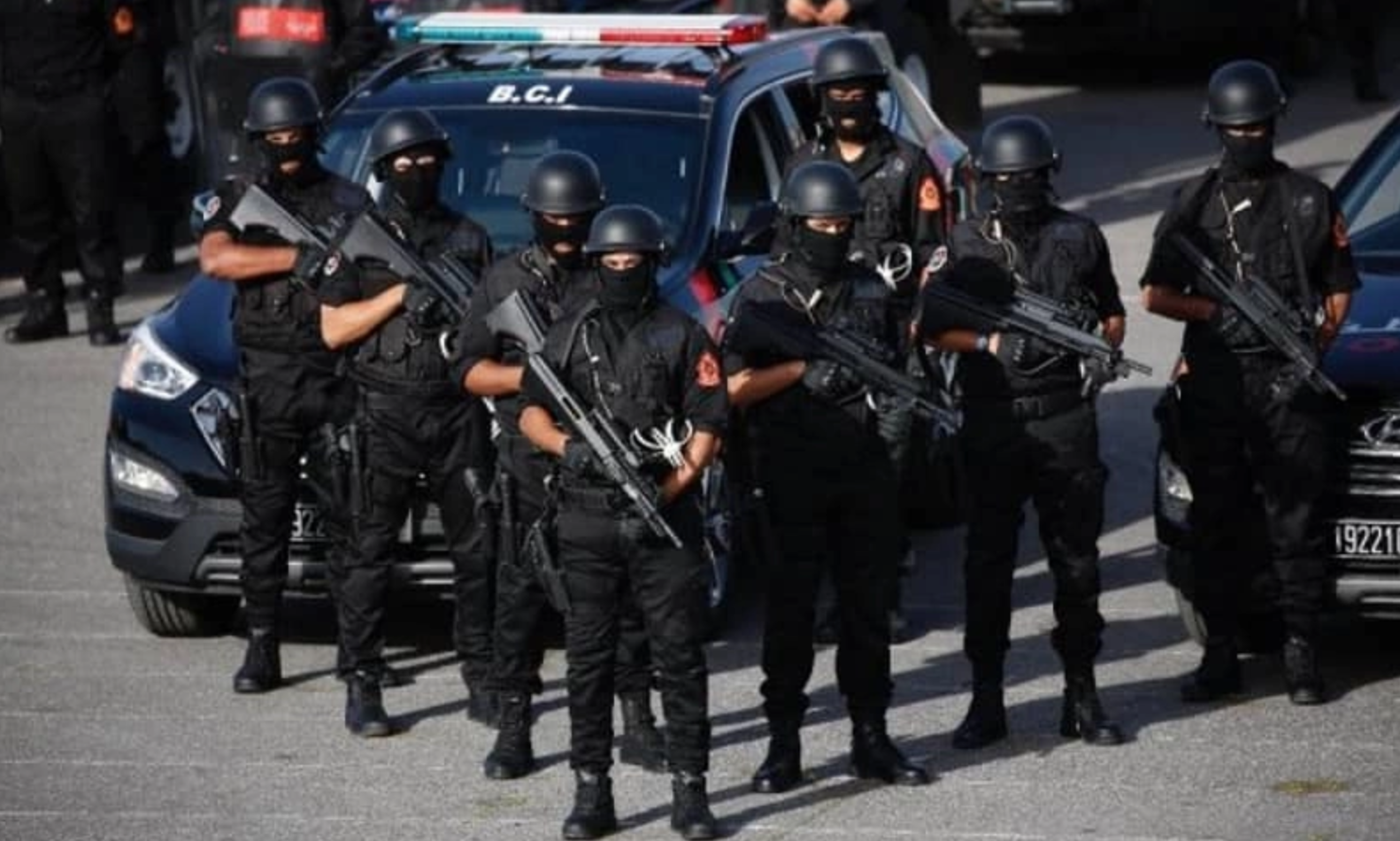
Rabat — Moroccan police had a record 95% crime-solving rate in 2024, according to the annual report released by the General Directorate for National Security (DGSN).
The report revealed that 2024 saw fewer thefts and assaults while cybercrime and drug busts increased. Violent crime, including thefts, sexual assaults, and car thefts, dropped by 12%.
Sexual assaults alone fell by 4% but drug-related crimes remain an issue, despite a 7% decrease. Police also carried out more drug seizures, especially cannabis and cocaine.
Cybercrime was a big problem for Morocco last year, with a 40% jump in online crimes such as blackmail and sextortion. However, many cases were solved thanks to the “E-Blagh” platform, which allows citizens to report online crime quickly.
Illegal immigration continues to be a challenge. The DGSN dismantled 123 criminal networks and arrested 425 people involved in illegal migration. Social media has emerged as a tool to organize illegal crossings, and police are adapting to the changing methods.
One of the biggest changes has been a new crime management system, which tracks cases from investigation to court. This system is already working in Kenitra, Tangier, and Marrakech and will be rolled out across the country.
A spokesperson for the DGSN said, “We aim to streamline police work and improve the speed and accuracy of investigations.”
Police have also turned to technology to help solve crimes. A new AI system, which is being tested in Casablanca and Agadir, helps identify suspects from sketches.
The AI system is also helping to identify license plates in urban areas, finding over 600 cars linked to crimes. Meanwhile, the DGSN’s “Tifli Moukhtafi” AI system has helped find 59 missing children by scanning social media.
Morocco also saw an upgrade in forensic tools. The National Forensic Laboratory now has new digital systems to ensure evidence is processed to international standards. The lab earned ISO 17025 certification for the seventh year in a row, keeping its reputation for high-quality crime-solving.
DGSN has provided officers with over 4,300 body-worn cameras, as well as placed cameras in police vehicles. These cameras link to new command centers, which help emergency response times. The DGSN has also added 26 drones to patrol borders and fight crimes like human trafficking and drug smuggling.
There’s been a push for safer methods to deal with suspects too. Non-lethal weapons like the “BOLAWRAP” and tasers have been introduced. This year, officers used Tasers 117 times, three times more than last year.
The DGSN report revealed that road accidents increased by 14%, with 1,063 people killed in crashes.
New police stations have been set up at key border points, including Tan-Tan port and airports in Errachidia and Zagora. Specialized units, including dog squads and a mobile catering unit, have been added to handle big operations. The DGSN is also improving conditions in detention centres, with better training for officers.
In the next few years, the DGSN plans even more upgrades. Work is already underway on a new central headquarters in Rabat, due to open in 2025. The directorate is also building 19 new police stations across the country to keep up with growing urban areas, including in Nador, Al Hoceima, and Marrakech.