 Join on WhatsApp
 Join on Telegram
Doha – The Spanish enclave of Melilla has registered one of its lowest irregular migration figures since the early nineties, with only 113 migrants entering the city throughout 2024.
This marks a significant decrease from the 340 entries recorded in 2023, highlighting a substantial shift in migration patterns at Spain’s North African border.
According to Europa Press, maritime arrivals saw the most dramatic reduction, with only 21 undocumented individuals reaching Melilla’s shores, representing an 88.3% decrease from the 180 recorded in 2023.
Land-based entries also experienced a notable decline, dropping 42.5% from 160 in 2023 to 92 in 2024.
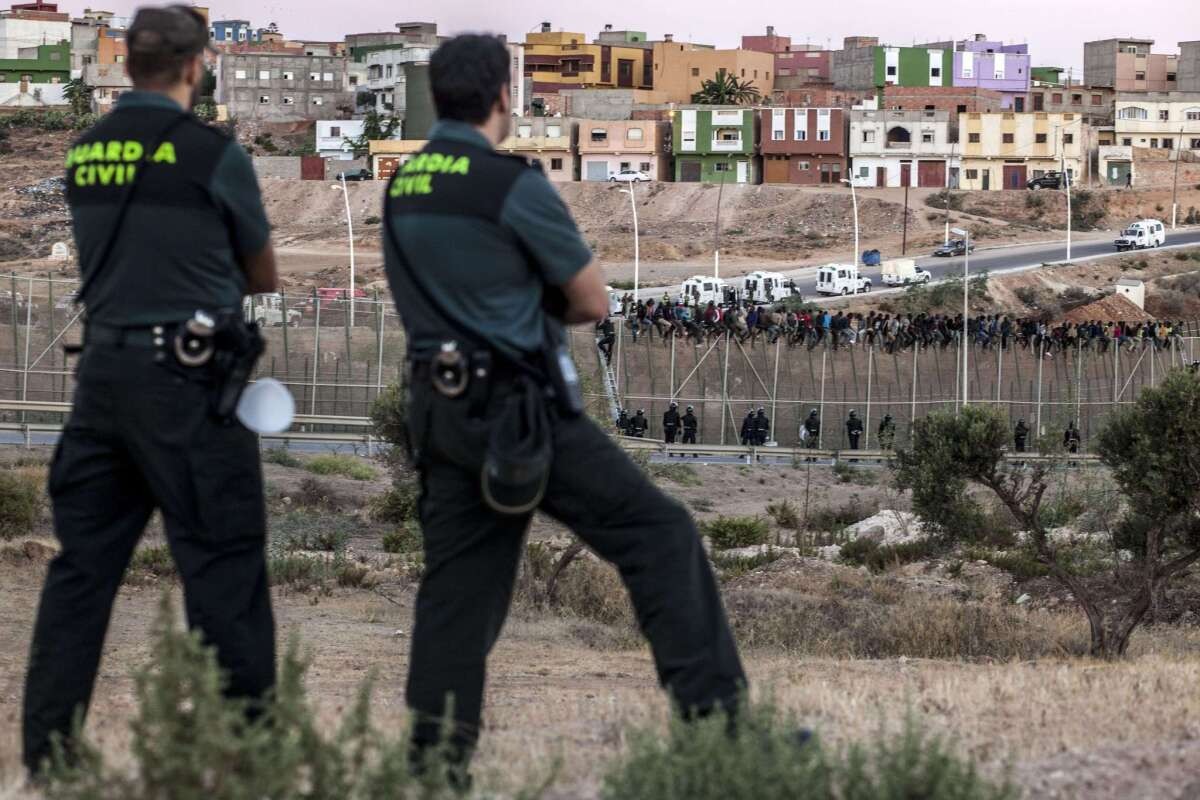
This sharp decline stands in stark contrast to previous years’ figures, particularly the tragic events of June 24, 2022, when between 1,500 and 2,000 refugees and migrants, predominantly Sudanese nationals, attempted to cross the Morocco-Melilla border.
While 150 succeeded in entering, the attempt resulted in at least 24 fatalities on the Moroccan side, according to official sources, though non-governmental organizations reported a higher toll of 37 deaths.
The city’s 11.2-kilometer border with Morocco’s northern province of Nador is fortified with three layers of fencing, concrete walls, ditches, and barbed wire, infrastructure that Amnesty International has criticized for hindering access to safe asylum-seeking procedures.
‘Priority partner’
Morocco’s role as a “priority partner” in migration management has been instrumental in achieving these reduced numbers.
In August 2024 alone, Moroccan authorities prevented 14,648 migrants from illegally entering Ceuta and Melilla, with the majority of interventions occurring in M’diq, near Ceuta.
The Moroccan Ministry of Interior reported in November that authorities thwarted 48,963 irregular migration attempts in 2024 and dismantled 210 criminal networks involved in human trafficking.
These rescued migrants received medical assistance, accommodation, and counseling.
Spanish officials have consistently acknowledged Morocco’s commitment. Rafael Pérez, Spain’s Secretary of State for Security, highlighted the “downward trend” in irregular arrivals during the XXI Meeting of the Spanish-Moroccan Permanent Group on Migration in Marrakech.
Spanish Defense Minister Margarita Robles described Morocco’s cooperation as “total and absolute,” while Foreign Minister Jose Manuel Albares praised Morocco’s efforts in addressing mass migration attempts.
Spanish media outlets have documented Morocco’s enhanced security measures. El País reported significant security deployments that prevented hundreds of migrants from breaching the Ceuta border fence during the September 15 mass migration attempt.
The operation saw Moroccan authorities intercept a total of 4,455 individuals – including 519 foreign nationals – over a six-day period.
El Debate’s special envoy described the border area as “absolutely shielded with fences and spirals of barbed wire.”
The effectiveness of these measures is reflected in broader regional statistics, with Morocco’s coastal control contributing to a 30% decrease in irregular entries to Spain from North African shores during the first half of 2024.
However, Moroccan authorities note that social media remains “a powerful pull factor for irregular migration,” particularly among young people, emphasizing the need for platform moderation of potentially harmful content.
Read also: Melilla Mayor: When Morocco Has the Will, It Prevents Massive Migrant Entries