 Join on WhatsApp
 Join on Telegram
Politicians, diplomats, academicians, experts, and journalists around the world share the view that the global geopolitical landscape has undergone a profound transformation in recent decades. At the same time, the rise of extreme populism and nationalism impacts the international order as it has been established since the post-World War II era and especially since the end of the Cold War.
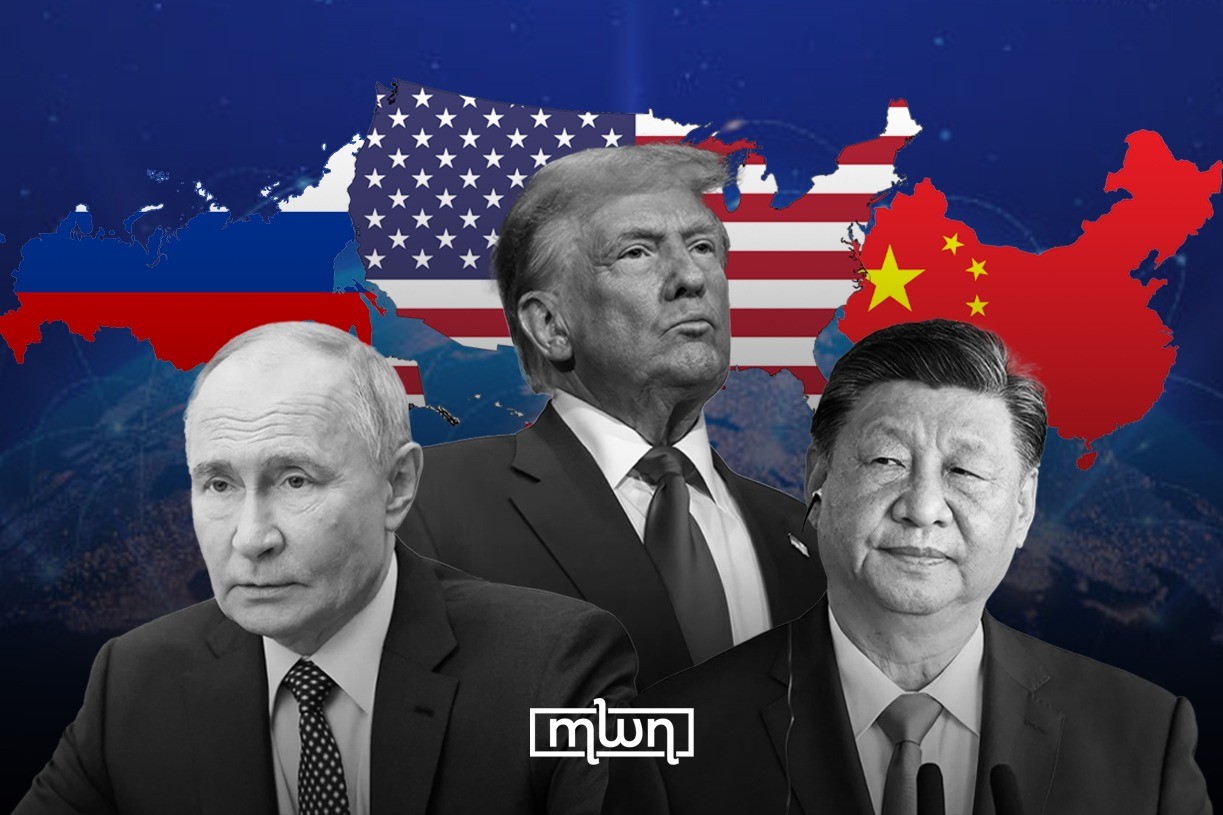
Today, these observers tend to give importance to the personal dimension in the political and diplomatic chessboard. In this respect, Vladimir Putin in Russia and Donald Trump in the United States deserve to be taken a look at. Their deep and provocative ideological belief in the supremacy and hegemony of their countries is worth serious scrutiny. Russia’s rejection of the unipolar domination of the United States has been vehemently expressed by Vladimir Putin in his speech at the Berlin Conference on security on February 7, 2007. Putin put forward arguments for establishing a multipolar world. China has expressed the same view over the last fifteen years.
This article explores the resurgence of Russia, the significance of the “America First” doctrine, the rise of China, and the resulting fragmentation of global governance. It concludes with an analysis of the strategic challenges and opportunities in the new geopolitical paradigm. It aims to take a look at the implications of changes worldwide.
The world order in question
Since new trends cast doubt on the sustainability of the power of the West and even reinforce a certain debate about the decline of the West (United States and Europe), one cannot help but observe the emergence of the new phenomenon in international relations. The stage goes blurry as a result of the rise of billionaire businessmen at the head of mega-companies, challenging governments and independent states’ hold on power, finance, and diplomacy.
It is commonly assumed that the liberal policies pursued by the United States and their international engagement, after the Second World War and the bipolar East-West rivalry during the Cold War, may have greatly contributed to the fall of the Soviet Union. As a result, a fragmented and unipolar world, led by the USA, has emerged. This happened to the disappointment of countries of the South, which had been perceiving the bipolar one as a shield against the specter of a world dominated by a single superpower.
Moreover, American hegemony has been well confirmed, particularly since the first Gulf War and the American operation “Desert Storm” for the liberation of Kuwait in 1991. American hegemony has been strengthened in the aftermath of the attacks of September 11, 2001. The international coalition the United States led stemmed from the need to defeat Al Qaeda terrorism in Afghanistan, Saddam Hussein’s hegemonic temptation in Iraq, Muammar Kaddafi’s trouble-making policy, Al Shabab guerillas, to name but a few.
The resurgence of hegemonic powers
The rise of Vladimir Putin to the head of Russia personifies the nostalgia for the glorified past and the greatness of the Russian empire. In this position, he is no different from the American president, Donald Trump, who wants to “restore” the greatness of America by reinstating the doctrine of President Monroe through his call for “America First.”. Both leaders adopt nationalist policies, strengthen their national capacities, challenge the established world order, and disregard international law. Both leaders aim at accelerating changes in the world order, as it has been built on the basis of international law and multilateralism since the Second World War.
This transformation comes along with the rise of populism, the decline of multilateralism, and the emergence of new centers of power opposed to the United States, namely China and Russia, leaders of what has been called “the Global South.”. They all oppose the West under American domination. China, which is confident in its nationalist doctrine and its aspirations for the renewal of the greatness of the Middle Kingdom, has been able, over the last thirty years, to rise as a leading power in different areas, such as trade, various industries, new technologies, space, and especially military power. It is not far from surpassing the United States in economic, technological, and spatial fields.
If during the Cold War the United States and the USSR led the two viscerally opposed blocs at all levels (ideological, geostrategic, economic, etc.), the USA and Russia currently meet, under Trump and Putin, in their competing approaches and strategies, especially in the management of international affairs and the defense of their interests.
Putin’s Russia, a resurgent power
It is worth reminding that since he ascended to power, Vladimir Putin has made it his sacred mission to restore Russia’s status as a power, not only in Europe as in the days of the tsars but also globally as under the USSR. His strategy has been marked by military involvements, such as the annexation of Crimea in 2014 and support for separatists in eastern Ukraine, as well as direct and powerful intervention in Syria to support the Assad regime and prevent Russia from losing its naval base and energy security to new competitors.
This strategy culminated in his war against Ukraine. Putin is constantly singled out for having also employed hybrid warfare tactics, including cyberattacks, disinformation campaigns, and hypothetical intervention in election campaigns in the US and Europe, to weaken Western institutions and sow discord in their societies. He justifies this strategy by saying there is a need to defend himself against the presence of NATO in his immediate vicinity in Eastern Europe and the Baltic Sea, which he considers a vital space for Russia.
Furthermore, it is believed that the accession of the countries of Central and Eastern Europe to the Atlantic Alliance was only possible because of Russia’s weakness since the fall of the Berlin Wall. Indeed, Hungary, Poland and the Czech Republic joined NATO in 1999, and seven other countries including the three Baltic countries sharing borders with Russia (Latvia, Lithuania, and Estonia) did so in 2004, following their accessions to the European Union. In its above-mentioned statement on February 7, 2007, Vladimir Putin reiterated his position considering that the expansion of NATO is a “serious provocation” for his country.
The energy policy is another arrow in Russia’s quiver. By exploiting its vast reserves of natural gas and oil, Russia has exerted significant influence on Europe, which has been heavily and long dependent on Russian energy exports. At the same time, Putin has sought to challenge NATO and the European Union, promoting Eurasian integration as an alternative to Western alliances. And clearly, he has succeeded in imposing his vision of his vital strategic space by effectively stopping, through his war in Ukraine, the push of NATO’s borders towards Russian territory.
At the same time, Putin has made all criticisms of his annexation of Crimea forgotten. In his vision of victory in this war, Putin is betting on stopping the West’s arms supplies to the Ukrainians. He continues his efforts to convince the American president to participate in bilateral negotiations that exclude Ukraine, to impose the framework of negotiations that he wants, and, therefore, to force Trump to approve the ongoing Russian information campaign on the illegitimacy of the current Ukrainian government.
Moreover, if the former USSR was already present, particularly in the Middle East and Africa through military regimes or socialist obedience, Russia’s engagement in these regions, since the end of the 20th century, has been essentially in the context of the race to secure a share of natural resources and to conquer new areas such as Libya, Central Africa, and the Sahel. The Russian new presence was ensured until recently through the so-called private or independent Wagner forces. It did not take the form of investments or economic or commercial partnerships as for the Chinese presence.
The Russian intervention in Syria is a special case because the main objective was to support the regime of Bashar Assad, a former ally, in partnership with the Islamic Republic of Iran, another ally, against the Syrian opposition forces, against the so-called Islamist terrorist groups, and especially against the presence of American forces. Another strategic objective was to ensure the Russian army presence in this region and especially in the Eastern Mediterranean, namely in the Syrian ports. Nevertheless, this adventure ended when Russia decided to let go of the Assad regime and allow its fall on December 24, 2024.
BRICS, a game changer
One of the great successes of the new Russia lies in the key role it played in the creation and development of the BRICS group on June 16, 2009, in Russia, which brought together Brazil, India, China, and Russia, later to be joined by South Africa. The grouping was designed to form a new geopolitical reality that counterbalances Western hegemony, especially American. It also aimed to represent a bloc of emerging economies considered important players in global growth and development. And it is no small feat for Russia to succeed in attracting powers like China and India to its side, even if no one can bet, to this day, on the solidity or sustainability of this “alliance.”
The platform provided a formal structure to discuss these issues and create mutual economic benefits. Obviously, the creation of the BRICS was not only about economics but also about political and security cooperation. Russia viewed the grouping as a means to strengthen its geopolitical influence, particularly in the face of increasing Western intervention in global affairs.
With its strategic vision, Russia thus sought to create a counterweight and promote a new, more multipolar world order in which the economies of so-called emerging countries could exert greater influence on the global political and economic chessboard. Russia, recovering from the economic collapse of the 1990s, sought to align itself with them to foster trade, investment, and regional development outside the Western-dominated financial system.
Given the impact of Western financial and trade sanctions against Russia due to the war in Ukraine, the ambitious project of creating a new currency for trade to replace the US dollar is clearly a strategic objective that could, if implemented, destroy the financial and economic power of the United States and the entire West.
By building a coalition with non-Western powers, Russia was able to assert its political leadership and ensure that its concerns were shared and its interests better represented in global governance. It also helped create new multilateral institutions within the BRICS, such as the New Development Bank (NDB). These institutions were designed to provide alternatives to Western-dominated institutions such as the World Bank and the IMF.
Russia’s role in creating the BRICS was thus driven by a combination of geopolitical, economic, and strategic interests aimed at shifting the global balance of power away from the West and creating new avenues for economic cooperation and influence. The group’s leadership helped make the BRICS an important platform for collaboration among major emerging economies, which has attracted new members. A first enlargement in 2023 included five new members: Ethiopia, Egypt, Iran, Saudi Arabia, and the United Arab Emirates.
But this new alliance will still have to find compromises and balances, especially in the face of the many economic challenges and political differences between its member countries. In addition, since January 1, 2025, the BRICS have had a new category of “partner states,” which currently includes nine countries (Belarus, Bolivia, Indonesia, Kazakhstan, Cuba, Malaysia, Thailand, Uganda, and Uzbekistan). The BRICS is expected to expand further in the years to come.
It is clear that, following the first enlargement of the group decided on January 1, 2024, the BRICS now represent 40.4% of the world’s produced wealth (in purchasing power parity) and 51% of the world’s population. The main countries of this grouping have ignited warnings from Donald Trump at the beginning of 2025. He declared that the core countries of the BRICS (Brazil, Russia, India, China, and South Africa) would be punished with “100% customs duties” if they replace the US dollar in their international trade. On his social network Truth Social, the president also wrote that these “countries could no longer hope to sell goods to the United States.”
Trump’s “America First” doctrine
Since World War II, the United States, the world’s leading economy and military power, has been the stable force on which the outside world and Western democracies could count. However, this state of affairs has begun to change at the beginning of 2025.
However, Donald Trump is behaving in a decidedly disrespectful manner, first and foremost towards his country’s traditional allies, especially Canada and Western Europe, and is defying a number of common international rules and norms. The perception of the United States as the reliable “Big Brother” has thus just been shaken to its foundations for a large part of the leaders and public opinion in Europe.
In practice, the slogan of “America First” means that the new administration in Washington, DC, mainly reserves its priorities for domestic affairs and, at the international level, for the defense and promotion of American interests, first. It gives primacy to national projects rather than to foreign aid, for example.
Donald Trump has chosen to start by closing USAID, the American development Aid Agency, by canceling all aid to foreign countries except Egypt and Israel, which have benefited from it since the Camp David agreement of September 17, 1978.
USAID, the world’s largest donor, has disbursed a total of $72 billion in 2023. Pending further developments, this agency is now integrated into the US State Department. This approach is presented as part of the new governance policy led by the all-powerful businessman in the new American administration, Elon Musk. It is intended to reduce the weight, influence, and finances of American bodies and agencies. American emergency aid has, in fact, saved millions of lives around the world so far, and that form of “soft” power has given the United States a unique status.
But the country is in the process of turning everything upside down. And China is about to take on—in the long term—the role of the United States, through its donations and investments around the world, without interfering in the internal affairs of the recipient countries, such as on issues of human rights or ecology, put forward by the Western countries.
The United States therefore risks losing the enormous capital of goodwill and sympathy that it has accumulated over the past 70 years in many parts of the world. While it is still too early to conclude that the international community has had enough of the United States with Trump as president, there is no doubt about how the business world and the political community perceive the American government. The current situation is not considered sustainable in the long term.
It should be remembered that Donald Trump began his first term, in January 2017, by signaling a desire to cancel the measures taken under his predecessor Barack Obama. On January 23, he ended the United States’ participation in the Trans-Pacific Partnership (TPP, free trade agreement). This partnership, negotiated by the Obama administration and intended to counterbalance China’s influence, was signed in 2015 by twelve Asia-Pacific countries, representing 40% of the world economy.
On June 1, 2017, he announced the withdrawal from the Paris Agreement, concluded by 195 countries in 2015, which he had described as “very unfair” for his country since it would allow, according to him, other nations to take an advantage over American industry. The actual withdrawal did not take place until November 2020.
Similarly, he decided to withdraw American from the Vienna agreement on Iranian nuclear power (the English acronym is JCPoA), signed in July 2015 between Iran and the 5+1 group (United States, Russia, China, France, United Kingdom, Germany). This decision was supported at the time by the Middle Eastern countries, allies of the United States, but criticized by the signatory countries of the agreement.
With Donald Trump once again at the head of the American administration for his second term, a fundamental shift has occurred in American politics and international affairs. He wants to achieve quick and symbolic victories in the short term, which can be communicated as a success to his fans and opponents. It seems that, from his own point of view, the president is managing to change course and, unlike his predecessors, to achieve the desired results for his country.
As a matter of fact, Trump has remained faithful to his doctrine and campaign promises in 2025. He has returned with greater force and determination to halt, if not demolish, multilateralism and challenge international law and the world order.
Trump’s presidency marks a radical shift from traditional American foreign policy. His “America First” doctrine seeks to prioritize sovereignty and economic interests over global cooperation. He has found nothing better, and in a sensational manner, than to sign on his first day in the White House a presidential order, among many others, to withdraw his country from the Paris Agreement and the World Health Organization.
Similarly, the United States has already withdrawn from several major international organizations or stopped contributing financially to others. The UN, in his eyes, is useless and expensive, and multilateralism and development aid are undermined each time. The American president also signed an executive order banning federal funding for international NGOs that support abortion. Since its signing in January 2025, many organizations have lost part of their funding.
Disdain for international law
If Trump’s actions were expected because they represent an extension of his policy during his first term, his desire for territorial expansionism has been more surprising since his electoral momentum. He continued to threaten to regain control of the Panama Canal. He reiterated his wish to see Canada as the 51st American state while recalling his claims and determination to achieve the acquisition of the Danish island of Greenland. The example of the Russian invasion of Ukrainian territories is not far from these American expansionist projects.
The leaders and populations of Canada and Denmark cannot get over the shock and are shaken with fear of seeing this strategy pushed to its end and not only as a negotiation strategy on the part of the Americans. The whole of Europe seems to shudder at the impact of Trump’s statements and is looking at themselves in incessant meetings between its leaders to find a minimum of consensus that would ensure the sovereignty of its states and their security.
As a result, Trump has managed to make a strong impression around the world with his disdain for multilateralism and has cast doubt on the trust, solidarity, and solidity of transatlantic relations within NATO, the world’s most important military alliance. In addition, his approach to alliances, such as questioning the value of NATO, has made European allies uncertain about US commitments. This could lead them to seek more autonomy, which could be both a challenge and an opportunity.
Yet Trump still remains critical of organizations such as the UN and NATO. His withdrawal from several international agreements and his “America First” policy have, on the other hand, shed light on his emphasis on bilateral agreements. However, trust in the United States as a reliable partner has been shaken, which will certainly have long-term effects. It is clear that, overall, Trump is trying to intimidate the world, including close allies like Canada, Mexico, and the EU, as well as enemies or competitors like China. But this is generating both outrage and distrust in the United States and is sure to attract retaliation.
Tariffs as a foreign policy tool
Since his inauguration, the American president has threatened to impose tariffs on countries around the world. He began by signing an executive order that imposes a 25% rate on goods from Mexico and Canada, as well as a 10% rate on goods from China. However, shortly before the entry into force, the United States agreed on February 3, 2025, to have a one-month pause on new tariffs with Mexico and Canada, in return for the two countries to double their efforts to further secure their borders and thus strengthen Trump’s policy in his fight against immigration.
Nevertheless, punitive tariffs on Chinese goods have come into force, prompting China to impose retaliatory tariffs. This shows how he works and how far he is prepared to go.
Furthermore, Trump’s announcement and policy caused a sensation, particularly in Canada, where many sections of the public opinion clearly distance themselves from the American president. Canadian crowds have expressed dissatisfaction with the customs tariffs on the country’s products. The American national anthem has even begun to be met with loud and sustained boos from Canadian audiences at sporting events.
It remains to be noted that the repercussions of the planned 25% tariffs imposition on goods from Canada and Mexico and 10% on Chinese goods are likely to eventually affect American consumers themselves. This is assessed by an analysis shared by the Washington-based think tank Tax Foundation, called “Trump Tariffs: Tracking the Economic Impact of the Trump Trade War”. This analysis shows that the proposed tariffs measures for the three countries would reduce the value of U.S. sales of goods and services by 0.4% and raise taxes by $1.2 trillion between 2025 and 2034. For the average American household, this corresponds to a tax increase of $830 in 2025.
China’s response to Trump’s tariffs
How about China? Indeed, just a little after the 10% tariffs imposed by the US on Chinese goods went into effect on Tuesday, February 4, 2025, China responded with measures, which to date are still relative, against imported products from the US.
These include:
-15% tariffs on coal and natural gas
-10% tariffs on oil, farm machinery, light trucks, and large-engine cars
-Export controls to the United States on 25 rare metals to “protect national security interests.”
-PVH Corp., which is the holding company for fashion brands Calvin Klein and Tommy Hilfiger, among others, and biotech company Illumina, have been added to China’s list of “unreliable entities.”
The tariffs against the United States go into effect on February 10, and China is filing a formal complaint with the WTO over the punitive US tariffs. China’s Ministry of Commerce said in a statement that the US actions were “malicious.” In a follow-up response, Chinese authorities announced that they would investigate “Google” for violating competition rules. The tech giant may have violated Chinese laws designed to restrict monopolistic companies.
It is worth recalling that during Trump’s first mandate, the US and China alternately raised tariffs on a wide range of products as part of a trade dispute. However, on a strategic level, it appears that China could be the great beneficiary of the protectionist and nationalist momentum of the American president and the Russian invasion of Ukraine. China would be able to strengthen its own positions and capabilities at all levels. Furthermore, it may one day take the risk to conquer the island of Taiwan, following the example of the Russian annexation of Crimea and the war in Ukraine, or even in line with Trump’s project to take over the territories of Canada and Greenland.
Europe’s dilemma
Europe is at the center of this new geopolitical landscape. Russian interventions, in particular the annexation of Crimea, the war in Ukraine, and the ongoing hybrid war, have eroded European stability, which has been facing a problematic economic situation since the successive financial crises and the pandemic crisis. At the same time, Trump’s skepticism towards NATO and his demands for increased defense spending have strained transatlantic ties, prompting calls for greater European strategic autonomy.
The rise of nationalist and populist movements in countries such as Hungary, Poland, and Italy, to name but a few, encouraged by Trump’s election, has further complicated the situation, undermining the EU’s cohesion and challenging its core values. At the same time, Europe must manage its economic relations with China, balancing the benefits of trade with concerns about Beijing’s growing geopolitical influence and human rights record. Also, the European Commission has been preparing for months for Trump’s possible punitive tariffs on the EU. Just as China was able to react quickly and impose tariffs on some US products, the EU would use exactly the same strategy if negotiations with the Americans fail.
Observers wonder whether Donald Trump really understands what is at stake, both for Americans and for Europeans, whose economies are closely linked. Is this a bluff? A negotiating tactic? A means of blackmail? And if so, what is his goal? The truth is, no one can say for sure yet.
Trump has said he plans to do something “significant” about tariffs on goods from the European Union, saying the EU “has not treated the United States well.” If this happens, the EU would be forced to retaliate. It would follow all the procedures, namely, impose punitive tariffs on American products in accordance with World Trade Organization rules. This was also the case in 2018, when Trump imposed tariffs on European steel and aluminum. Back then, the EU responded by imposing tariffs on carefully selected American products such as bourbon, jeans , and Harley Davidson motorcycles—products made in states where political leaders supported Trump.
This time, the EU’s response would most likely attempt to sanction products from carefully selected geographic areas in the United States, which would hit Trump’s electoral base. It is therefore predictable that a trade war would be deeply damaging for all sides.
North Africa and the New Order
North Africa’s strategic location has made it a focal point of Great Power competition. Russia has expanded its military and economic presence in the region, notably in Libya and Egypt, in addition to its traditional ally Algeria, challenging Western dominance there. At the same time, the reduction of American engagement in this region, as in the Sahel, has created a vacuum that has allowed Russia and China to increase their influence.
For its part, the traditional French presence has shrunk in recent years throughout the region and in Africa. In the Sahel countries and in Central Africa, French and American forces have simply been replaced by Russian Wagner forces. The footprint of the European Union, a grouping in identity and economic crisis but without geopolitical weight, is almost invisible in the conflict management and international affairs.
The inter-Libyan conflict, the security situation in the Sahel, the position of the region as a transit and departure point for migrants to Europe, the economic and financial crisis in Tunisia, the hard time the military regime in Algeria is experiencing, the lack of resolution of the regional artificial conflict over the Moroccan Sahara, the vulnerability of the regime in Mauritania, and so many other issues do not fail to exacerbate tensions in the region. At the same time, the Chinese “Belt and Road” initiative brings significant investments to North Africa, particularly to Morocco. This is raising concerns about the economic dependence of these countries and the growing geopolitical influence of China in the region and elsewhere in Africa.
Morocco’s balanced diplomacy
Located at the crossroads of Europe, Africa, and the Middle East, Morocco faces both opportunities and challenges in this new era. The recognition of Moroccan sovereignty over the Sahara by the US under President Trump in 2020, by many European countries, and most recently France in 2024, has further strengthened the traditional and multifaceted ties between Morocco and all these countries. This has consolidated its diplomacy and strengthened its position and aura as a trusted strategic partner. Saying that, one must bear in mind that the Kingdom also benefits from strategic partnership relations with Russia, China, India, and Brazil, in addition to influential Gulf countries. Hence, its balanced diplomacy and neutrality on major international issues and current conflicts enable Morocco to be a key player on the regional and international chess boards.
Morocco’s economic and trade relations with the EU, its leading trading partner, and with all these countries on the bilateral level, are vital for its economic growth. However, this requires careful management and increased vigilance on an ongoing basis to maintain these relations at the expected political and economic level.
The country has always played a leading role in the Libyan crisis, the Israeli-Palestinian conflict, and issues concerning the Arab-Muslim world in general. It positions itself as a leader in the field of development cooperation and trade in Africa. Morocco is, in fact, the leading African investor in West Africa and the second largest African investor on the entire continent. Besides, it entertains profound historical relations in the Sub-Sahara.
It also plays a key role in the fight against terrorism, particularly for the stabilization of the Sahel region, even if the situation is aggravated by the challenges posed by conflicts in Libya and Mali. At the same time, Morocco’s leadership, illustrated by its economic successes, particularly in its industrial transition and in the field of renewable energies, positions it as a regional pole of stability and sustainable development. This situation makes it increasingly attractive for foreign direct investments from different countries in recent times, particularly European and Chinese, which confirms the confidence placed in it at the international level.
A multipolar world: challenges and opportunities
It must be acknowledged that the second Trump presidency is accelerating the crisis of multilateralism by promoting unilateralism, nationalism, and protectionism while undermining alliances and international cooperation. However, it must also reveal the even partial resilience of international institutions and encourage other actors to fill the void left by the United States. The long-term impact will depend on the ability of the USA and their partners to rebuild trust and modernize cooperation frameworks at both the bilateral and multilateral levels.
The era of American domination is probably coming to an end, due partly to the unilateral policies of the present administration and could face stronger competition from global players advocating a multipolar world order, where they would have better consideration, such as China, Russia, and regional powers like India. This geopolitical and geostrategic paradigm shift is bound to lead to increased instability and maybe confrontation as nationalism and populism replace the post-World War II consensus on global governance.
It is an upheaval that presents significant challenges as states grapple with rising power competition and changing security dynamics in an international environment characterized by the unresolved nature of several conflicts.
It is no secret that one of President Trump’s motives behind his project to conquer Greenland is the growing importance of the region, north of the Atlantic, as Russia has in recent years extended its activities and maybe control over the Arctic maritime route. In addition, his repeated declarations about readiness to talk with Vladimir Putin, with the aim to end the Ukraine war, is another sign of Russia’s determination to maintain its stance on this issue, while despising western countries with their military support to Ukraine.
In the long term, it seems that Russia, the more and more powerful due to alliance with China as well as with North Korea and Iran, will accept no less than a victory there. It will therefore pursue its defiance to international law and ignore calls to respect sovereignty and established borders.
The lessons of the past and present are clear: in a world of shifting alliances and competing powers under the new geopolitical paradigm, adaptability and strategic foresight will be essential to the survival and success of some countries in a changing world order, where governments and key players are trying to implement adaptive strategies to meet the challenges and take advantage of the opportunities of the contemporary era.