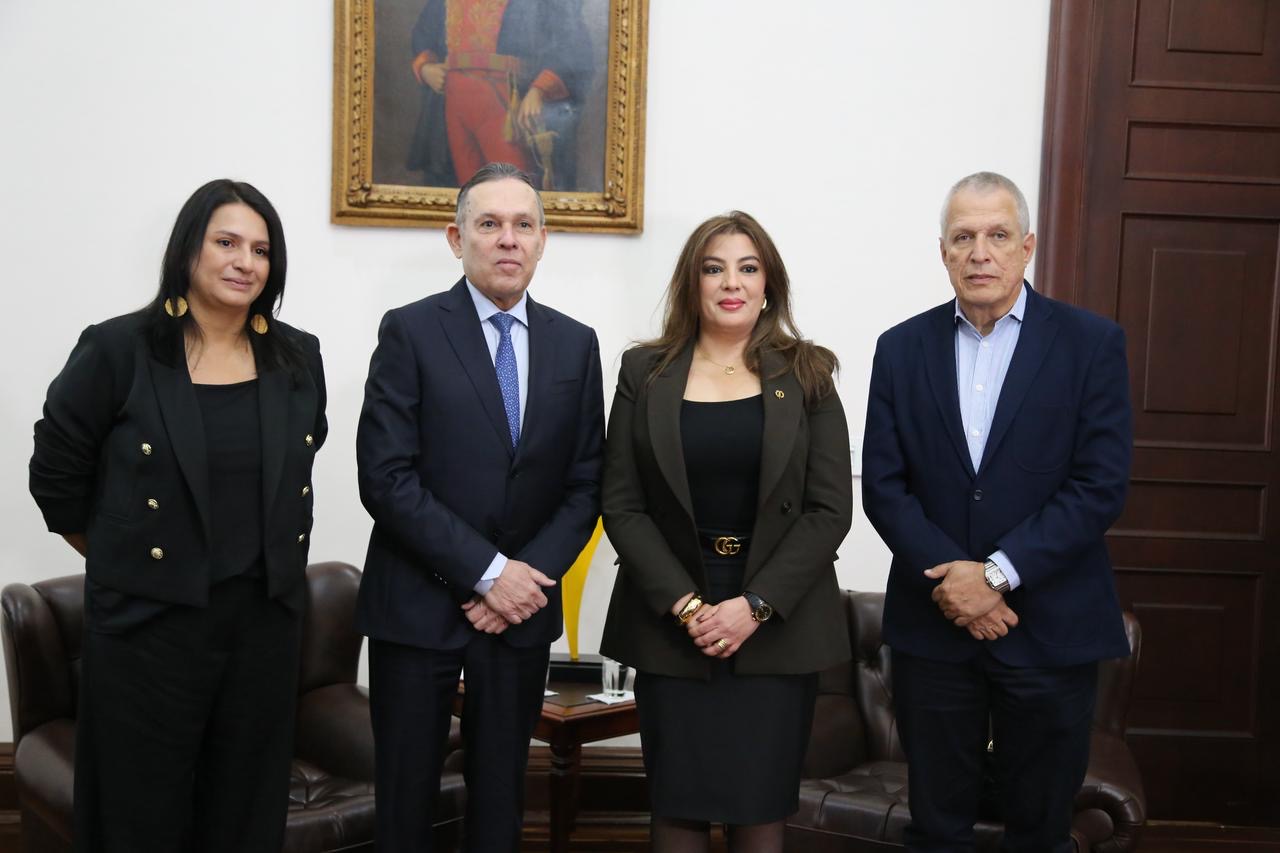
Doha – Colombian Congress President Efraín Cepeda has reinforced his legislature’s backing for Morocco’s Western Sahara position, expressing strong disagreement with President Gustavo Petro’s support for the Polisario Front during a meeting with Moroccan Ambassador Farida Loudaya on Thursday.
The congressional opposition to Petro’s position has been consistent since the president’s initial decision in August 2022, when sixty-two out of 108 senators voted against restoring diplomatic ties with Polisario.
The petition, read by Senate Secretary General Gregorio Eljach Pacheco in October 2022, explicitly rejected the Ministry of Foreign Relations’ decision to revive a 1985 joint statement with the separatist group.
Cepeda blazoned that Petro’s recognition of the separatist group was rejected by over 70% of the Colombian Senate, exposing the significant divide between the executive and legislative branches on this issue.
“That recognition was rejected by more than seventy percent of the Senate of the Republic,” Cepeda stated during the meeting.
The Congress president also elevated the importance of strengthening bilateral relations with Morocco, pointing to substantial trade ties between the two countries.
Official data shows that bilateral trade reached $350 million in 2022, with Colombia exporting coal, coffee, and chemical products while Morocco increased its supply of fertilizers and agricultural products to the Colombian market.
Cepeda questioned the impact of the Colombian government’s stance on its stated goal of strengthening ties with Africa.
“When the President has said that he wants to strengthen relations with Africa, with this treatment to the Kingdom of Morocco, what happens is that it tarnishes that future,” the congressman remarked, calling on the executive to “reconsider” its position.
The congressional support for Morocco reflects a broader shift in South American diplomacy, with several countries moving away from supporting the separatist group.
Recent examples include Ecuador’s suspension of recognition of the self-proclaimed “SADR” in October 2024, followed by Panama’s similar decision in November 2024.
This latest development comes amid strained diplomatic relations between Bogota and Rabat since Petro’s decision to recognize the Polisario Front in 2022.
The tension has led to a suspension of bilateral dialogue, with Moroccan diplomatic sources confirming that “everything has been frozen” since then.
The meeting was attended by key figures including Senators German Alcides Blanco Alvarez, president of the Colombia-Morocco Friendship Group, and Paola Andrea Holguin Moreno, member of the Foreign Relations Commission.
Both senators are among the 65 out of 105 Colombian senators who signed motions supporting Morocco’s territorial integrity in November 2023.
At the time, the senators expressed deep frustration with the executive branch, stating that “the government has once again turned a deaf ear not only to our motion of October 19, 2022, signed by 63 Senators representing nine political parties but also to our numerous calls for respect for the sovereignty and territorial integrity of the Kingdom of Morocco.”
The motion specifically denounced the government’s “ill-advised decision” to establish relations with Polisario’s self-proclaimed SADR, stressing that it “in no way represents the position of Colombians towards Morocco.”
At this latest meeting, Cepeda concluded, “All support for the Kingdom of Morocco. We must continue strengthening these commercial relations that have been so important for both nations. Hopefully this government will reconsider,” reinforcing the legislature’s position on maintaining strong ties with Morocco despite current executive policy.