
 Join on WhatsApp
 Join on Telegram
Rabat – Salinity poses a significant challenge to agriculture in several countries around the world. It occurs when too much salt builds up in the soil or water, making it hard for plants to grow due to their inability to absorb enough water. Salinity can occur naturally, but human activities like poor irrigation practices and overuse of groundwater can exacerbate the issue.
In Africa, salinity is a growing concern that threatens crop yields and soil health. Many regions already suffer from water shortages, and when salty water is used for farming, it damages the soil.
Countries in North and Sub-Saharan Africa are especially affected because of dry climates and poor water management. Salinity reduces crop yields, forces farmers to abandon land, and worsens food insecurity. Around 80 million hectares are affected by salinity in Africa.
In light of these challenges, biosaline agriculture could offer several benefits for regions suffering from salinity and water scarcity. Biosaline agriculture is a farming method that helps grow crops in salty soil or water. Instead of fighting salinity, it finds ways to use it and turn salty lands into productive farms.
Some plants, like quinoa and certain types of barley, can survive in salty conditions. Scientists are also developing new crop varieties that can grow in these conditions.
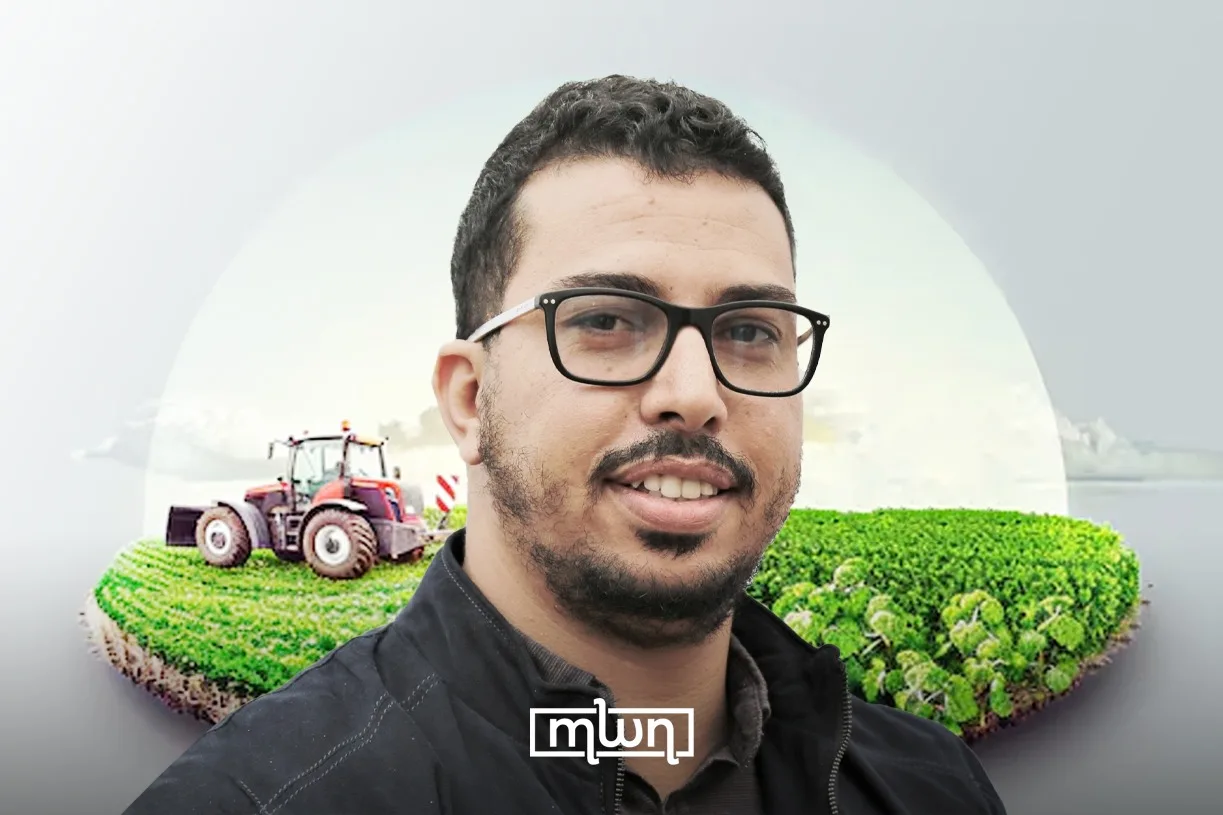
Morocco World News (MWN) spoke with Abdelaziz Hirich, a professor of agriculture in marginal environments at University Mohammed VI Polytechnic (UM6P), to learn more about this farming method.
For Hirich, biosaline agriculture is emerging as a necessity rather than an option, particularly in regions facing increasing soil salinity and water scarcity. The urgency for biosaline agriculture is reflected in global statistics, the professor said, noting that one billion hectares of land worldwide are affected by salinity, including 80 million hectares in Africa and one million in Morocco alone. These figures reflect a growing crisis that threatens food security, agricultural productivity, and rural livelihoods.
Biosaline research in Morocco
Hirich’s expertise in salt-tolerant crops began during his master’s and PhD at Hassan II Agronomy and Veterinary Institute in Rabat, where he focused on salinity challenges. His career path took him to Dubai’s International Center for Biosaline Agriculture (ICBA), where he worked for six years on large-scale projects before joining UM6P in 2020.
While working at ICBA, Hirich led agricultural projects in UAE, Egypt’s New Valley regions, as well as several sub-Saharan African countries, including Sierra Leone, the Gambia, Liberia, Togo, Botswana, Namibia, and Mozambique in addition to Morocco. These projects focused on introducing and transforming salt tolerant crops including forages and quinoa, particularly in salt-affected lands, through bio-saline agriculture.
After joining UM6P, he has led multiple biosaline agriculture initiatives across Morocco. His work particularly focused on marginal environments where traditional crops struggle due to high salinity and drought stress.
These projects focus on salt-tolerant crops, like quinoa, blue panicum, Sesbania, cowpea, and halophytes (e.g. salicornia), as well as sustainable irrigation using saline groundwater instead of fresh water, and participatory research with farmers to test and adopt new agricultural models.
UM6P’s research in this area is far from theoretical as it directly involves farmers through 15 experimental platforms, each functioning as a “living laboratory” where crops and irrigation techniques are tested under real conditions.
These platforms are located in the country’s southern provinces of Laayoune, Smara, Tarfaya, Boujdour, Bir Anzarane, and Dakhla, with others located in Doukkala, Rahamna, and Khouribga, including a 15-hectare farm on mining exploited land.
One key initiative is the new UM6P farm in Boujdour’s Jrifia area, where desalinated groundwater is being used for large-scale agricultural development in partnership with the Moroccan Ministry of Agriculture.
“It’s a demonstration platform to support farmers in the newly irrigated 9,000-hectare perimeter. We provide technical expertise to help them transition to more resilient agricultural practices,” the professor explained.
Through such initiatives, UM6P works with farmers, tests crops in their fields, observes the results, and upscales successful techniques, ensuring that their research has tangible benefits.
Hirich works specifically at UM6P’s African Sustainable Agricultural Research Institute (ASARI) in Laayoune. He has dedicated years of research to this field and his goal is not just scientific advancement but to ensure that research translates into real-world impact for farmers.
“Our philosophy at the center is not only making research for research to publish papers, but to make more impact with local communities, especially farmers,” he said.
Challenges of adopting biosaline agriculture
Despite its great potential to transform agriculture, biosaline agriculture faces multiple barriers, Hirich remarked. Of these, is the fact that salt-tolerant crop varieties are not widely available due to the focus of major seed companies on conventional crops.
“Most big seed companies do not invest in salinity-resistant crops because they focus on crops grown under fresh water conditions like fruits and vegetables,” he explained.
Hirich identified farmer resistance to change as another challenge, explaining that many farmers are hesitant to replace traditional crops like maize and alfalfa, even when they struggle with low yields due to soil salinity. Adoption is slow as a result of these deep-rooted agricultural practices.
“Farmers sometimes don’t realize they have a salinity problem or they are too used to their traditional crops. Even if maize stops working, they will still try to grow it,” Hirich said.
In addition, farmers prefer high-value crops like berries and tomatoes, which are sensitive to salinity but generate more income than biosaline alternatives. Some salt-tolerant crops, like quinoa and blue panicum, are becoming more commercially viable, but scaling up remains a challenge.
“Biosaline crops are often less profitable than traditional cash crops, but for farmers with no other options, they provide an alternative to abandoning their land,” he said.
The adoption of biosaline agriculture also faces policy challenges, including in Morocco, as this alternative cropping system was not clearly adopted within the major agricultural development plans in Morocco (Green Morocco Plan and Generation Green Plan)
The country is experiencing its seventh consecutive year of drought, and the impact of this water crisis has reached agriculture, industry, tourism, and daily life. To save water, Morocco decided to invest heavily in several desalination plants throughout the territory.
Given this, the government’s main priority is, understandably, securing more water through desalination. But biosaline agriculture especially the use of saline groundwater offers an alternative by reducing the demand on freshwater, Hirich argues.
Water crisis and biosaline agriculture’s role
The government invested heavily in desalination plants in different regions, including Agadir, Safi, Casablanca, and Dakhla. While these projects increase water availability, they come at a high financial and environmental cost.
Hirich says that biosaline agriculture can complement desalination efforts by reducing reliance on freshwater irrigation by using brackish/saline water and introducing drought-resistant crops that require less irrigation.
This farming method would also provide alternative income sources for farmers struggling with water scarcity, according to the professor. He argued that biosaline agriculture is a solution that fits both water scarcity and soil degradation since it allows farmers to grow crops with less water while restoring land productivity.
With Africa losing 2 hectares of arable land every minute due to salinity and desertification (according to FAO), Hirich reiterated that biosaline agriculture is a critical tool for future food security.
He noted that biosaline agriculture is a judicious option for countries without coastal access since they cannot rely on desalination. Given the current situation, governments should integrate salinity management into national agricultural policies to prevent long-term productivity loss, Hirich added.
“Salinity is irreversible. Once soil becomes saline, it never goes back to its original state,” the professor warned, citing data from the Food and Agriculture Organization (FAO). According to the organization, the world loses 2 hectares of arable land every minute due to drought and desertification.
Hirich recalled that biosaline agriculture has made significant progress in Morocco. However, much more needs to be done to scale up research and adoption beyond pilot projects and ensure long-term funding from governments, not just international donors, as well as integrate biosaline solutions into mainstream agricultural policies.
“Biosaline agriculture is not just an alternative, it is a necessity” for the future of African agriculture, the professor concluded.