
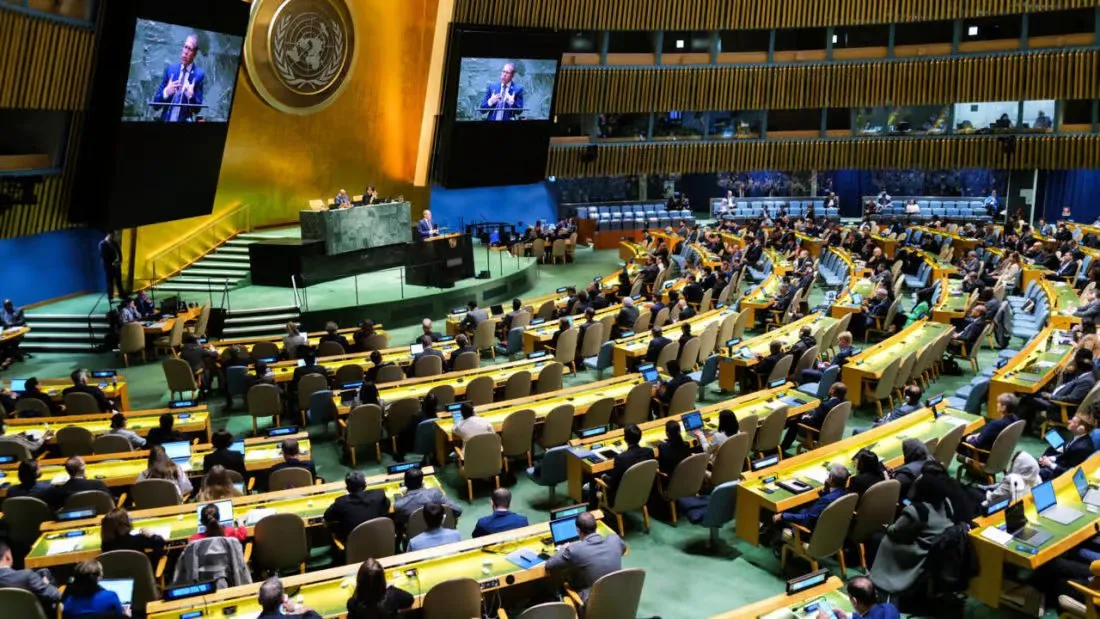
Rabat – Morocco’s Minister of Solidarity, Naima Ben Yahia, led a discussion at the United Nations in New York on women’s economic empowerment and their role in development.
Organized with Saudi Arabia and the UN Population Fund (UNFPA), the event took place during the 69th session of the Commission on the Status of Women (CSW69).
Ben Yahia outlined Morocco’s efforts over the past two decades to advance gender equality through legislative and social reforms. She also recalled the role of the 2011 constitution in ensuring equal rights and underlined state programs that work on expanding social protection and promoting women’s access to employment and entrepreneurship.
The minister also touted the National Initiative for Human´s (INDH) role in supporting income-generating projects and vocational training.
UNFPA representative Mireille Sander commended Morocco’s work in advancing women’s inclusion, while Cynthia Samuel-Olonjuwon of the International Labour Organization (ILO) acknowledged progress in promoting decent work for women.
Moroccan lawmaker Latifa Cherif noted Parliament’s role in gender parity efforts, referencing legislative initiatives on equality and protections against violence.
The event gathered high-level participants, including Senegalese Minister Maimouna Dieye, Saudi Shura Council member Al Jawhara Bint Fahd Al Saud, and representatives from UN agencies and international organizations.
Ben Yahia also participated in ministerial meetings on social protection and gender equality in the Arab world, holding talks with UN officials and government representatives, including CEDAW Chair Nahla Haydar and British Minister for Equality Seema Malhotra.
Morocco has been working to improve women’s rights, mostly via legal reforms and social initiatives.
The Family Code (Moudawana), amended in 2004, granted women better rights in marriage, divorce, and child custody, but gaps persist in areas like inheritance, guardianship, and legal enforcement.
The government has launched a new effort to revise the Moudawana to further strengthen women’s rights and address lingering inequalities. While progress is evident in education, political representation, and economic inclusion, challenges remain, including disparities in labor force participation, persistent social norms, and difficulties in accessing justice for women facing discrimination or violence.