
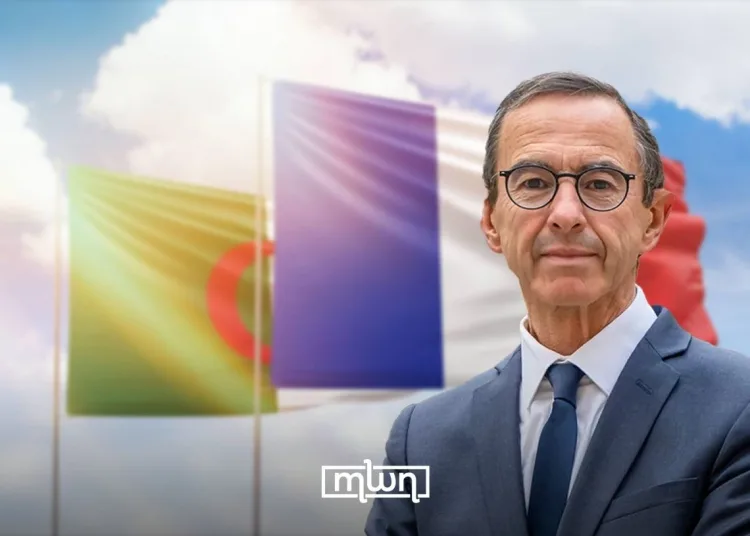
Rabat – Paris is preparing to send Algerian authorities a list of individuals to be expelled from France, with the hope that Algeria will accept the list and use it as a step towards warming bilateral relations, which have been strained by migration issues.
Three government sources told AFP on Thursday that the list, which includes “several dozen” names, is expected to be officially sent to Algeria soon. One source said it could happen “this week,” while another suggested it would be done “today or tomorrow,” and a third described the move as “imminent.”
“This is the first list,” Interior Minister Bruno Retailleau said on RTL radio on Wednesday, noting that it included a few dozen individuals.
The issue of Algeria refusing to accept nationals in an irregular immigration status, including the perpetrator of a deadly attack in Mulhouse, France, on February 22, has deepened tensions, which were already strained following France’s recognition of Morocco’s sovereignty over Western Sahara in July last year.
The expulsion list currently appears far smaller than what Retailleau initially envisioned, which included several hundred names. However, additional lists may follow.
Retailleau met with French President Emmanuel Macron on Wednesday in a “one-on-one” meeting, according to an official close to the president. “We make a lot of their differences,” the official said, noting that they were in agreement on the principle of expelling Algerians under a deportation order.
However, President Macron is keen to avoid further escalating tensions with Algeria over migration, fearing a negative impact on other sensitive issues, such as intelligence sharing in the fight against terrorism.
Diplomatic warming is necessary, especially in the context of counterterrorism cooperation in the Sahel region, where both countries are working together to combat jihadism.
France has a vested interest in the stability of Algeria, the largest country in Africa, which is surrounded by neighboring states facing security challenges.
Additionally, France is concerned about the potential return of Algerian or Franco-Algerian jihadists from Syria, a potential threat to national security. French diplomats recently noted that the two countries were in a state of “near-breakdown” in relations.
In response, President Macron has sought to de-escalate tensions, urging an end to “talking through the press.” “It’s ridiculous; it never works that way,” he said in late February.
This was in response to comments by Algerian President Abdelmadjid Tebboune, who had criticized the “toxic atmosphere” between the two countries in an interview with L’Opinion. Tebboune emphasized the need to resume dialogue, but he conditioned this on Macron’s willingness to express the desire to do so.
Algerian media welcomed Macron’s “calming words” while lamenting Retailleau’s further escalation of the situation.
When asked about a potential direct dialogue between the two presidents, the Élysée did not respond.
This week, French Foreign Minister Jean-Noël Barrot reiterated France’s desire to improve relations with Algeria, stating: “Of course, France aspires to have good relations with Algeria, a neighboring country with which our ties are strong.” However, he added that “calm cannot be unilaterally decreed.”