
 Join on WhatsApp
 Join on Telegram
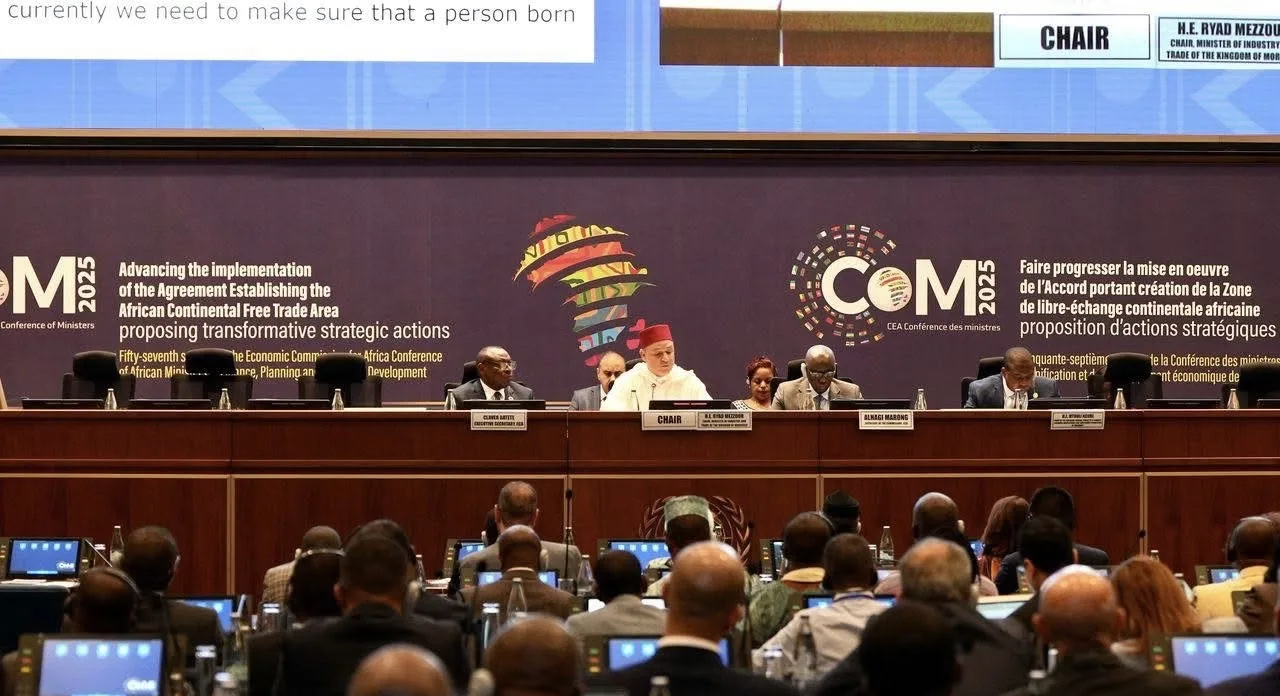
Rabat – Minister of Industry and Trade Riyad Mezzour reaffirmed Morocco’s commitment to the African Continental Free Trade Area (AfCFTA) at the 57th session of the United Nations Economic Commission for Africa (UNECA) in Addis Ababa.
Addressing African finance and development ministers, Mezzour described AfCFTA as more than a legal framework, calling it a crucial project that could reshape the continent’s economic future.
“AfCFTA is the challenge of our generation,” Mezzour said. He urged African nations to take bold steps to ensure the agreement delivers on its promise in a world where economic realities continue to evolve.
Since returning to the African Union in 2017, Morocco has positioned itself as a link between North and South, between long-standing traditions and new innovations.
Mezzour noted the need for Africa to move beyond exporting raw materials and relying on imported goods. He called for stronger regional value chains that would allow African industries to compete in the global market.
He pointed to Morocco’s experience, where strategic industrial policies turned the country into a key player in the global fertilizer market. With Morocco supplying over 20% of the world’s fertilizer needs, he said Africa has the potential to become a leader rather than a supplier of raw materials.
He also pointed to Morocco’s growing role in car manufacturing, citing the Morocco-DRC-Zambia electric mobility project as proof that Africa could carve out a place in the global electric vehicle industry.
On another note, Mezzour stressed the importance of industrial sovereignty and urged fellow African countries to use their resources wisely and push for sustainable growth.
He said AfCFTA should be fair and environmentally responsible, noting that Morocco already generates 45% of its energy from renewable sources. He added that Morocco stands ready to share its expertise in green energy, industrial development, and digital transformation to help other African nations advance.
He also spoke about Africa’s infrastructure gap, which costs the continent an estimated 2% of its GDP each year. He proposed the creation of an AfCFTA Infrastructure Fund to finance essential transport networks, including ports, railways, and roads, which could boost trade across Africa.
The minister also said Africa’s economic transformation must include sectors like agriculture, where climate-smart policies could protect farmers while giving women and young entrepreneurs a stronger role in small and medium-sized businesses.
“African children deserve more than the borders imposed by history. They deserve a continent without barriers, united, ambitious, and proud,” Mezzour said in his closing remarks.
Morocco was unanimously elected to lead the 57th session of the UNECA Conference of Ministers, which focused on turning AfCFTA into a reality through digitalization, technological progress, food security, and energy transition.
The North African country will also host the next session in March 2026.