
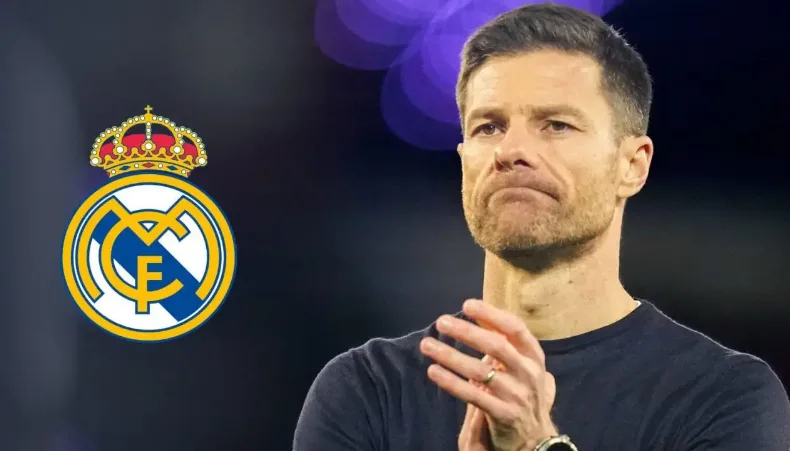
Rabat – After weeks of speculation, Real Madrid has appointed Xabi Alonso as their new head coach. The former Bayer Leverkusen manager, who led the German side to their first-ever Bundesliga title in a successful two-year spell, takes over from the legendary Carlo Ancelotti.
According to Fabrizio Romano, Alonso will sign a three-year contract with Los Blancos starting May 25, and is expected to lead the team to the FIFA Club World Cup in June.
Why did Real Madrid choose him?
Real Madrid was looking for a coach who could bring modern tactical ideas while also understanding the club’s high-pressure environment, winning mentality, and internal expectations.
Xabi Alonso fits that profile. As a former player, he’s familiar with the pressure at Santiago Bernabéu, the importance of competing for every trophy, and emulating the success achieved by the club’s legends.
🚨🤍 Xabi Alonso to Real Madrid, here we go! Story confirmed and deal sealed for Xabi as new manager until 2028.
Staff sorted, contract in place and three year deal for Alonso with Real planning for him to start at FIFA Club World Cup.
Ancelotti farewell soon, then Xabi era. 🎞️ pic.twitter.com/s6jY4DzZmx
— Fabrizio Romano (@FabrizioRomano) May 12, 2025
In recent years, Real Madrid has adopted a strategy of turning to familiar faces, former players or coaches with ties to the club, especially after the failed experiment with Julen Lopetegui.
This approach proved effective with Zinedine Zidane, who delivered three consecutive UEFA Champions League titles. Even after his first departure, the club returned to him, and later to Carlo Ancelotti, both of whom brought stability and silverware. These experiences reinforced the belief that those who know the club from the inside are more likely to succeed.
Xabi Alonso had long been on Real Madrid’s radar, alongside other former players like Santiago Solari and Álvaro Arbeloa.
Xabi Alonso’s style of play
Xabi Alonso’s tactical setup at Bayer Leverkusen is built on fluidity, structure, and attacking efficiency, using a 3-4-2-1 formation that adapts based on the phase of play.
Jonathan Tah, Edmond Tapsoba, and Piero Hincapié form a solid defensive unit, while Granit Xhaka and Robert Andrich provide control as the double pivot. Jeremie Frimpong and Alejandro Grimaldo add width and enable quick transitions.
In midfield, Florian Wirtz and Amine Adli bring creativity as dual number 10s, linking play to the attack. Up front, Victor Boniface or Patrik Schick leads the attack, focusing on scoring and maintaining possession to support the team’s buildup..
Alonso’s system blends possession control with vertical attacking, using structured pressing and fluid buildup to bypass pressure. His tactical flexibility allows seamless shifts between 3-4-2-1, 3-5-2, and 4-2-3-1, ensuring balance and adaptability. This mix of solid defense, midfield control, and attacking fluidity makes Leverkusen one of Europe’s most versatile teams under his leadership.
In their build-up play, Bayer Leverkusen employs an asymmetrical 4-2-3-1 formation to create numerical superiority in deeper areas.
The attack features a single center forward, typically Patrik Schick or Victor Boniface, while Jeremie Frimpong operates as the right winger.
Florian Wirtz and Amine Adli function as dual number tens in the central attacking midfield roles. However, there is no traditional left-winger, as Alejandro Grimaldo positions himself deeper, aligning with the defensive line.
At the back, the defensive core consists of Jonathan Tah and Edmond Tapsoba as the central anchors, while Piero Hincapié shifts into the right-back role. Ahead of them, the double pivot of Granit Xhaka and Robert Andrich provides structure and control. This setup ensures numerical superiority in the build-up phase, allowing Leverkusen to bypass opposition pressing efficiently and progress up the pitch with stability.
After his success at Bayer Leverkusen, where he used a 3-4-2-1 system to control games and break through pressing, Xabi Alonso is bringing a similar formation to Real Madrid. The main difference is that Madrid will play with two forwards instead of one, giving the attack more speed and movement. A playmaker behind them will link midfield to attack, keeping the team balanced while making fast, sharp plays forward.
Real Madrid is set for a significant tactical transformation, shifting from Carlo Ancelotti’s traditional 4-3-3 or 4-4-2 formations to a 3-4-2-1 system.
Alonso’s approach is a purely possession-based football, high pressing, and structured defensive positioning, aiming to unleash the talent of key players like Vinícius Jr. and Kylian Mbappé.
Defensively, Alonso is expected to deploy a three-man backline, ensuring stability while allowing wing-backs to push forward. Antonio Rüdiger, Eder Militão, Raúl Asencio. Additionally, Real Madrid has officially secured the signing of Spanish talent Dean Huijsen, a 20-year-old, reinforcing their defensive options.
Voir cette publication sur Instagram
According to Fabrizio Romano, Real Madrid has been monitoring three defensive prospects, Ibrahima Konaté and William Saliba, as potential additions to strengthen the squad. These defenders will be tasked to stop attacks and stay calm on the ball, helping the team build up play from the back.
Alonso’s midfield structure revolves around a solid double pivot, ensuring control and defensive balance. Aurélien Tchouaméni and Federico Valverde are expected to be the box-to-box pillars, combining defensive strength with smart distribution. Eduardo Camavinga, with his adaptability, adds dynamism, while Arda Guler and Dani Ceballos bring creativity and technical finesse in advanced roles.
If Madrid secures a signing like Enzo Fernández or Angelo Stiller, they would enhance depth and refine Alonso’s tactical approach, reinforcing the team’s ability to dominate possession and dictate the tempo.
🚨 BREAKING: Trent Alexander-Arnold to Real Madrid, here we go! 💣⚪️
Decision to leave Liverpool now confirmed as Trent says goodbye to the club after winning one more PL title.
Documents being prepared for Trent to join Real Madrid on a 5 year contract, verbal agreement done. pic.twitter.com/IkmL1VIhWE
— Fabrizio Romano (@FabrizioRomano) May 5, 2025
Wing-backs will be crucial in Alonso’s setup, stretching the opposition and providing attacking width. Trent Alexander-Arnold on the right would offer elite passing and crossing ability, allowing him to push forward without worrying about defensive gaps, thanks to the three central defenders providing cover.
On the left, Madrid could go for Alejandro Grimaldo, a rumored signing from Leverkusen, or wait for Daniel Carvajal’s return, adjusting positions accordingly.
With Arnold given freedom to create, his long passes and vision would perfectly complement Vinícius Jr. and Mbappé, with their pace to exploit spaces behind defenders. This system would unleash Madrid’s attacking power while maintaining defensive stability,
The attack would center around Vinícius Jr., Mbappé, and Bellingham, combining speed, technical skill, and smart movement. Vinícius and Mbappé would stretch defenses with their pace and clever positioning, while Bellingham links midfield and attack, creating opportunities and controlling the flow of play – but can also crash into the box and pounce on rebounds and second balls.
Alonso’s attacking approach would focus on quick passing, fluid positioning, and structured transitions. If they develop strong chemistry, this front-three could become one of Europe’s most feared trios.
🚨⚪️ Alvaro Carreras wants to join Real Madrid and his plan has not changed.
No bid or club to club talks yet but understand Real will approach Benfica after Taça de Portugal final to reach an agreement.
Carreras has already agreed terms with Real, as @SrNaninho reported. pic.twitter.com/RcOdFraSkO
— Fabrizio Romano (@FabrizioRomano) May 20, 2025
Potential Departures
The first potential departure is the Spanish right-back Lucas Vázquez. A Castilla graduate, he has been a versatile squad player since 2015, winning 16 major trophies. Now 32 years old, his contract is expiring, and Madrid may not renew it as they prepare for the arrival of Trent Alexander-Arnold.
Brazilian forward Rodrygo is reportedly considering a move away. With Xabi Alonso’s expected shift to a two-man attack, he is likely to see limited game time. Manchester City and Arsenal are monitoring him, with reports of a possible €100m offer.
🚨⚪️ Lucas Vázquez and Real Madrid are expected to part ways at the end of the season, with Spanish RB leaving as free agent.
The plan is for Lucas to play at FIFA Club World Cup if nothing happens before; and then try new chapter after Trent’s arrival. pic.twitter.com/dzp6fDdoNC
— Fabrizio Romano (@FabrizioRomano) May 13, 2025
Luka Modrić, the 39-year-old midfield legend and Ballon d’Or winner, joined Real Madrid from Tottenham 13 years ago. Since then, he has won 24 titles, making him the club’s third most decorated player. His contract expires in June 2025, but Madrid is expected to renew it for one last dance with the club at the FIFA Club World Cup.
Brahim Díaz’s future at Real Madrid is uncertain. The 25-year-old Moroccan playmaker has struggled to secure regular minutes amid a crowded attacking lineup. With the rise of stars like Kylian Mbappé, Vinícius, Jude Bellingham, and the emergence of Arda Güler, his role has significantly diminished.
Ferland Mendy’s future at Real Madrid is uncertain too, due to his ongoing injury problems, which have limited his time on the pitch. With the club exploring new left-back options and Alonso’s system placing high importance on wide players, Mendy is expected to leave this summer.
Real Madrid is expected to start afresh, with Xabi Alonso expected to reshuffle the squad, bring in players that fit the mould of the club as well as his game setup.
The only question is: will he rise to the challenge?