
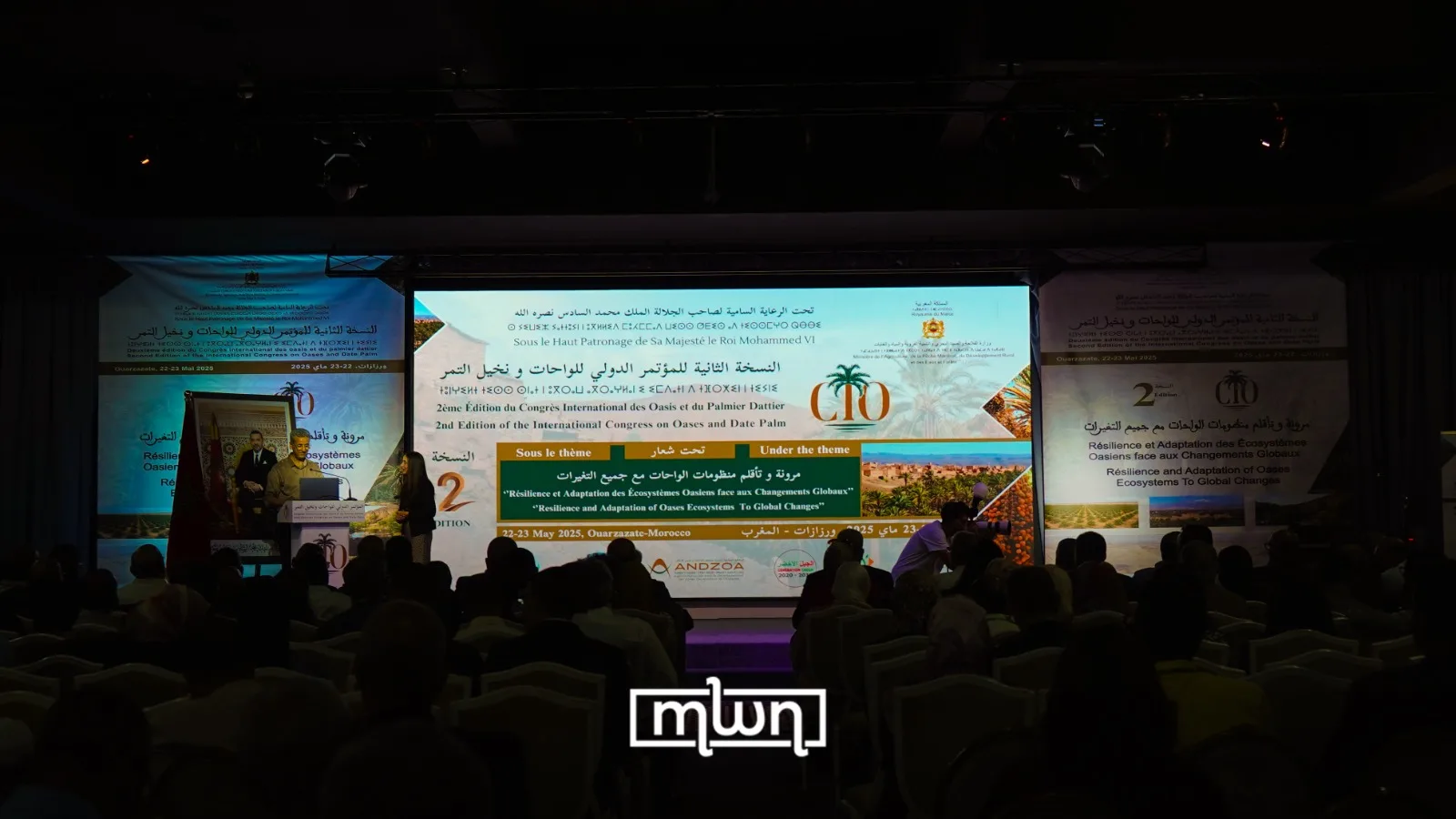
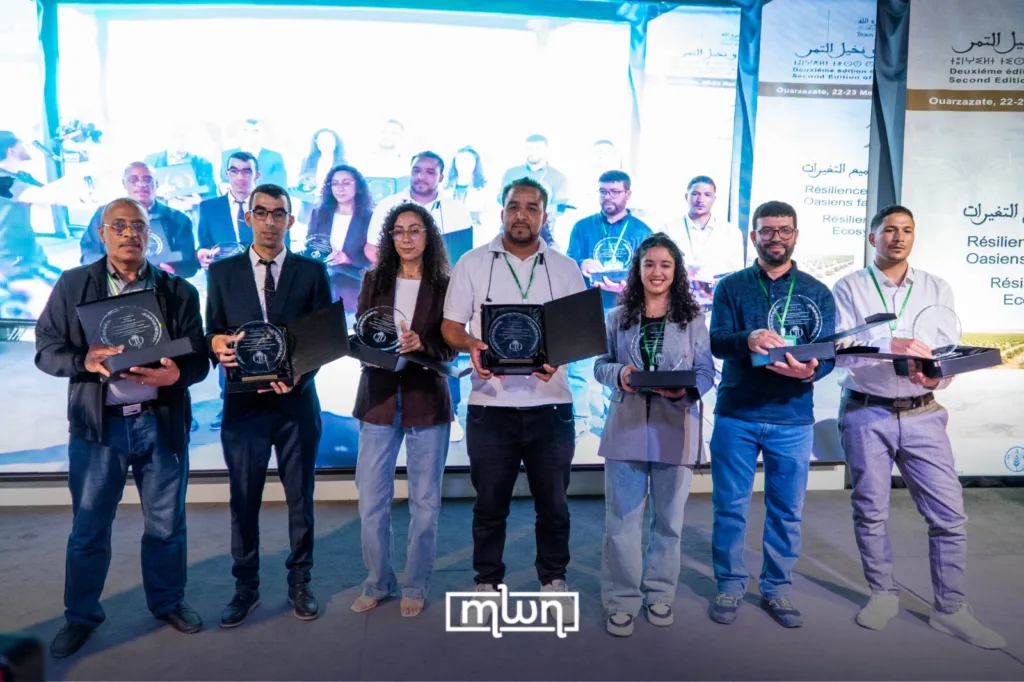
Ouarzazate — The second edition of the International Congress on Oases and Date Palm closed today with prize ceremonies recognizing groundbreaking research and the delivery of comprehensive recommendations for sustainable oasis management.
The two-day conference brought together researchers, practitioners, and policymakers to address the mounting challenges facing desert ecosystems worldwide.
It focused on approaching the impact of the pressing challenges of climate change on oases and date palm, providing a platform for discussions that would lead to reducing its effects.
Conferences, discussions, and panels provided various approaches to addressing the effects of climate change on oases, providing insights to improving the biodiversity of oase.
Oases’ physical environment and water management
The congress stressed the importance of establishing permanent scientific observatories in oasis zones to ensure continuous monitoring of environmental indicators and water sources.
Participants called for developing decision-support modeling tools based on mobilization to anticipate vulnerability scenarios and guide sustainable management of public policies.
Biodiversity Conservation and Resource Valorization
Key recommendations focus on implementing early warning systems for the detection and monitoring of new invasive species, involving all relevant stakeholders in the process.
The congress pointed to utilizing genetic combinations for water management by developing resistant and adapted varieties for new extensions.
Modernizing and standardizing processing procedures for product valorization was identified as essential, alongside establishing Arab or international standards with common sensory evaluation criteria for date quality and varieties.

Socioeconomic Resilience and Territorial Development
The congress called for strengthening product certification as a lever for competitive differentiation to better position products in national and international markets.
Recommendations include deploying segmented marketing strategies according to consumer products and improving visibility of Moroccan varieties in mass distribution through storytelling and attractive design.
Adopting eco-design approaches and promoting innovative concepts for promotional regeneration of the oasis image emerged as priorities. The congress called for making the oasis cultural heritage a pillar of climate change adaptation policies and strengthening the territorial governance of oases.
The congress underscored that while facing unprecedented pressures from climate change and development pressures, oasis ecosystems also represent laboratories for innovation in sustainable desert living. The research presentations demonstrated how modern technology can enhance rather than replace traditional desert survival strategies.

The prize winners and other participants returned to their respective regions with new tools and collaborative relationships aimed at implementing the congress recommendations. Follow-up initiatives are already being planned to monitor progress and facilitate ongoing knowledge exchange.
The next edition of the International Congress on Oases and Date Palm is expected to build on these foundations, particularly on scaling successful interventions and developing new partnerships between research institutions, local communities, and development organizations.
As climate change continues to expand in arid regions globally, the innovations and strategies developed for oasis ecosystems are likely to have implications far beyond traditional desert boundaries, making the congress’s work increasingly relevant for global sustainability efforts.