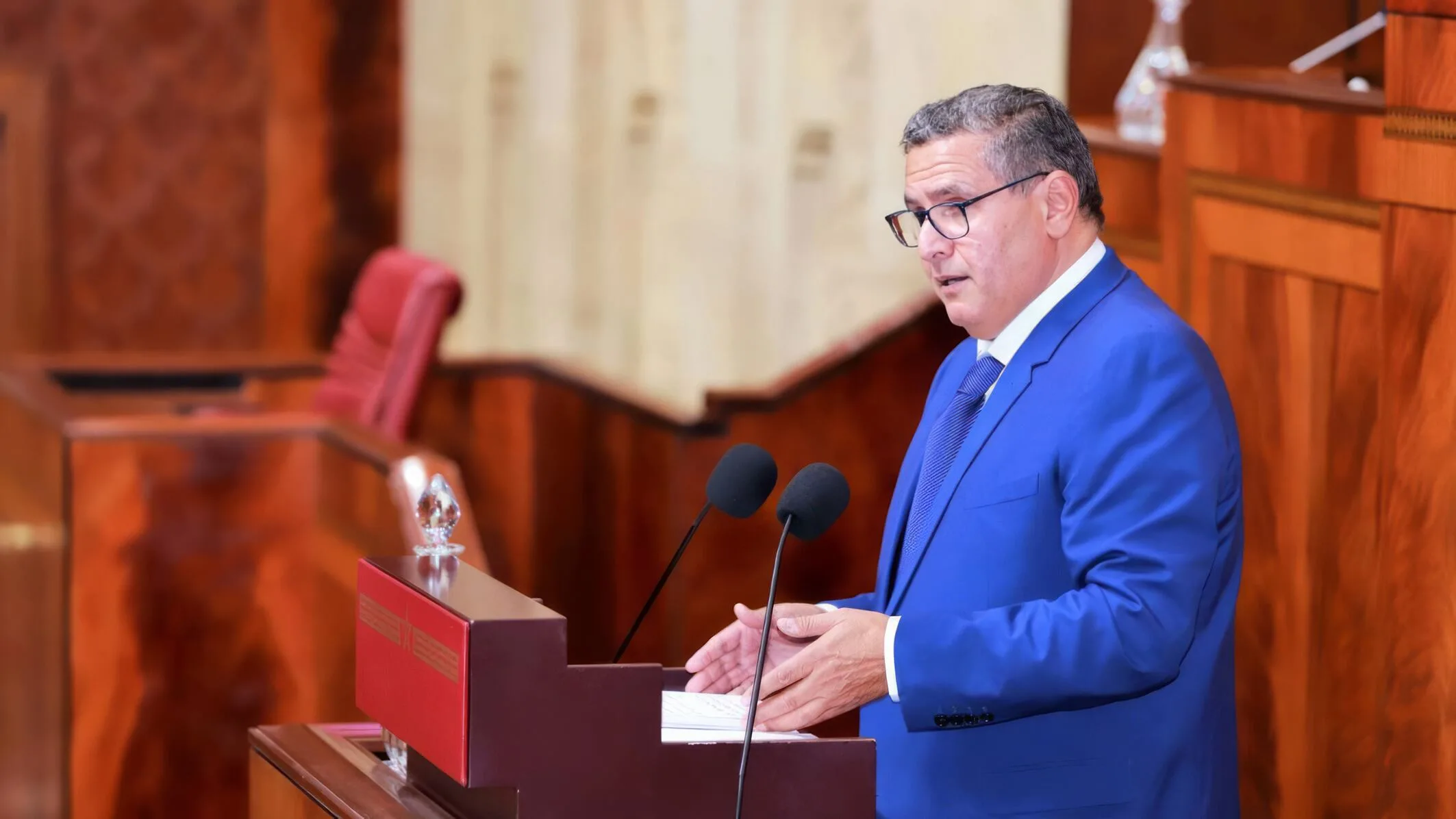
Doha – Morocco has allocated MAD 26.5 billion ($2.65 billion) for the Direct Social Aid program in 2025. The government aims to increase this budget to MAD 29 billion ($2.9 billion) by 2026. Head of Government Aziz Akhannouch announced these figures Tuesday at the Chamber of Counselors.
Morocco now ranks second in Africa for social spending, dedicating about 2% of its GDP to finance this program. The initiative targets 4 million families, representing approximately 60% of households not covered by family allowance schemes.
The program provides monthly aid ranging from MAD 500 ($50) to MAD 1,200 ($120) based on family composition and circumstances. Since launching the digital platform “www.asd.ma” in December 2023, around 4 million households have benefited from the program.
These 4 million households represent nearly 12 million beneficiaries. Of these families, 3.2 million also receive Mandatory Health Insurance (AMO) services. More than 2.4 million households include children, while about 1.5 million have no children.
Social transformation takes major leap
Over 5.5 million children now receive direct aid through the program. Additionally, more than one million people aged over 60 receive monthly social assistance in the form of lump-sum subsidies. These subsidies aim to preserve the dignity of the elderly, strengthen their purchasing power, and reduce risks associated with aging.
The prime minister noted that the government allocated MAD 25 billion ($2.5 billion) to the program for 2024. The government has also strengthened efforts against school dropout rates. About 1.8 million families with 3.1 million students receive exceptional aid.
This support amounts to MAD 200 ($20) for primary and middle school, and MAD 300 ($30) for high school, limited to six children per family.
Akhannouch revealed that 61% of beneficiaries come from rural areas. This approach aligns with the government’s commitment to promoting equal opportunities, especially for rural girls. Currently, 75% of children aged 6 to 20 are covered by school aid.
The government has also implemented a birth premium program. Families receive MAD 2,000 ($200) for the first child and MAD 1,000 ($100) for the second.
A crucial extension of social coverage
By the end of January, 42,800 families had benefited from this initiative. The program aims to improve maternal and child health, strengthen vaccination, and support healthy childhood.
Support for widows has seen unprecedented progress. More than 420,000 widows currently benefit from aid, compared to only 75,000 at the end of 2021.
Among them, 330,000 have no children, marking a major extension of social coverage. Nearly 87,000 widows care for 97,000 orphaned children, with support expected to reach MAD 400 ($40) per schooled child by 2026.
The Mandatory Health Insurance now covers all Moroccan families. The government has integrated more than 4 million vulnerable households into a non-contributory system. These families receive free healthcare and hospitalization in public health facilities.
The state ensures the sustainability of this system by covering these families’ contributions, amounting to about MAD 9.5 billion ($950 million) annually.
Since the launch of this system until March, more than 14 million medical files have been registered with the CNSS agency. These include over 300,000 related to chronic or costly diseases. Nearly 12 million cases have been processed, with a total amount exceeding MAD 17 billion ($1.7 billion).
Health insurance in Morocco has made decisive progress with the massive integration of non-salaried and independent workers. Through the adoption of 28 implementing decrees, nearly 3.5 million people now benefit from medical coverage adapted to their income.
By April, more than 400 million cases had been filed, with an average of 2,255 per day. Some 360,000 cases have already been processed, for an amount of nearly MAD 1 billion ($100 million).
Read also: Education Reform: Akhannouch Reviews Achievements, Charts Path Forward