
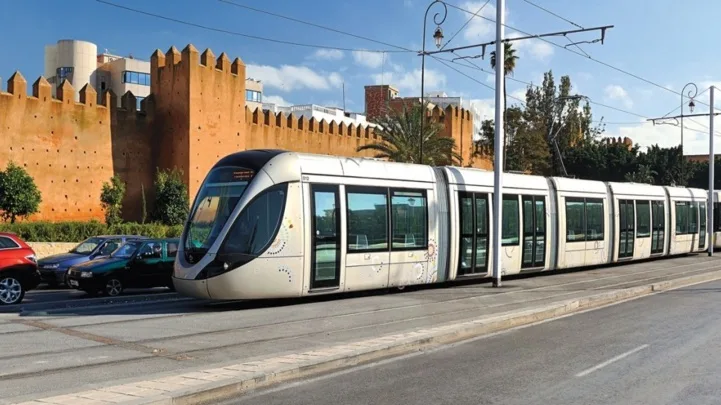
Rabat – The Rabat-Sale tram operator, Transdev, has announced a new fare schedule set to take effect from July 1, introducing increases in ticket prices and subscription fees across the board.
The price of a single journey ticket will rise from MAD 6 to 7 (approximately $0.59 to $0.69). This ticket allows passengers to transfer to a different tram line within 60 minutes. The electronic version of the ticket will also be adjusted to MAD 7 ($0.69).
A new “ticket + parking” option will be offered at MAD 14 (approximately $1.38), covering round trips between Arfan City station in Rabat and the Karima neighborhood in Sale.
The “Trambus” ticket, which enables residents of Temara to complete their journey by public bus number 30 immediately after the tram ride, will increase from MAD 8 to 10 (about $0.79 to $0.99).
Subscription fees will also be raised. The monthly “Student Comfort” pass for students under 26 attending public and private institutions will increase by MAD 10, from MAD 150 to 160 (about $14.82 to $15.81).
Other users, including employees, will see their “Comfort” subscription rise from MAD 250 to 270 monthly ($24.70 to $26.70). Quarterly and semi-annual subscriptions will be set at MAD 750 ($74.10) and MAD 1,460 ($144.25) respectively, while the annual subscription will cost MAD 2,700 (~$266.75).
Despite the fare increases, the fines for violations remain the same: MAD 50 ($4.94) for first-degree offenses such as traveling without a ticket or using an invalid subscription, and MAD 150 ($14.82) for second-degree violations including obstructing tram doors.
The Rabat-Sale tram system has been operating since 2011, running two lines that connect key districts in both cities. Line 1 links Hay Karima in Sale to Irfane in Rabat, while Line 2 connects Moulay Abdellah Hospital in Sale to Yacoub Mansour in Rabat.
The tramway offers an affordable, efficient, and environmentally friendly alternative to private vehicles, helping to reduce traffic congestion and pollution in the rapidly growing urban areas. For thousands of daily commuters — including students, workers, and families— the tramway is essential for accessing workplaces, schools, and vital services making it a cornerstone of regional mobility and economic activity.