
Rabat – Liberia and Ecuador have both reaffirmed their strong support for Morocco’s sovereignty over its southern provinces in Western Sahara during official visits to Rabat on Friday.
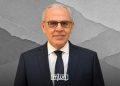
Liberia’s Foreign Minister, Sara Beysolow Nyanti, said her country fully supports Morocco’s territorial integrity, including the Sahara region. Speaking at a joint press conference following her meeting with Moroccan Foreign Minister Nasser Bourita, she described Morocco’s autonomy plan as the “only serious, credible, and realistic solution” to the conflict.
Nyanti also said that Liberia, which will become a non-permanent member of the United Nations Security Council in January 2026, will continue backing Morocco’s position during its term. She commended the growing international support for the autonomy plan and the momentum led by King Mohammed VI to resolve the Western Sahara dispute peacefully.

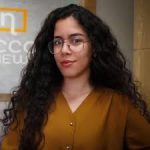
In a separate meeting the same day, Ecuador’s Foreign Minister, Gabriela Sommerfeld, also voiced her country’s support for Morocco’s autonomy plan, calling it “the basis for resolving the regional dispute.” Speaking after talks with Bourita, she said that Ecuador supports a political, realistic, and lasting solution to the conflict, within the framework of the United Nations.
Ecuador withdrew its recognition of the self-styled “Sahrawi Republic” on October 22, 2024, and ended all contacts with the separatist group.
Stronger bilateral ties
During the meetings, both Liberia and Ecuador acknowledged the need to strengthen bilateral ties with Morocco and work together on global challenges. Morocco and Ecuador, in particular, expressed their commitment to improving cooperation in many areas, including climate change, gender equality, human rights, food security, health, and fighting corruption.
They also spoke of the importance of South-South and South-North cooperation through Atlantic partnerships and shared goals for development, security, and solidarity.
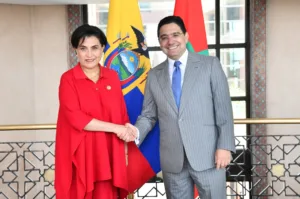
Both Bourita and Ecuador’s foreign minister celebrated efforts made under international migration frameworks like the Marrakech Pact, the Rabat Process, and the Los Angeles Declaration. They agreed to promote safe and orderly movement of people.
Both countries outlined the importance of achieving the Sustainable Development Goals (SDGs) in an inclusive and integrated way, particularly by fighting poverty, managing water resources, and protecting the environment.
To boost diplomatic cooperation, Morocco and Ecuador signed two agreements. The first is a memorandum of understanding between Morocco’s diplomatic training institute and Ecuador’s diplomatic academy. The second agreement establishes a formal mechanism for political consultations between the two countries.
The ministers also expressed a desire to strengthen economic cooperation by encouraging investment, supporting private sector partnerships, and exploring opportunities to diversify trade.