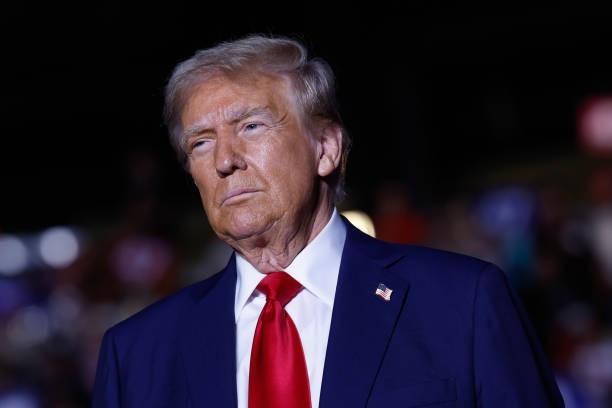
US President Donald Trump announced yesterday steep new tariffs on imports from over 20 countries, targeting long-standing trade partners and smaller economies with what he calls a “national security correction.”
The most severe blow landed on Brazil, which now faces a 50% tariff on its goods. In a letter posted on his Truth Social platform, Trump accused Brazil’s leadership of undermining democracy and free speech, referring to the prosecution of former President Jair Bolsonaro, a close ally.
Brazilian President Luiz Inácio Lula da Silva pushed back, warning that any unilateral measure would be met with a response “in accordance with Brazilian law.”
The letters, which assign individual rates ranging from 20 to 50%, went out to countries including Algeria, Sri Lanka, Iraq, Brunei, Moldova, and the Philippines.
None of these countries represent major industrial threats to the US, and their combined trade imbalance with Washington amounts to a negligible figure in the context of America’s $30 trillion economy.
Countries reaction
While Trump’s message drew alarm, not every country answered with confrontation. In Tokyo, Japan’s chief trade negotiator, Ryosei Akazawa, said talks with the US would continue.
He underlined Japan’s interest in safeguarding its automotive exports, which alone account for about 1 percent of the country’s GDP. Akazawa, however, ruled out any compromise on agriculture, a politically sensitive issue in an election year.
South Korea struck a similar tone, expressing interest in resolving the trade deficit that the US cited. Seoul’s Ministry of Trade described the moment as a chance to rework domestic systems and reach common ground with Washington.
In contrast, South African President Cyril Ramaphosa’s office issued a sharp rebuke. His statement dismissed the 30% tariff as unfounded, claiming it does not reflect trade realities.
According to Pretoria, most US goods enter South Africa without any tariff, and the country’s average import duty stands at just over 7%. South Africa signaled it would pursue diplomatic channels to seek a more balanced deal.
The Philippines, Brunei, and other Southeast Asian countries named in Trump’s letters have not responded publicly. While their trade volumes with the US remain modest, officials in Manila and Bandar Seri Begawan are reportedly evaluating whether to quietly engage with US envoys or coordinate with regional partners.
Vietnam, facing earlier threats of a 46% tariff, recently signed a deal that reduces its rate to 20%, in exchange for opening its domestic market.
Trump’s new tariff push also carries geopolitical undertones. Days before his letter to Brazil, he warned of additional tariffs for any country that aligns itself with BRICS, the economic bloc that includes Brazil, Russia, India, China, and South Africa, and recently expanded to include Egypt, Iran, Indonesia, and the UAE. According to Trump, countries supporting what he called “anti-American policies” would face an additional 10% tariff.
Meanwhile, of the 90 countries initially given a three-month negotiation window, only two, the UK and Vietnam, have reached a deal so far. Trump has expressed doubt about future agreements, saying Japan and others “have gotten too comfortable ripping us off.”
His letters to world leaders end with the same sentence: “These Tariffs may be modified, upward or downward, depending on our relationship with your Country.” It is a statement open to interpretation – part threat, part invitation.
For now, world capitals are left to interpret Trump’s words and his intent. Some may negotiate. Others may retaliate. But few, if any, are treating this tariff campaign as business as usual.