
 Join on WhatsApp
 Join on Telegram
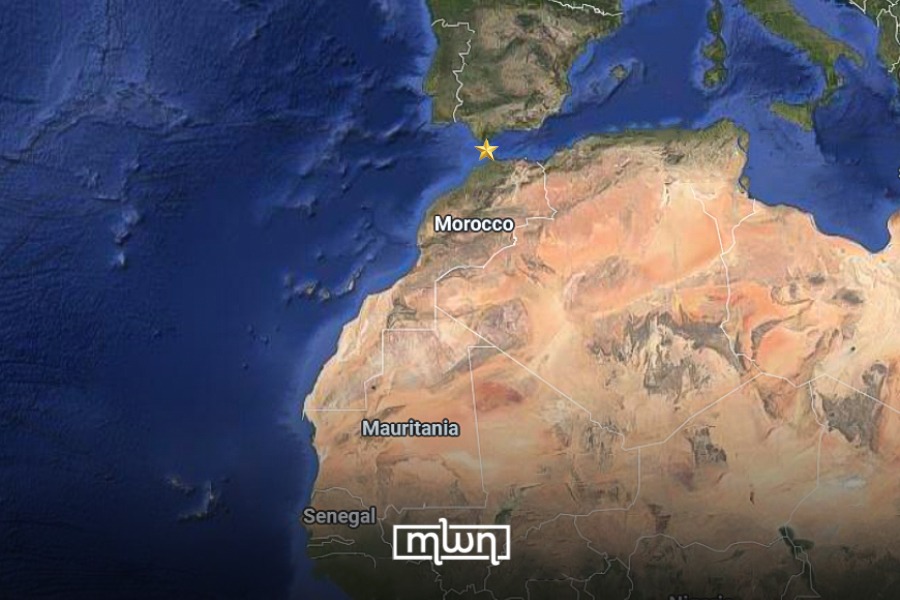
For decades, the Strait of Gibraltar marked the boundary between a developed North and a dependent South. Today, it has become something else entirely, a strategic fault line between Europe turning inward and an emerging African front, anchored by Rabat, Dakar, Nouakchott, among others, that refuses subordination and now intends to set its own terms.
The End of a One-Way Orientation
For much of the modern era, the western Mediterranean revolved around a clear strategic gravity, African states along the Atlantic coast looked to Europe as a promise. The Strait of Gibraltar’s mere 14 kilometers of water concentrated that silent tension, a passage to hope for some, a defensive barrier for others.
That asymmetry has reversed. What was once a border between a decision-making center and an executing periphery is now a line of tension between two poles of assertion. No longer do Paris, Rome, or Brussels dictate the terms unilaterally.
Rabat, Dakar, Nouakchott, and, to a lesser degree, Cairo now impose their own frameworks.
Europe: A Disoriented Partner, a Diminished Player
This loss of strategic clarity has been accelerated by successive crises, from the Eurozone’s financial turmoil to the migration waves of the past decade, the Brexit rupture, and the war in Ukraine. Each has chipped away at Europe’s confidence, deepening its instinct to protect rather than project, to manage rather than lead.
Europe has retreated into a defensive crouch, most recently illustrated by the European Commission’s abrupt reversal in the face of a resolute Donald Trump on tariffs. Shaken by internal crises, undermined by the rise of extreme parties, and constrained by energy dependencies, the EU hides behind its borders. It now views foreign relations less as a tool of influence than as a risk to be contained.
In doing so, it struggles to inspire. Meanwhile, emerging African powers are pragmatically sketching the outlines of an alternative order, one more fluid, resilient, and free to maneuver.
Morocco: From an Aspirant to Architect
Consider Morocco. The days when Rabat dreamed, sometimes naively, of joining the European Union are gone, buried alongside the illusions of the Barcelona Process, the ambiguities of the Union for the Mediterranean, and the arrogance of an unbalanced partnership.
Today, Rabat is not seeking to join a “center,” it is redrawing the periphery. Over the past two decades, Morocco has built a deliberate architecture of influence, forward positions in sub-Saharan Africa, footholds in major logistics corridors, an economic diplomacy rooted in reality, and an increasing ability to play on multiple boards.
The expansion of ports like Tangier Med, Nador West Med, and soon Dakhla Atlantic is more than logistics. Their very names signal sovereign commercial intent and a strategic nod to a regionalization that reaches beyond Europe to American, Emirati, Chinese, and African horizons.
Even the now-abandoned Morocco–UK power cable project sent a political message, Morocco can conceive and launch a major intercontinental initiative without passing through France or Spain, and even bypassing the European mainland to connect directly to post-BrexitBritain. The signal was unmistakable, Morocco will project itself without asking permission, and respect will be the condition for partnership.
Senegal: Negotiating, Not Submitting
Morocco is no longer alone. Since Bassirou Diomaye Faye came to power, Senegal has shifted its stance. The era of automatic consensus with Paris is over. Dakar aims to remain a partner, but a free one. The new president is not calling for rupture but for recalibration. Old ties are not to be erased but renegotiated, firmly, and without turning back.
New hydrocarbon resources have undoubtedly strengthened Dakar’s leverage, but it would be naive to believe the shift in narrative stems solely from the discovery of oil and gas. The change reflects a deeper, generational evolution, a slow-cooked transformation, much like a well-prepared Tabaski feast, whose roots go back decades.
Still, the recent economic reshaping of Senegal has accelerated this trajectory. With the boost from gas, mining, and port projects, Senegal now asserts its rights, demands contract reviews, and ends the blank-check era for multinationals. It seeks not merely to “benefit” from the international order but to help shape it, and to choose its allies freely, whether in Washington, Beijing, Rabat, or Ankara. West Africa, the message goes, is no longer a receptacle, it is becoming a pole.
Mauritania: The Sahel’s Gatekeeper
Then there is Mauritania, more discreet, but no less pivotal. Long seen as a flat transit country with little weight, Nouakchott has become the last viable strategic entry to the Sahel. To the east, Libya is fragmented and militia-controlled. To the west, Algeria has closed its airspace to French operations and severed links with southern borders, choosing symbolic confrontation over tactical partnership. And in the center, Mali, Niger, and Burkina Faso have broken with the West.
Today, no one enters the Sahel without the consent of Nouakchott, Rabat, and a few West African ports still supplying the AES bloc, chief among them Dakar. Together, they filter, coordinate, or block. Mauritania’s position, won rather than granted, gives it silent but formidable leverage. It can choose cooperation or raise the stakes, arbitrate between Gulf states, Western powers, and rising Asian ambitions. And crucially, it no longer has to ask, it is others who must come to it.
A Fault Line, Not a Bridge
The key takeaway in this analysis is that Gibraltar is no longer just an active tectonic fault, it is a sharper geopolitical and ideological divide. What was once a passage is now a strategic demarcation, on one side, a Europe too weary to persuade, on the other, an Africa advancing without asking.
This is not a simple reversal of power, as the northern side of the strait remains too strong and influential. What is happening instead is a recalibration of posture and ambition. The South is no longer trying to join the North’s order, it is building its own, with its own values and objectives. In this new geometry, Gibraltar is no longer a bridge, but a mirror.