 Join on WhatsApp
 Join on Telegram
Marrakech – The United Arab Emirates has secured its position as the leading foreign investor in Morocco for 2024, contributing MAD 3.1 billion ($310 million) in foreign direct investment (FDI), according to a recent report by Morocco’s Office des Changes.
This investment flow represents 18.9% of Morocco’s total net FDI and marks a major 57.8% increase from the UAE’s 2023 investment level of MAD 1.9 billion ($190 million). The growth in Emirati investment has positioned the Gulf country ahead of traditional investors like Germany and China.
Germany secured the second position with MAD 2.1 billion ($210 million) in investment flows, up from MAD 1.4 billion ($140 million) in the previous year. China followed closely in third place with investments totaling MAD 2.05 billion ($205 million).
Morocco’s overall FDI performance strengthened considerably in 2024, with total net inflows reaching MAD 16.3 billion ($1.63 billion), representing a 52.5% increase from the previous year. This improvement stems from a 10.2% rise in FDI receipts to MAD 43.8 billion ($4.38 billion) and a 5.3% decline in related expenses to MAD 27.5 billion ($2.75 billion).
The positive trend in Morocco’s FDI was driven primarily by a dramatic recovery in debt instruments, which quadrupled to MAD 7.2 billion ($720 million), alongside a 14.9% increase in equity securities to MAD 7 billion ($700 million). However, reinvested earnings decreased slightly to MAD 2.1 billion ($210 million).
In terms of sectoral distribution, real estate activities claimed the largest share of FDI at 45.4%, narrowly surpassing manufacturing industries which accounted for 45.2%. Together, these two sectors captured over 90% of foreign investment in Morocco during 2024.
The surge in UAE investment builds on the momentum of a historic MAD 130 billion ($14 billion) megadeal signed between Morocco and the UAE in May 2025.
This landmark agreement – the largest private investment in Morocco’s history – focuses on water security and energy infrastructure development through a consortium including the Mohammed VI Investment Fund, TAQA Morocco, and Nareva.
This consortium is developing critical infrastructure projects, including a 1,400-kilometer high-voltage transmission line connecting Western Sahara to Casablanca and four seawater desalination facilities with a combined annual production capacity of 900 million cubic meters.
Read also: Morocco’s Foreign Direct Investment Reaches $1.64 Billion: 55% Growth in 2024
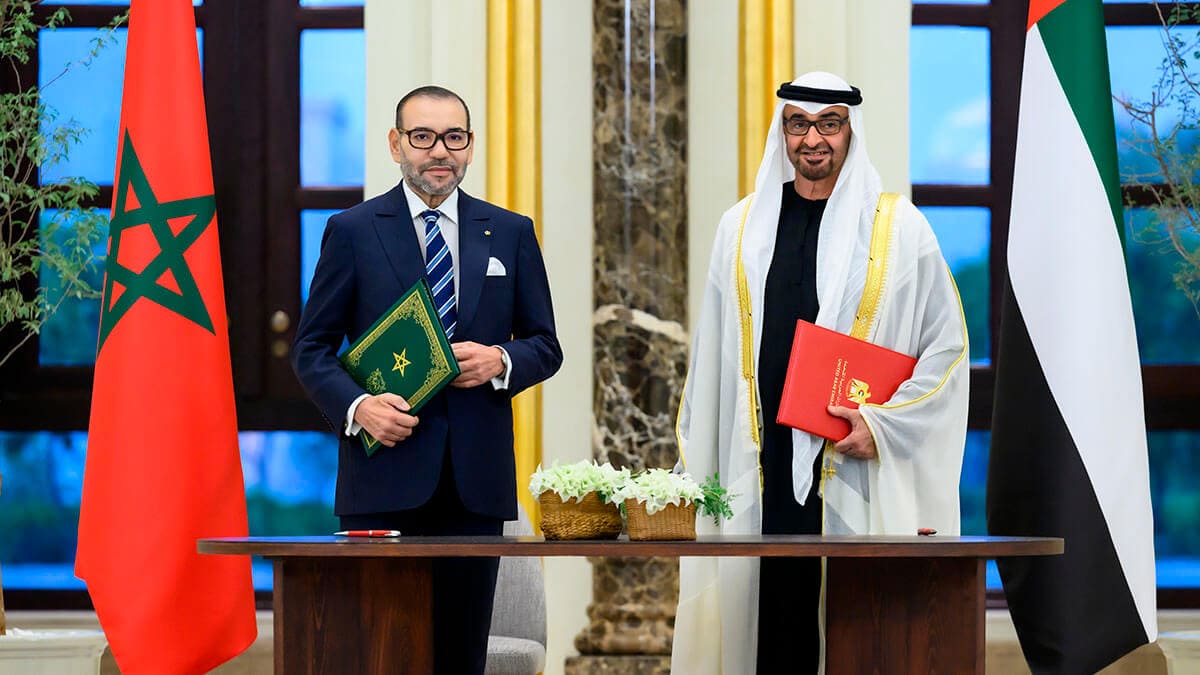
The rising prominence of Emirati investment in Morocco also reflects strengthening diplomatic ties following King Mohammed VI’s official visit to Abu Dhabi in December 2023 and a subsequent private visit in early 2025.
These diplomatic engagements established what officials have termed a “renewed partnership” between the two countries, targeting collaboration in strategic sectors.
Meanwhile, Morocco’s direct investments abroad (IDME) fell considerably, decreasing from MAD 12.4 billion ($1.24 billion) in 2023 to MAD 6.9 billion ($690 million) in 2024 – a 44.6% reduction.
This decline, coupled with increased inward investment, shifted Morocco’s net investment operations balance from a surplus of MAD 1.8 billion ($180 million) in 2023 to a deficit of MAD 9.4 billion ($940 million) in 2024.
The changing investment landscape demonstrates Morocco’s success in diversifying its economic partnerships beyond traditional European investors, particularly with Gulf and Asian countries, as it pursues ambitious development goals in renewable energy and water security.