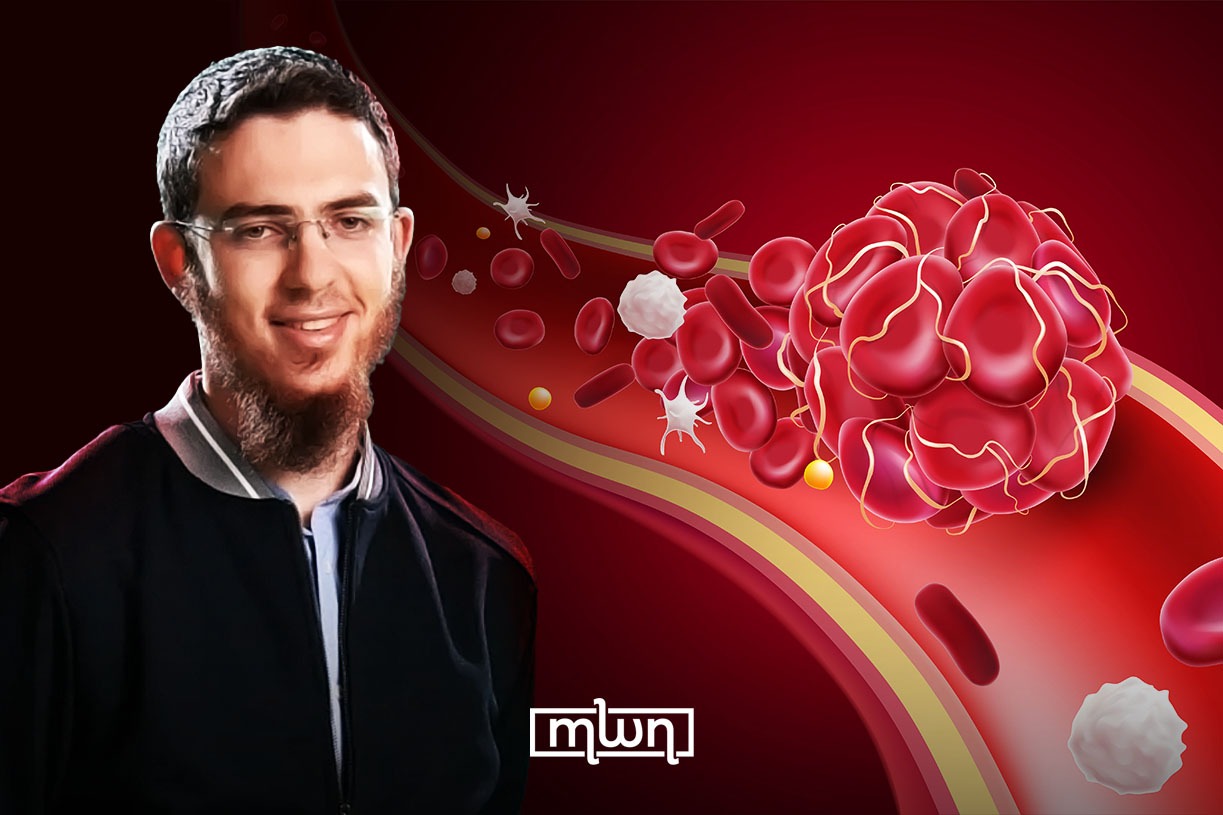
Marrakech – Youssef El Azouzi, the name dominating headlines in recent weeks, has emerged as Morocco’s most talked-about physician-inventor – first crowned the Arab world’s top innovator for a heart-failure stent, and now drawing global attention with a pioneering device that filters blood from inside vessels.
The breakthrough, which many observers say could redefine how ICUs fight infection and how surgeons protect transplanted organs, holds particular promise for transplant patients and those with immune deficiencies.
In an extensive interview with Morocco World News (MWN), El Azouzi detailed the science behind his innovation, the challenges he overcame, and his vision for transforming critical care medicine. He spoke candidly about his journey from student-innovator to startup CEO, revealing how early lab results are already pointing to a step-change in patient outcomes and what lies ahead on the road from prototype to bedside.
From medical studies to groundbreaking innovation
Youssef El Azouzi, 34, is a Moroccan physician-inventor who studied general medicine with a passion for innovative research. “I always loved doing research that involved something that hasn’t been done before,” El Azouzi told MWN. “I always wanted, at some point in the future, to discover or to develop something novel and innovative, something that would be groundbreaking and would change the paradigm of thinking in medicine.”
His inventive spirit emerged long before his medical career began. “Even before I entered medical studies, I always had a desire and was inspired to develop groundbreaking solutions. I remember before my medical studies, I was really interested in combining hydropower with geothermal into one renewable energy loop system,” he recalled.
During medical school, his focus crystallized around cardiovascular medicine. “When I learned about heart failure and how the disease process happens in medical school, and because it was strongly linked to kidney function, I knew that the key to resolving heart failure was actually at the level of the kidneys,” El Azouzi explained.
This medical knowledge merged with his childhood interests in unexpected ways. “Ever since my childhood, I loved looking at and evaluating maps, whether world maps or national maps. I was very obsessed with anything that had to do with transportation, whether a road network or water network of pipes – that just really intrigued me,” he shared. These elements converged to inspire his innovative approach to blood circulation and filtration.
Born in 1991 in Rabat, El Azouzi has an international background. His father, originally from Ksar El Kebir, studied neurosurgery at Harvard University, where he met El Azouzi’s American mother before they returned to Morocco to start their family.
At 16, El Azouzi attended an international boarding school in Oxford, England, before pursuing neuroscience at an American university. Eventually, encouraged by his father and driven by his desire to help patients, he focused on medicine while maintaining his interest in research.
After completing his medical studies in Turkiye in 2017, El Azouzi faced a critical decision: specialize in a specific field or practice general medicine. He chose the latter, despite his father’s encouragement to specialize, because he wanted to impact multiple medical disciplines through invention rather than limit himself to one area.
The journey to entrepreneurship
Around the time of his graduation in 2017, El Azouzi conceived the idea for Aorto Medical. Working with engineers, he developed an innovative device for treating heart failure. After creating a prototype and running successful simulations, he traveled to the United States seeking investors.
Between 2017 and 2018, the US-China trade war created a cautious investment climate, leading many potential investors to decline funding his project. Following these unsuccessful fundraising attempts, El Azouzi decided to present his device to the Stars of Science program, a major innovation competition organized by the Qatar Foundation.
In 2019, he became the first Moroccan to win the competition (Season 11), where his Flow Modulator Stent for heart-failure patients earned top honors among nearly 2,000 applications.
Using the prize money of approximately $300,000, he officially founded Aorto Medical in Tangier that same year to develop affordable, minimally invasive cardiovascular technologies. The company then launched preclinical animal trials in the United States and France, along with device attachment tests.
Currently, El Azouzi serves as founder and CEO of Aorto Medical, where he has raised over $1.1 million and advanced multiple patents through the World Intellectual Property Organization (WIPO).
“I also always wanted to create a business where I was very successful,” El Azouzi noted. “Of course, the more you are able to dominate a particular market, especially if you have something that you can file a patent in, then the more likely that outcome would occur, where I would essentially control a certain segment of the market, in this case, related to patients who have heart failure.”
The blood-filtering device: A first-of-its-kind innovation
El Azouzi’s latest breakthrough is a first-of-its-kind internal blood-filtering device designed to steer inflammatory and immune cells from inside blood vessels themselves – potentially transforming treatment for infections and transplant rejection. He unveiled the invention in late August on his social media accounts, releasing a video that documented his journey to America to formally register the device.
“Essentially how the device works is, it diverts the path of white blood cells, so that they don’t go to a specific part of the body that is suffering from chronic inflammation,” El Azouzi explained. “But it can also do the opposite if the doctor and the patient want. The device can be configured such that it increases the amount of white blood cells going in a certain direction towards a certain area of the body.”
This dual functionality offers unprecedented control over immune response. The device successfully underwent testing on a 75-kg pig in a US laboratory, demonstrating its ability to direct immune cells from one leg to another without adverse effects. According to El Azouzi, this successful test proves that the device can control cell direction from within the vessel itself.
The project cost approximately $250,000 as of March, not including time and effort invested, with funding coming entirely from private benefactors.
El Azouzi uses vivid analogies to explain his innovation: “It’s useful to see or look at the vascular system in the body as a kind of road network, and we can imagine the white blood cells as cars,” he illustrated. “The objective here is to prevent those cars from taking the wrong turn where the white blood cell can attack a sensitive part of the body, for example, a new organ that has been transplanted.”
He then expanded on how the device can be used for fighting chronic infections using a military comparison: “Perhaps a good analogy would be that you have a front line in a war against an enemy, and the front line is very long, let’s say a thousand kilometers, and you have a limited number of troops, or white blood cells in this case,” he elaborated. “Let’s say you have 10,000 troops to defend the front line that is a thousand kilometers long. So, that means that for every kilometer of the front line, you would have 10 troops defending, and therefore the risk of infiltration would be extremely high.”
His innovation solves this strategic problem: “An effective way of defending the territory would be to concentrate the troops at the highest risk areas, where there is a higher risk of invasion or infiltration by the enemy.”
“Essentially this device gives you this optionality, that gives you the ability to maneuver or redeploy the troops so that they are concentrated in the highest risk areas where there is a high level of infection and where the immune system needs to resist and to defend the body from sepsis,” he articulated with precision, demonstrating how the device can strategically redirect the body’s immune resources to combat life-threatening infections.
Advantages over existing solutions
El Azouzi’s device offers significant advantages when treating the looming rise of antibiotic-resistant bacteria worldwide. “It’s a kind of immunotherapy,” he noted. “It optimizes the immune system, and by default, the immune system resists against all types of pathogens or all types of infections.”
This contrasts sharply with current options. “Current solutions for preventing the rejection of newly transplanted organs involves immunosuppressive medication that is very toxic,” he explained. “It reduces the immune system all over the body. It can cause bone density loss, causes high blood pressure, can cause diabetes, can cause depression and other toxic effects.”
He vividly characterized these medications: “It’s useful to look at immunosuppressive medications as a kind of nuclear bomb where it’s essentially carpet bombing the entire immune system all over the body. It increases the risk of infection and susceptibility of the patient to hostile pathogens.”
Alternative approaches have significant limitations too. “Another solution is CRISPR gene editing where, for example, if we transplant an animal organ into the patient, we delete some genes that cause inflammation. But this would only be effective if you’re dealing with animal-to-human organ transplantation, which is really still in its infancy,” El Azouzi pointed out.
“For human-to-human transplantation, CRISPR gene editing would not be effective because you’re not going to take the donor patient and change his genes. You can do that to an animal. You can’t do that to a human,” he added.
Regarding artificial kidneys, he noted their limitations: “The problem is that the flow rates inside of these artificial kidneys is very low. It may improve the status of the disease from level 5 chronic kidney disease to level 4 chronic kidney disease. But they cannot reverse the stage of chronic kidney disease back to level 2 or level 1.”
For standard kidney transplants, the outlook is concerning: “Within 10 years of getting a kidney transplant from another person, there is a 50% chance of the kidney failing within the first 10 years. It’s kind of like flipping a coin heads or tails,” he said. “In order to prevent this rejection from happening in the first place, or even if the patient has already had the transplantation and is five years down the road, then the device can be retrofitted into the patient and further damage can be stopped.”
Dialysis, another current treatment option, presents its own challenges: “Dialysis requires the patient to frequently visit the hospital and it’s very expensive. It’s about $40,000 per year. It’s very much a drain on the health funds of the government, as well as the patients themselves, because to a certain extent they have to pay out of pocket.”
Intellectual property and development progress
El Azouzi has secured strong intellectual property protection for his innovation. “We have filed two patents on this particular device, and so we’re in a favorable intellectual property position right now,” he confirmed. “We filed to a number of regions, including China, Japan, the US, and Europe.”
These patents have received positive validation from international authorities. “We have also received a positive WIPO search report,” he added. “According to the three criteria of the WIPO, which are number one, novelty, number two, inventive step, number three, industrial applicability, we have all of those checked off positively.”
Overcoming challenges, fighting for miracles
The development process wasn’t without significant hurdles. One of the major obstacles El Azouzi faced was technical. After working on an initial idea from 2022 to 2024, the project failed to demonstrate effective function and durability inside the body.
“After two years of work, we had essentially failed at demonstrating that the device would function effectively. And we had failed to demonstrate that the device would last inside of the body,” El Azouzi revealed. “We had to go back to the drawing board and start from scratch.”
This created an existential crisis for the project. “I think that was a do or die moment in the course of this particular project,” he reflected. “There are some times in the life of a project where there’s an existential threat. There’s a lot of doubt at that point, you just feel that you have to be ready for any kind of outcome, even an outcome of failure after having spent a quarter of a million dollars on the project and having nothing to show for it in front of investors.”
The stakes were enormous. “It could affect your credibility in raising further money later on. Because investors are very emotional sometimes. And if they just see one small failure, then they can completely turn away,” he explained. “The funds would dry up and your credibility would be lost. It would be essentially downhill from there.”
The team had to find a solution that wasn’t radically different from the initial design while working with limited funds and time constraints. El Azouzi describes it as “almost a miracle” that they were able to make a U-turn and achieve success.
El Azouzi’s approach to these challenges was philosophical: “You just have to have a cool head and accept the worst outcome. Just accept that that could happen and you have to be okay with it,” he advised. “If you don’t accept it and you’re not okay with the worst outcome of failure, then you’re just going to be extremely stressed and, frankly, you’re not going to be able to solve the problem. Anxiety is the worst enemy in these kinds of situations.”
Future plans and clinical trials
Looking ahead, El Azouzi outlined ambitious goals for his technology. Ideally, by the end of next year, he aims to have “a new iteration of the device and it should be shown to increase the performance of the device by three to four-fold in a larger animal study where we would test the actual clinical use case, which is kidney transplantation,” he projected.
Clinical studies would follow after that. “If the funds are available, clinical studies can be potentially done by mid-2028,” he estimated. “This timeline is realistic based on our experience and based on what the experts have told us as far as regulatory procedures.”
At present, El Azouzi is in discussions with a Parisian institution that could provide the necessary funding for clinical trials. In Morocco, Ali Kettani, an anesthesiologist-resuscitator and head of the intensive care unit at Moulay Youssef Hospital in Rabat, has expressed commitment to collaborate and has issued a letter of engagement mobilizing hospital resources for these clinical trials, though nothing has been formally signed yet.
The device stands to benefit millions worldwide, including approximately 10,000 to 15,000 Moroccans currently on dialysis. With successful human trials, El Azouzi’s innovation could transform treatment for chronic kidney disease, transplant medicine, and immune disorders – potentially cementing Morocco’s place at the forefront of global medical innovation.