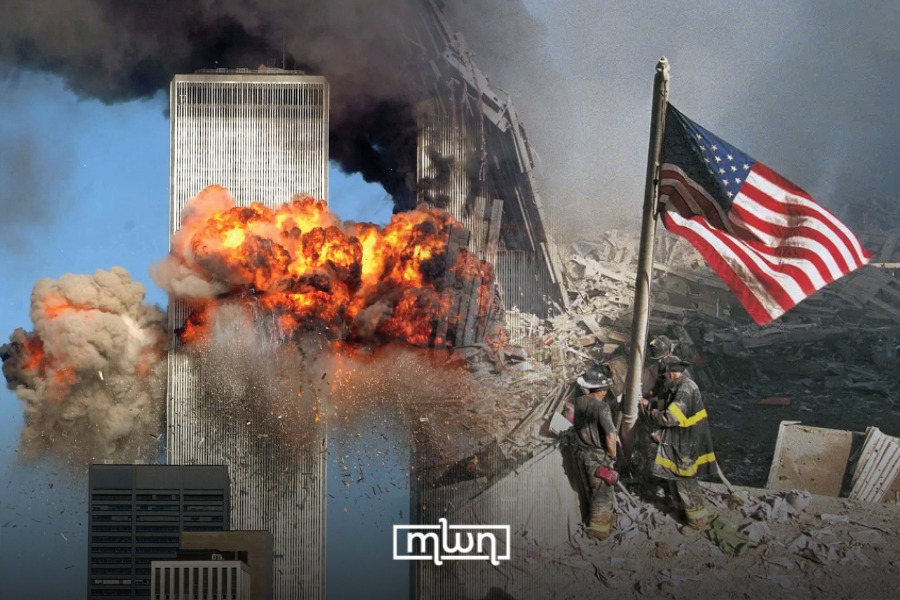
When the September 11th, 2001 attacks occurred in the United States, profound changes were well underway across the globe that reflected a desire for harmony, prosperity, and cooperation in the new millennium. Time, demographic trends, a global health pandemic, and the general aging of the world population have helped heal some of the wounds from that terrible day. The common bonds of humanity became frayed (everywhere), but they indeed held.
Other significant events occurred in 2001: The framework plan for the operation of the African Union was adopted in May in Lusaka. The first international treaty to address a new crime phenomenon—cybercrime—was signed in November in Budapest. In December, China joined the World Trade Organization. With a GDP of $19.2 trillion, China’s economy is now thirteen times larger than it was in 2001.
Today, about thirty percent of Americans were not alive on 9/11/2001—tens of millions have no direct memory of that event. The U.S. imported nine million barrels of oil each day in September 2001. Today, the U.S. exports over three-and-a-half million barrels per day, plus millions more of refined gasoline and other petroleum products. The emergence of the United States as a leading producer of oil and natural gas could not have been predicted in the fall of 2001, as oil anxiety rose.
There were fewer than three million Muslims in the United States in 2001. Today, the Muslim population is closer to four-and-a-half million. Muslim political representation was minimal at the time. Fast forward 24 years, and things are different. There are four Muslim members in the U.S. House of Representatives in 2025 and nearly 200 others serving in city, county or state offices.
Diversity in the community is demonstrated by the fact that no racial or ethnic group (White, Black, Asian, Hispanic, etc.) forms a majority among the U.S. Muslim population. The community plays an ever-growing role in public life in many parts of the United States, from “Little Mogadishu”, a neighborhood of Minneapolis, Minnesota, to Paterson, New Jersey and Dearborn, Michigan, each with significant and diverse Muslim populations. Everyone-is-welcome community iftars are now commonplace in large American cities during Ramadan.
A June 2025 Pew Research survey report on the views of Muslims in America noted that Muslims and Christians attend religious services at least once per week at very similar rates: 39% and 37%, respectively. Additionally, Muslims in the U.S. tend to have more post-secondary education than Christians: “44% of Muslim adults are college graduates, including 26% who have a master’s, doctorate or other postgraduate degree. In comparison, 14% of Christians and 16% of religiously unaffiliated adults have advanced degrees.” Opportunity is non-denominational.
A Changing World
Post-9/11 events show just how connected the world has become. This past week commemorates a decade since German Chancellor Angela Merkel’s decision to open the country’s borders to large numbers of Syrian (and other conflict zone) refugees and migrants. More than one million refugees and migrants would eventually reach Germany over the next several years. Sentiment turned, though, against her immigration policies by 2017. Her CDU party eventually lost the ability to govern effectively.
Many of those who settled in Germany worked to make the country a new home. Germany, like other Western nations, faces stagnant or declining native birth rates, and is now aging at a faster rate than its EU neighbors. According to a recent study commissioned by the Bertelsmann Foundation, Germany’s workforce could shrink by ten percent by 2040 without substantial and coordinated immigration. It’s a similar story across the EU.
As the West grappled on-and-off with migration challenges a decade after 9/11, Morocco’s King Mohammed VI inaugurated the Mohammed VI Institute for the Training of Imams and Morchidines in 2015, allowing several thousand imams and Islamic scholars—men and women from across Africa and the EU—to study and train in Islamic jurisprudence, tolerance, philosophy and Quranic sciences. Pope Francis himself visited the training institute during his March 2019 trip to Morocco.
In a 2020 feature in The Guardian, Peter Neumann, a terrorism expert at King’s College London’s Department of War Studies, noted the rapid rise and rapid destruction of ISIS and how quickly its demise led to the evaporation of any appeal among impressionable young adults around the world: “In hindsight, Isis’s collapse happened quicker than we expected. It’s now clear that what made them so attractive for a while is less their ideology than their success. And when Isis stopped being successful, it stopped being attractive.” Lessons that are applicable, too, as threats from domestic terrorism in the West become the focus of national law enforcement agencies.
From somewhere else
Happily thereafter, a post-9/11 global connectedness grew. In 2003, California elected a Republican governor (Arnold Schwarzenegger) who was born in Austria. In 2008, Moroccan-born Ahmed Aboutaleb was appointed mayor of Rotterdam, the third-largest city in the Netherlands. He was the first Muslim to be appointed mayor of a major city in Western Europe. In 2016, Sadiq Khan would become the first Muslim mayor of London, as well as the first individual to win the mayor’s seat three times. The most popular names for baby girls and boys in 2024 in England and Wales were Olivia and Muhammad.
The current French Minister of Culture, Rachida Dati, was born to a Moroccan father and Algerian mother. Mexico’s current and first female president, Claudia Sheinbaum, is the descendant of Jewish migrants from Eastern Europe. Almost 30% of New Zealanders were born outside the country. In 2011, the Amazigh culture and language were officially recognized in the Moroccan Constitution. 89 nations, including Iran, Pakistan and Vietnam, submitted films for consideration at the 2024 Academy Awards ceremony.
In 2024, according to the Migration Policy Institute, a record 304 million people lived in a country other than their country of birth—about 3.7 percent of the world’s 8.2 billion people. Across the globe, a diverse mix of causes led to dramatic migration over the past decade. How nations handle this complex phenomenon will speak volumes about long-term regional stability and, likely, regional economic growth. “These people end up contributing to the economy of Canada or Britain”, said a French professor in a 2022 New York Times feature concerning the exodus of some Muslim French citizens as they emigrated from France, seeking greater acceptance elsewhere in Europe or the U.S.
This year, a Pew Research Center analysis of Census Bureau data estimated that 51.9 million immigrants live in the U.S. Over 15% of the U.S. population is now foreign-born, and in 2001, just 11% were foreign-born. Today’s proportion of foreign-born population is matched only during the Civil War and post-Civil War period (1860-1890; about 14% foreign-born), an era of significant immigration to the U.S. from Ireland, Italy, Eastern Europe, as well as China.
Post-COVID
The COVID-19 pandemic has added another layer of change and upheaval to the post-9/11 order. Viruses and pathogens travel across borders without passports and without prejudice. In 2021, the United Nations World Tourism Organization estimated that the decline in international travel in 2020 resulted in $1.3 trillion in lost global export revenues, rich nations and poor alike. Some of the wealthiest nations had some of the highest COVID-19 mortality rates.
Importantly, India now exports twenty percent of the world’s generic drugs, as the origin of pharmaceuticals continues to diversify. According to the Association of American Medical Colleges, in 2021, about twenty percent of active U.S. physicians were born and attended medical school outside the United States or Canada, totaling more than 203,500 physicians. In the UK, 30% of National Health Service staff in London report a nationality other than British. The global supply chain is just that.
Today, the threats to the well-being of individual nations, as well as to the planet itself, are numerous and require cooperation that blends science, policy, faith, culture, imagination, and some luck, too. As the Arab proverb says, “Winds don’t blow as the ships wish.“