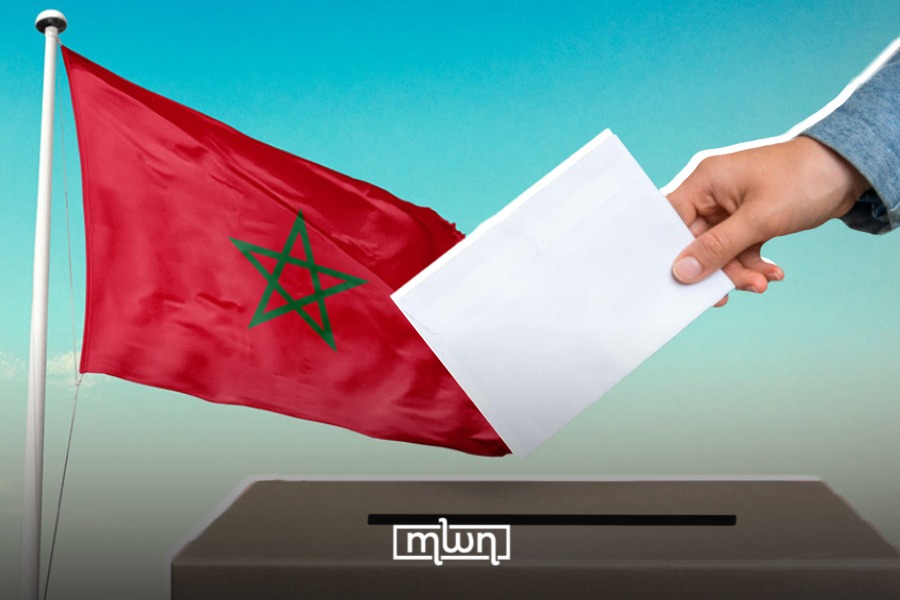
Morocco has ranked 107th worldwide out of 173 countries in a worldwide democracy index according to the “Global State of Democracy 2025” report.
Released by the International Institute for Democracy and Electoral Assistance (IDEA), the report indicates that Morocco came in the 19th position in Africa and received an overall score of 0.531 points.
The report classified Morocco as having a “fragile democracy,” with particular weaknesses identified in representation and rule of law.
Serving as an international reference for monitoring democratic governance indicators since the institute’s establishment in 1995, the report focuses on certain criteria to deliver countries’ assessment in terms of democracy.
At the representation indicator level, Morocco ranked 107th globally with a score of 0.432 points, which IDEA asserts the limited effectiveness of elected institutions.
The report’s findings also ranked the North African country in 77th with a score of 0.509 points at the human rights indicator level, while Morocco’s rule of law remained weak, ranking at 107th place with a score of 0.396 points.
Morocco came 96th globally at the political participation level, with a score of 0.531 points, raising the urgent need to enhance citizens’ effective participation in the political process.
In Africa, Morocco ranked 19th, surpassing most Maghreb countries, including Tunisia 112th, Mauritania 114th, Algeria 117th, and Libya in 151st.
However, the country lags behind African countries such as Cape Verde (1st in Africa and 34th globally), South Africa (43rd), Ghana (48th), and Mauritius (52nd).
In the Arab world, Morocco came 4th after Iraq (97th globally), Jordan (102nd), and Lebanon (105th). The ranking among Arab countries reflects the North African country’s advanced regional position.
Germany topped the global general index, followed by Denmark and Norway, while Costa Rica came fourth and Chile fifth. The bottom ranks included countries such as Afghanistan, Kuwait, Qatar, Saudi Arabia, Somalia, Sudan, Syria, UAE, and Yemen.
The report referred to global migration and its impact on democracy, noting that more than 304 million people live outside their homelands. The migratory situation raises questions about belonging, rights, and political participation.