 Join on WhatsApp
 Join on Telegram
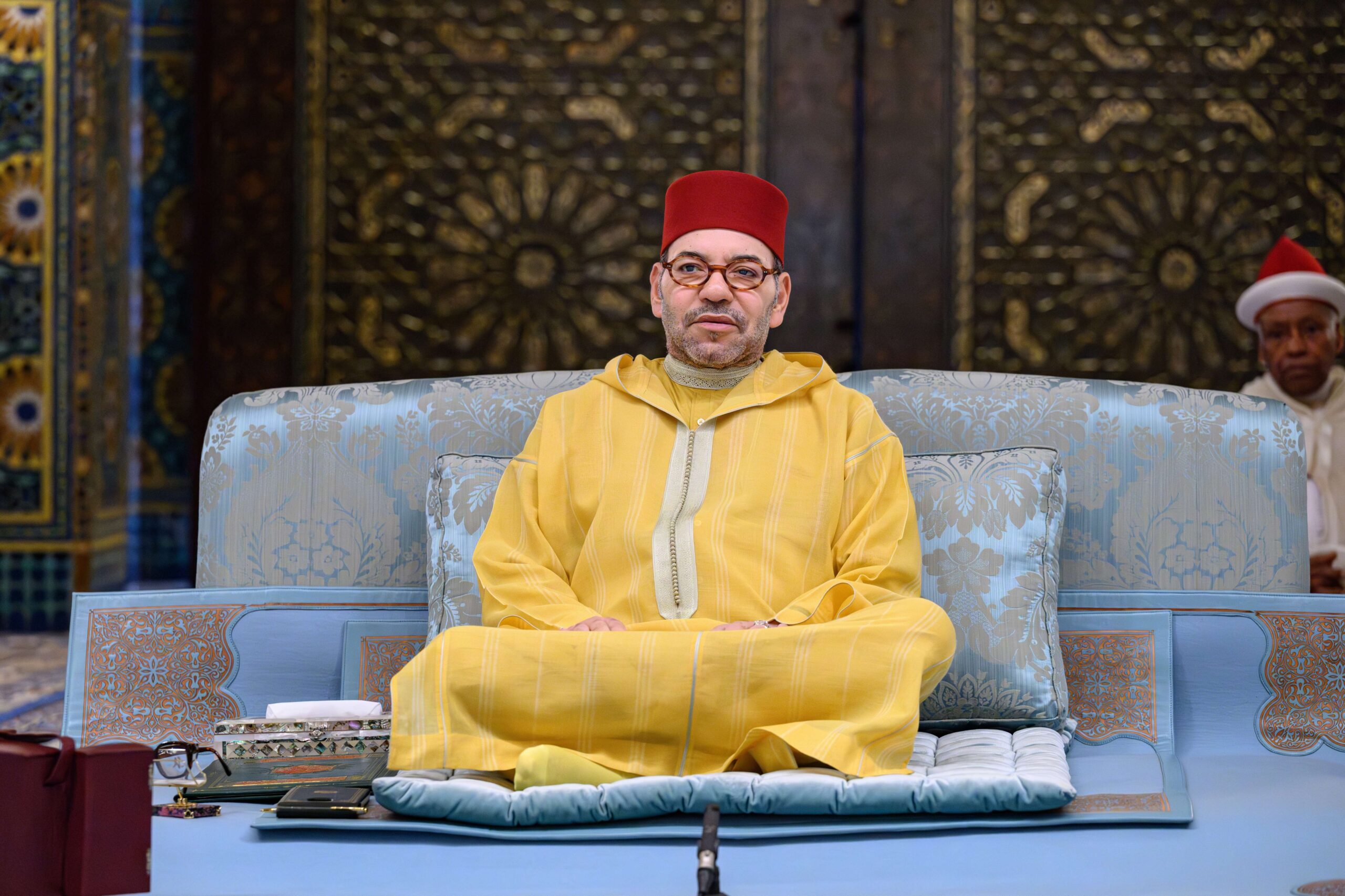
Marrakech – King Mohammed VI, in his capacity as Commander of the Faithful, has issued a comprehensive letter to the Higher Council of Ulemas outlining a ten-point framework for commemorating the 1500th anniversary of Prophet Muhammad’s birth. The royal message establishes a roadmap for religious and cultural activities to mark this historic occasion.
In his letter, read Monday in Rabat by Ahmed Toufiq, Minister of Habous and Islamic Affairs, the King stresses the importance of organizing scientific and media activities worthy of this “grandiose and solemn event” that the world is experiencing this year.
“By virtue of Our role as Commander of the Faithful and assuming the responsibility that falls to Us, by the will of God, to protect the Dogma, We are pleased to inform you of Our decision to address this letter to you,” the King stated.
The King’s first directive calls for courses, conferences, and academic symposiums to be held in councils, schools, universities, and public places.
These events should focus on introducing people, especially youth, to the Prophet’s life and his major work of “bringing humanity from darkness to light through the revelation of monotheistic faith” and teach younger generations to “abandon all egoism both personally and in social life.”
The monarch also directed that similar activities be implemented to thank God for entrusting Morocco’s spiritual leadership to the Prophet’s lineage, which has remained faithful to his teachings by perpetuating his tradition and preserving his revealed wisdom.
The third directive centers on celebrating God’s guidance in perpetuating the legacy of the Commandership of the Faithful, which has allowed Moroccans to follow religious precepts taught by the Prophet.
The King recalled his own efforts in promoting both religious practices and initiating believers into noble moral values.
He also called for recognizing the previous efforts of other past Alaouite kings in preserving prophetic tradition, particularly hadiths, recommending the Council publish a scientific edition of Sultan Mohammed Bin Abdellah’s work, “Al-Futuhat al-Ilahiyya fi Ahadith Khayr al-Bariyya” (“The Divine Illuminations in the Hadiths of the Best of Men”).
The fifth directive focuses on showcasing Moroccans’ care for the missions entrusted to the Prophet in the Revelation (i.e., the divine message of Islam), particularly their attention to the Holy Quran through memorization, psalmody, and exegesis.
The King also called for reminding people of Moroccans’ remarkable interest in spiritual purification through Sufi brotherhoods throughout Morocco. He noted that “the essence of this education lies in the love of the prophet, the ultimate purpose toward which all spiritual affiliations of these brotherhoods converge in their quest for proximity to the Lord.”
The seventh directive involves sharing knowledge about Moroccans’ mastery in creating the first collections of praises dedicated to the Prophet. These compositions “aim to exalt the prime nature and nourish the soul, drawing inspiration from the Prophet’s spirituality through the art of Sama’a (declamation of religious songs).”
The monarch also directed attention to Moroccans’ formulation of prayers dedicated to the Prophet, including Sheikh Maati Cherkaoui’s “Dakhirat al-Muhtaj” (“Viatique of the Indigent”) and Imam Jazouli’s “Dalail al-Khairat” (“Guides to the Ways of Good”). These prayers were wielded by Moroccans “in their sacred struggle to liberate occupied territories during the 15th century.”
The sovereign remarked that “in adversity, Moroccans always demonstrated their unwavering attachment to the Prophet.” He cited the example of Abou Abbès Al Ozfi, who wrote “Al-Durr al-Munazzam fi Mawlid al-Nabi al-Mu’azzam” (“Anthology of Poems Composed in Celebration of the Birth of the Illustrious Prophet”) during the 7th century of the Hegira.
The ninth directive instructs the Council to prepare a critical edition of Cadi Ayad’s “Kitab al-Shifa bi Ta’rif Huquq al-Mustafa” (“Treatise on the Curative Virtues of Knowledge of the Prophet’s Rights”), a biography that established Morocco’s scholarly reputation in the world “well before” Imam Jazouli’s work.
Finally, the King called for inviting the public to multiply prayers for the Prophet during this anniversary, in accordance with divine words. The Councils of Ulemas should hold large assemblies where prayers honoring the Prophet are raised, attended by religious officials and all believers, he added.
The King also urged the Council to include the Moroccan diaspora in these celebrations through the European Council of Moroccan Ulemas and other institutions, asserting that African brothers should also be invited through the Mohammed VI Foundation of African Ulemas.