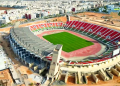

Forget the roar of the stadium crowds; the defiant voice of Morocco’s youth now resonates loudest across the nation. Fed up with the decades-long cycle of broken promises, protesters organized by groups like the Moroccan youth movement “GenZ212” are not merely calling for increased funding for healthcare and education – they are directly challenging a system of deeply rooted corruption that continuously prioritizes glitzy international spectacle over the basic needs of its own people.
The message is clear when the government spends billions on international sporting bids while public services decline and recent graduates face crippling unemployment. These protests are a clear expression of public disappointment with the current government’s policy focus and its failure to adequately address urgent social needs.
The human cost of government superficiality is the root cause of this uprising. Prime Minister Aziz Akhannouch’s government actively starves the mechanisms designed to protect its most vulnerable citizens while pursuing international recognition through multi-billion-dirham bids for the World Cup and African Cup. Consider the 30,000 Moroccan children with disabilities, such as those with autism, ADHD, and other learning disorders, whose education is disrupted due to the government’s failure to release promised funds.
Organizations that manage support centers – relying on a meager pledge of 500 million dirhams – are left scrambling, their budgets dwarfed by a single stadium renovation.
The list of institutional cruelties most tragically affects Moroccan women. The horrifying case of Imane in Taza, who suffered severe facial disfigurement in what authorities describe as an inhumane assault, is a brutal reflection of the everyday realities Moroccan women face: systemic injustice, inequalities, prejudice, and widespread domestic abuse and harassment.
Her tragedy serves as a metaphor for the state’s larger inability to put safety and justice ahead of show. It reflects the profound vacuum left by a government that will spend any amount of money on maintaining its reputation abroad, but little on ensuring that even half of its citizens have access to basic human dignity and protection from violence.
In the Atlas Mountains, the betrayal is even more horrific. Many survivors in the Al Haouz region are still living in improvised, flimsy tents two years after the devastating 2023 earthquake, as they are unable to find safe housing. While official government reports claim reconstruction rates exceed 90%, activist groups and residents vehemently dispute these figures, pointing to hundreds of families excluded from compensation.
It is a troubling contrast: Akhannouch’s administration races to complete gleaming World Cup infrastructure on the coast, but abandons its own citizens in the high-altitude, cold conditions of Morocco’s rural areas. The lack of safe shelter for earthquake victims is the ultimate symbol of an administration prioritizing spectacle over the fundamental obligation to ensure its people’s survival and recovery.
The government must realize that the people and youth who are peacefully calling for accountability are not the enemy; they are the conscience of the nation striving for its future. The true adversary is systemic corruption and misplaced vanity that drain public resources and deny human dignity across every sector.
This peaceful uprising, driven by the desire for justice and a government that prioritizes the needs of its own citizens, is the cornerstone for real, long-lasting progress.
As King Mohammed VI himself affirmed in his last Throne Day speech, “There is no place today or in the future for a Morocco that moves at two speeds.” The administration must stop treating its citizens as obstacles to its global image, and finally begin to govern for the welfare of all.