
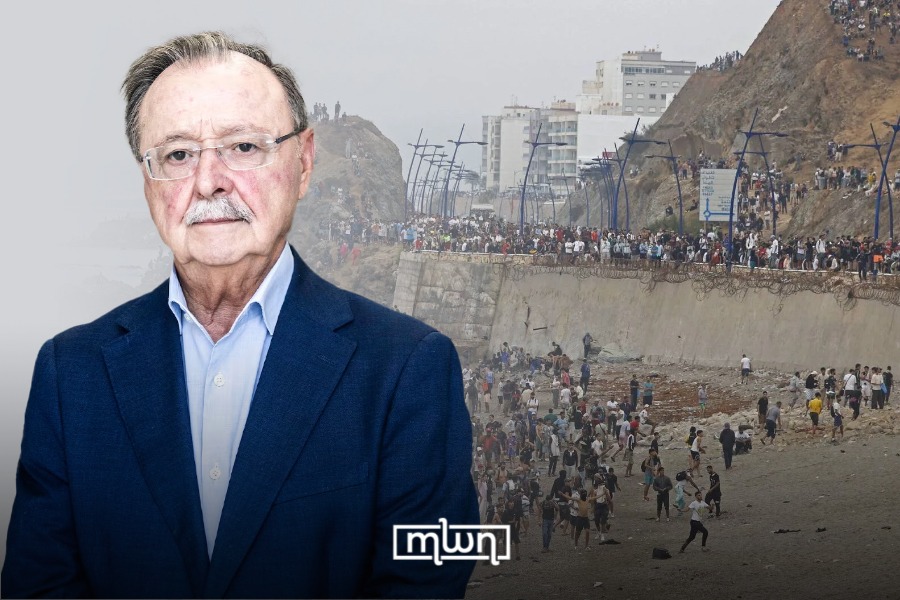
Agadir – Ceuta President Juan Vivas has said that processing the cases of migrants who entered the Spanish-occupied enclave during the mass crossings at the end of July could take at least a year if authorities continue at the current pace.
According to Spanish media reports, Vivas revealed Thursday that the National Police is processing between 25 and 30 cases per day related to the migrants who arrived in Ceuta. At that rate, he estimated that it could take a year to process the return to Morocco for those who entered the city.
Speaking at a press conference, Vivas called on Spain’s central government to deploy additional human and material resources to accelerate return procedures and the processing of international protection applications.
“Ceuta cannot endure this situation for another year,” Vivas lamented, arguing that the city has remained in an “abnormal” situation for weeks.
The Ceuta president acknowledged that the 25-to-30 daily figure did not come from official government data. He said his administration had relied on external sources he considered reliable because the central government had declined to provide the requested figures.
Vivas maintained that the Spanish state has sufficient resources to increase the pace of processing and urged Madrid to mobilize them.
He also called for a permanent delegation of Spain’s Asylum and Refuge Office to be deployed in Ceuta to speed up applications for international protection.
According to Vivas, the office has increased its meetings from once a month to once a week in response to the migration crisis. However, he said this remains insufficient and pressed for officials to be physically present in Ceuta so that cases can be processed and decisions made more quickly.
Vivas also criticized the relocation of migrants from the makeshift settlement at El Trampolín to other temporary facilities in Ceuta, arguing that moving people does not address the underlying administrative challenge.
“The will to solve the problem means putting sufficient resources into Immigration, Asylum and the Police,” he said.
He concluded that the priority should be strengthening the institutions responsible for processing migration and asylum cases rather than simply moving migrants between temporary locations.