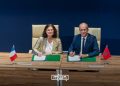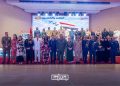

Marrakech – Marrakech hosted the opening of the Fifth World Power-to-X Summit on October 1, bringing together 2,000 attendees from 40 countries and 125 speakers to address what organizers termed the global “hydrogen gap” between ambition and implementation.
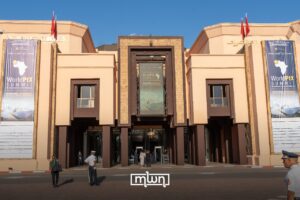
The two-day event at the Palais des Congrès is hosted by the Ministry of Energy Transition and Sustainable Development. Co-hosts include the Research Institute for Solar Energy and New Energies (IRESEN), the Moroccan Green H2 Cluster, Mohammed VI Polytechnic University (UM6P), and the Moroccan Agency for Sustainable Energy (MASEN).
Morocco’s green hydrogen strategy took formal shape through the “Morocco Offer” circular issued by the head of government on March 11, 2024. The framework reserves up to one million hectares of public land for Power-to-X development, with an initial 300,000 hectares now allocated.
On March 6, 2025, the steering committee pre-selected five investors for six projects valued at MAD 319 billion, approximately $32.8 billion. These projects span green ammonia, e-fuels, and green steel production across three southern regions. Land reservation contracts are currently being executed.
King Mohammed VI addressed the sector’s strategic importance in his July 29, 2023 Throne Day speech: “Following the meeting I chaired in this regard, the government prepared the ‘Morocco Offer’ project in the field of green hydrogen.”
“I invite the government to speed up the implementation of this project, to make sure the requirements of quality are observed, to leverage our country’s significant potential in this regard, and to meet the expectations of leading global investors in this promising field,” he said.
Infrastructure as a foundation
Energy Minister Leila Benali outlined three priorities in her opening address. Infrastructure development leads the agenda, with formal requests for proposals for a floating storage regasification unit at Nador-West Med port, and pipeline construction connecting supply and demand centers planned before year-end.
“We cannot talk seriously about hydrogen, about part of it, if we are not credible in building our gas infrastructure,” Benali stated. She noted that over 50 companies responded to a summer expression of interest process, including international oil and gas firms, FSRU operators, infrastructure players, and construction companies.
The minister spotlighted the Morocco-UAE strategic partnership signed at COP28 in Dubai in December 2023, formalized through a shareholder agreement on May 19, 2025. This agreement includes plans to double natural gas consumption in electricity generation by more than two billion cubic meters annually through gas power plant expansion.
Benali stressed the Morocco Green Hydrogen Offer created “a benchmark of good governance, a benchmark for risk diversification by targeting multiple sectors to minimize market risks in industry, in electricity generation, in transportation fuels.”
She referenced an upcoming International Maritime Organization vote in October that could transform shipping fuel consumption patterns.
The minister identified four focus areas for the summit: finance, offtake agreements, infrastructure and logistics, technology and innovation, and talent development.
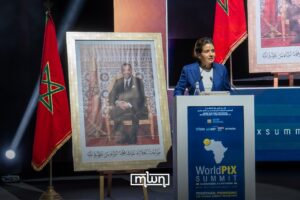
She described Morocco’s positioning as an “OTC Corridor” covering origination, transit, and certification. “Morocco is a producer, but also will be a producer and exporter of competitive low-carbon electrons, low-carbon molecules, low-carbon steel, and other commodities, fertilizers as well,” she explained.
Benali concluded with direct appeals: “To financiers and the industry, we need to really move now beyond pilot projects towards implementation of ready portfolios and with fair risk sharing and fair and realistic returns.”
She added: “Over the next two days, let’s transform ambition into execution, MOUs into actual investments, and projects into shared prosperity in our regions.”
Research and industrial development
IRESEN Director General Samir Rachidi reported substantial progress on demonstration projects. The institute is advancing construction on a green ammonia demonstration unit capable of producing four tons per day, powered by four megawatt electrolysis capacity, with commissioning expected in 2026. This facility operates in partnership with UM6P and OCP at the Green H2A platform.
“According to the latest Global Hydrogen Compass Report, published last week by the Hydrogen Council, more than 500 projects have reached FID, are under construction or in operation,” Rachidi noted. “This represents over 110 billion dollars of capex and shows that the momentum is real and that perseverance pays off.”
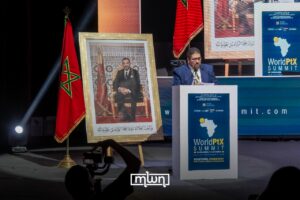
IRESEN secured equipment grants through international partnerships, including an electrolyzer from Wallonie-Bruxelles Internationale and an innovative water production system from the Czech Republic Cooperation Agency. With German Federal Ministry support, a power-to-liquid demonstration unit is planned for 2028 commissioning.
Rachidi announced the integration of the IRESEN-DIX scientific conference, established in 2013, into the Power-to-X platform. This year’s edition features over 250 research papers.
The summit also introduced the Power to Talent initiative, a matchmaking program connecting young professionals with industry employers, supported by the Foundation for Education for Employability.
Cluster perspective on regional development
Green H2 Cluster President Mohammed Yahya Zniber stressed the imperative of balanced regional growth. He noted that while green hydrogen production leverages Morocco’s solar and wind resources, implementation costs remain high and technology continues maturing. Required infrastructure for storage and transport demands substantial long-term investment.
“It is essential to adopt an integrated regional strategy that benefits all our regions and eliminates all forms of disparities and exclusions,” Zniber said.
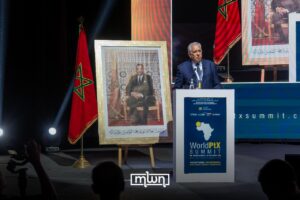
He invoked King Mohammed VI’s vision: “Our ambition is that every Moroccan can benefit from the prosperity and development dynamics that we inscribe in our collective future.”
Zniber called for strengthening local training and innovation capacities, encouraging public and private investment, and establishing dynamic regulatory frameworks. He emphasized the need to combine ambition with sustainable development and social justice.
MASEN: Methodical progression
MASEN Chairman and CEO Tarik Ameziane Moufaddal traced Morocco’s 15-year renewable energy trajectory under royal vision, positioning current hydrogen developments as the next logical phase. He reported that one project has completed its prefeasibility phase and is preparing to enter advanced studies, while six others will soon begin initial prefeasibility work.
“One year has brought the demonstration. A first project has concluded its prefeasibility phase and is preparing to enter the second phase of advanced studies, while six others will soon start their first prefeasibility phase,” Moufaddal stated. He noted these projects involve first-tier national and international investors anchored in Morocco’s southern regions.
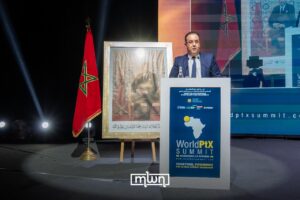
Moufaddal pointed out that the preselection procedure under the Morocco Green Hydrogen Offer remains open to new investors. He described Morocco’s approach as methodical rather than rushed: “A new sector is built at the pace of precision, not precipitation.”
The MASEN chief outlined Morocco’s value proposition for international investors: exceptional resources, high-level political vision, recognized stability, and strategic positioning between four continents. He stressed that ambition extends beyond energy to encompass qualified employment, new expertise, industrial value chains, and territorial benefits.
Academic integration and food security
UM6P President Hicham Habti addressed the summit through a video message, connecting energy transition to broader development questions. He positioned the Green H2A platform at Jorf Lasfar as demonstrating how hydrogen converts to ammonia and supports low-carbon fertilizer production for Moroccan and African agriculture.
“What is truly at stake is larger than any single project. It is about the credibility of an entire development model,” Habti stated. “Will Africa remain a consumer of solutions others provide or with previous value? Will Morocco only export molecules or also expertise, know-how, and open area?”
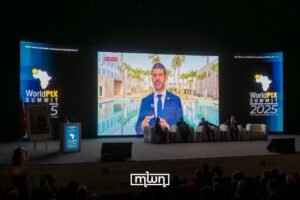
Habti characterized the summit as testing coherence between ambition and delivery, discourse and measurement, local priorities and global responsibilities.
He urged participants to discuss resilience and sovereignty alongside technical specifications: “Speak not only of megawatts and electrolyzers, but of resilience and sovereignty, because these are the real currencies of the energy transition.”
Private sector roadmap
General Confederation of Moroccan Enterprises (CGEM) President Chakib Alj detailed Morocco’s national roadmap targeting up to nine million tons of green hydrogen annually by 2050.
Since last year, commitments exceeding MAD 300 billion have been announced for six large-scale projects in green hydrogen, green ammonia, and green steel, each supported by land allocations up to 30,000 hectares.
“This scale is unprecedented in Africa and clearly demonstrates that Morocco has moved beyond planning into augmentation,” Alj stated.
According to IRENA projections cited by Alj, Morocco ranks among nations with the lowest projected green hydrogen production costs by 2050, ranging between $0.70 and $1.40 per kilogram depending on technological progress and efficiency gains.
Alj outlined requirements for translating ambition into reality: defined national targets for electrolyzer capacity and dedicated renewable generation, infrastructure development priorities including pipelines and export facilities, alignment of technical and certification standards with EU requirements, and securing financing for high-capital projects through long-term offtake contracts.
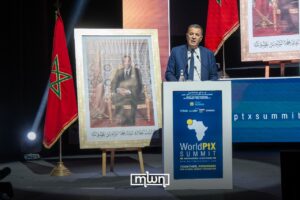
He put forward domestic value creation over export metrics alone. “Morocco has a capacity to reach up to 4% of global demand by 2030, thanks to its abundant resources and available land. But the real question is how this opportunity can create jobs, stimulate SMEs, and reinforce our industrial sovereignty,” Alj explained.
The CGEM president projected that Moroccan domestic consumption could reach two million tons annually by 2035, particularly in the transport, steel, cement, and fertilizer sectors. He advocated for moving up the value chain through green ammonia, methanol, and steel derivatives rather than limiting exports to primary products.
This approach requires industrial offset clauses with international partners, ensuring technology transfer and strengthening the national industry through supplier development programs.
Technical program
The summit’s technical agenda includes 13 high-level panels exploring green hydrogen economy enablers ranging from technology and finance to infrastructure and regulation, supplemented by 17 side events and masterclasses.
Key sessions include the October 1 high-level plenary on securing and de-risking offtake featuring H2Global, MASEN, TAQA Morocco, and Copenhagen Infrastructure Partners, and the October 2 side event on advancing green hydrogen readiness in the Southern Mediterranean with European Investment Bank financing and certification pilots.
Panel 12 on October 2 addresses decarbonizing air, sea, and road transport with the Port of Rotterdam, Maersk, and FEV participating. The MED-GEM EU-funded program co-runs multiple sessions focusing on bankability, certification, port export readiness, and transport decarbonization.
Major industrial projects include TotalEnergies studying a 200,000 ton per year green ammonia export project near Guelmim-Oued Noun with partners including Copenhagen Infrastructure Partners and AP Møller Capital.
OCP and ENGIE signed a memorandum of understanding for a multi-billion-euro platform integrating renewables, green molecules, and desalination, supporting OCP’s decarbonization and green fertilizer objectives.
The summit will conclude on October 2, with outcomes expected to advance Morocco’s positioning in European hydrogen import corridors following the 2024 Germany-Morocco climate and energy alliance.
Read also: Morocco’s 2030 World Cup: A Green Hydrogen Game-Changer