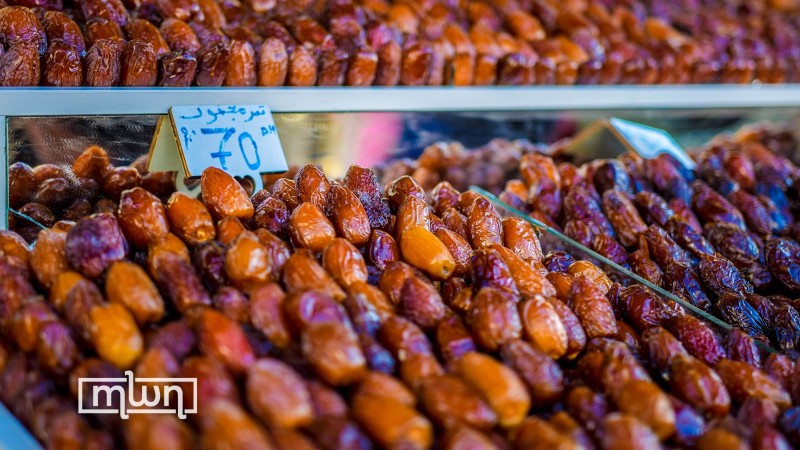
Rabat – The 14th edition of the International Date Fair in Morocco (SIDATTES) will take place in Erfoud from October 29 to November 2.
Discussions will explore how sustainable water management underpins the vitality and future of Morocco’s date palm and oasis landscapes.
A platform for sustainability and agricultural innovation
SIDATTES 2025 is organized by the Ministry of Agriculture in collaboration with the Association of the International Date Fair in Morocco (ASIDMA), with support from the National Agency for the Development of Oasis and Argan Zones (ANDZOA).
This year’s theme reflects growing concern over water scarcity affecting Morocco’s oases – ecosystems that play a vital role in preserving biodiversity, combating desertification, and supporting local livelihoods.
Sustainable water management, organizers stress, is key to maintaining the balance of these fragile environments and ensuring the long-term viability of the date palm sector – a cornerstone of oasis agriculture and a driver of socio-economic development.
Thousands expected to attend
The fair will bring together over 230 Moroccan and international exhibitors and is expected to attract more than 90,000 visitors.
Spread across 40,000 square meters, the exhibition area will feature several themed pavilions, including regional showcases, institutional and sponsor areas, an international zone, and sections dedicated to local products, agrosupplies, machinery, and livestock.
The regional pavilion will spotlight the country’s four main date-producing regions: Drâa-Tafilalet, the Oriental, Souss-Massa, and Guelmim-Oued Noun.
A dedicated livestock area will exhibit native sheep and goat breeds from oasis regions. At the heart of the fair, the “Rahba” pavilion, covering 3,000 m², will serve as a marketplace for date producers, cooperatives, and economic interest groups to display and sell their products.
An additional 300 m² will be devoted to local products, while the agrosupplies section will host firms specializing in fertilizers, irrigation systems, renewable energy, and packaging. A special educational space will allow children to explore the world of oases through interactive activities.
Conferences, research forums, and cultural events
Alongside the exhibition, a rich scientific and cultural program will take place. The Agricultural Development Agency (ADA) and Crédit Agricole du Maroc (GCAM) will organize an Investment Forum under the theme “Responsible Investment for the Development of Date Palm and Oasis Systems.”
The National Institute for Agricultural Research (INRA) and ANDZOA, in partnership with FAO and ICARDA, will hold a scientific day focused on innovative and sustainable solutions for oasis systems. The National Agricultural Advisory Office (ONCA) will lead practical workshops for farmers and young entrepreneurs, while networking sessions will encourage B2B partnerships across the sector.
Cultural events, artistic evenings, and competitions for date products will also punctuate the program, celebrating the rich agricultural and cultural heritage of Morocco’s oases.
From local tradition to international platform
The roots of SIDATTES trace back to the Tafilalet Date Fair (Moussem des Dattes du Tafilalet), established by royal decree in 1940 and honored by King Mohammed V in 1957. In 2010, King Mohammed VI instructed the creation of the first International Date Fair, and his visit in 2011 gave a strong impetus to the development of Morocco’s date palm sector.
Today, SIDATTES stands as a regional benchmark for innovation and cooperation, fostering knowledge exchange, modernization, and value creation across oasis territories.
The 2025 edition aims to reaffirm Erfoud’s role as a meeting point of tradition, science, and sustainability, shaping the future of Morocco’s date palm economy in an era of climate challenges.
During last year’s edition, Morocco advanced its date palm sector through six newly signed agreements aimed at strengthening resilience in the Drâa-Tafilalet region, the country’s leading hub for date production.
The initiatives focus on improving agricultural practices, fostering innovation within the industry, and providing targeted support to local farmers. They also prioritize farmer training, promote water and energy efficiency, and introduce traceability standards across cooperatives to ensure sustainable and high-quality production.