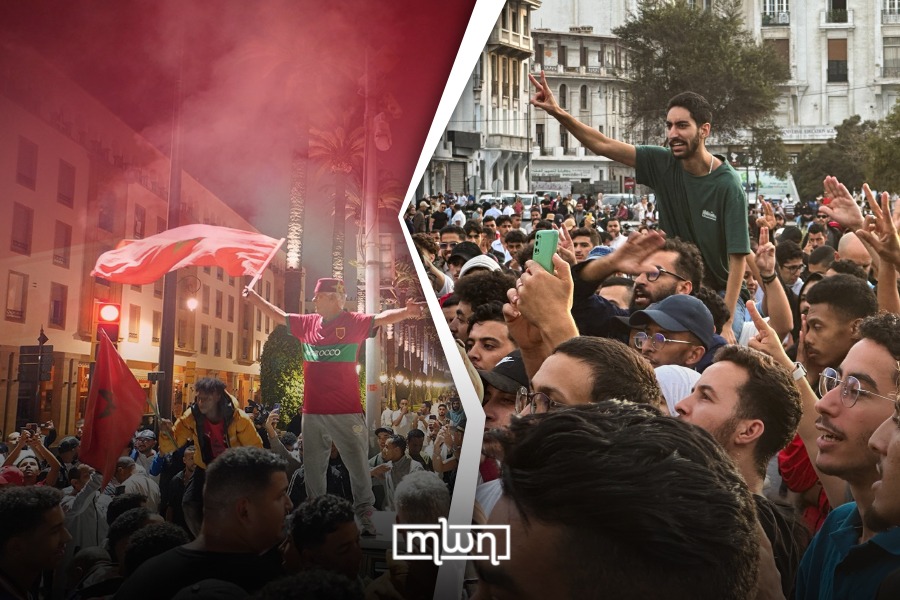
Agadir – Only days after Moroccans took to the streets in the ongoing GenZ212 movement to call for better healthcare, improved education, and to voice their frustrations with the current government, the same streets were filled with citizens of all ages, genders, and social backgrounds demonstrating overwhelming national pride. Gigantic Moroccan flags waved high, car horns blared in unison, and crowds across the country sang and chanted slogans celebrating the impressive performance of the U20 Moroccan National Football Team. The contrast of both events was remarkable, revealing both loyalty and unity among Moroccans. The same individuals whose demonstrations captured national attention just a week ago were now filling social media with moments of pride. Their actions, often misunderstood as defiance or rootlessness, are in fact acts of love, born from a desire to see their country thrive.
Just days earlier, members of Morocco’s younger generation, particularly those identifying as Gen Z, organized peaceful demonstrations across the country, advocating primarily for improvements in healthcare and education. While most protests remained orderly, isolated incidents in Inzegan and Oujda heightened frustrations, with participants demanding accountability and governmental reform.
Following an eloquent speech by King Mohammed VI, these protests were temporarily paused, scheduled to resume later in the month. At first glance, such protests may seem fueled by anger, but in reality, they reflect a deep sense of belonging. These citizens, driven by hope and courage, demonstrate that genuine patriotism includes the courage to demand progress and justice.
On October 15 Moroccan streets were filled again — this time with joy, laughter, and unity — following the U20 Moroccan team’s dramatic win over France in the semifinals on penalties. Four days later, on October 19, under the leadership of head coach Mohamed Ouahbi, the team achieved its first-ever World Cup victory against Argentina in Chile. Celebrations spread across cities from Casablanca to Tangier. Citizens, including many who had protested days before, came together under the red flag with a green star. Their passion for their heroes proved that love for one’s country is enduring and resilient, able to coexist with critique. These spontaneous celebrations spoke louder than any slogan: demanding improvement does not imply rejection of the nation; it signifies a profound commitment to its progress.
Beyond these immediate events lies a deeper insight into Moroccan society. The ability to express frustration while simultaneously celebrating collective victories demonstrates a remarkable civic consciousness. Moroccans show that patriotism is not blind loyalty, nor is dissent a rejection of one’s homeland. By voicing their demands and embracing their successes, citizens reveal that a nation’s strength is measured not only by its achievements, but by the engagement, conscience, and integrity of its people. The streets of Morocco reflect a wisdom born from balancing rights and responsibilities — a recognition that both are necessary for the advancement of individuals and the nation. Moreover, this astonishing first-ever accomplishment in Moroccan history should not be seen merely as a football event, but as the result of a long journey of persistence, preparation, determination, and hard work. The whole team dedicated their time, sacrificed their leisure, and put everything second to one goal — winning the World Cup. These are simple principles, yet if applied in any domain, they can lead to success. By working as a team and prioritizing the greater good of the nation, the power of the collective effort is demonstrated.
Ultimately, Moroccans have once again proven their responsibility and civic maturity. Even amidst ongoing protests, they found the time and energy to celebrate the achievements of their U20 football team, demonstrating that calling for one’s rights is not a sign of disloyalty, but an expression of faith in the nation’s potential. The ability to both critique and celebrate is a testament to the resilience and reflective spirit of Moroccan society — a balance that many nations might envy.