
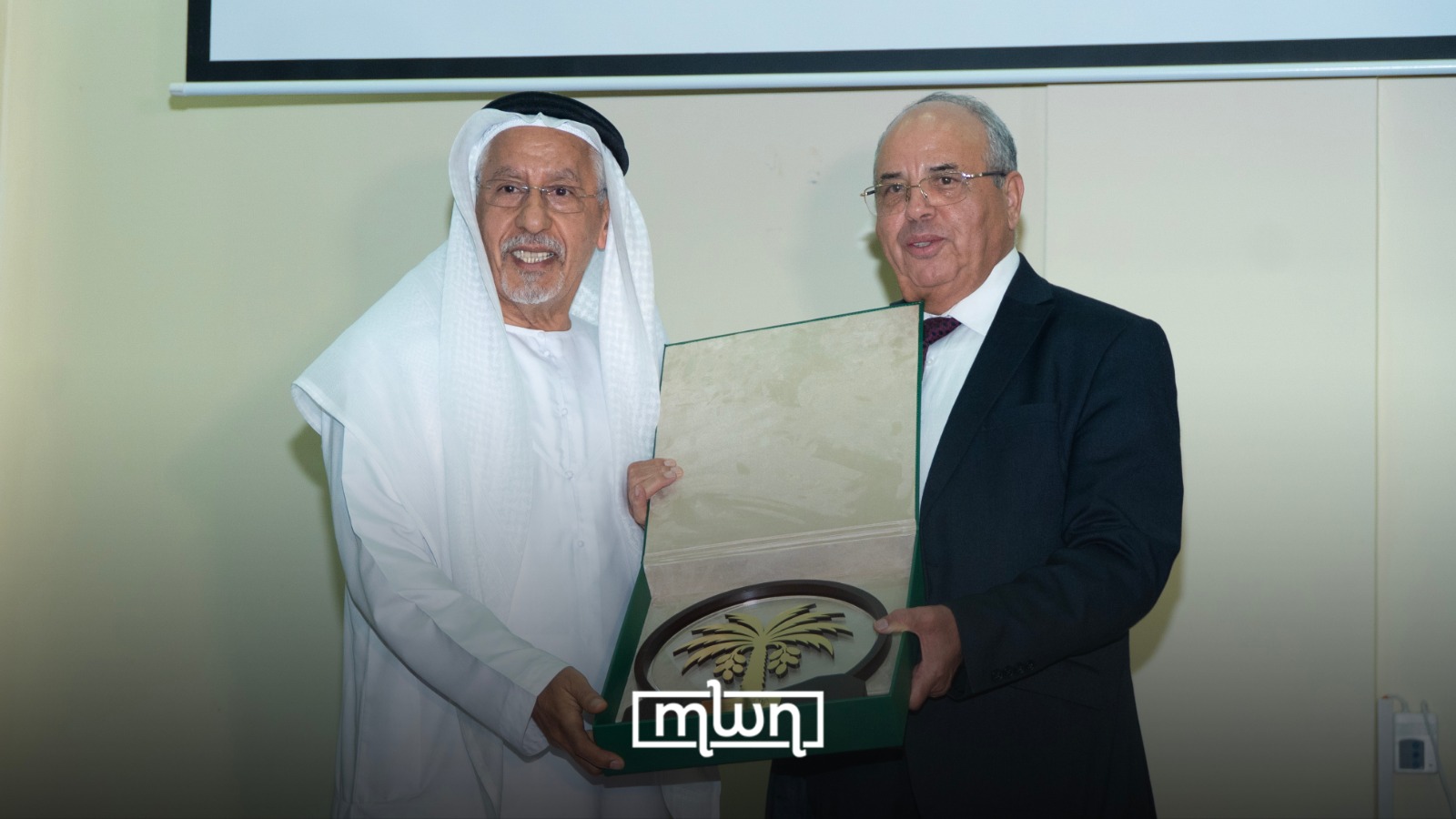
Erfoud – Morocco’s 14th International Date Festival honored yesterday the Khalifa International Award for Date Palm and Agricultural Innovation with the top pavilion honor.
Abdelouahhab Zaid, Secretary General of the Khalifa Award, expressed his pleasure with Morocco World News: “Thank God, Khalifa Award United Arab Emirates was recognized — the UAE Pavilion was recognized as the number one pavilion for its size, its quality, its participation, and more importantly, for the countries we are bringing with us.”
The festival has been a fixture in Morocco’s agricultural calendar since 2010.
Despite a two-year hiatus during the coronavirus pandemic, the event has maintained its status as a crucial gathering point for the international date industry.
What sets the Khalifa Award’s participation apart is its commitment to fostering international collaboration.

Each year, the organization brings between eight to ten countries to the festival, with participants supervised and financed by the award itself.
This approach has helped transform what began as a national celebration into a truly international event.
“Such efforts are aiming for several outcomes,” Zaid explained. “Most importantly, we allow these countries to see what’s going on in regard to the date industry in Morocco.”
“We also allow them to bring their product and share it with Moroccans and create a spirit of positive competition between date growers.”
For many international participants, the festival offers something beyond business opportunities — a pilgrimage of sorts to the birthplace of the world’s most prized date variety, according to Zaid.
“They are so happy to come here and visit the country where the Medjool is originating from,” he noted.
“The origin of Medjool is Morocco, the Tafilalet Valley, in the Boudnib area. Now there are no two people in the world that are disagreeing about this.”
The continued success of Morocco’s date industry owes much to royal support and strategic development initiatives. King Mohammed VI has championed new plantation programs in the Boudnib area, while various Moroccan institutions have advanced tissue culture propagation techniques.

However, Zaid stressed that more work remains to be done.
“I would like to request from the Ministry of Agriculture to give more effort to the tissue culture industry in the country and make sure they bring some financial support beside the political support,” he said.
“These laboratories need financial support in order to produce good quality date plantlets of Medjool and other Moroccan varieties.”
As both a scientist and an expert in the date palm industry, Zaid expressed satisfaction with Morocco’s progress in the date sector.
“I’m very pleased with the state of development of the date industry in Morocco and wish all date growers a great future,” he concluded.
The recognition of the UAE pavilion underscores the deepening agricultural ties between Morocco and the Gulf states, and reflects the growing international significance of Morocco’s date industry on the world stage.