Rabat – Morocco’s 2026 Finance Bill (PLF 2026) introduces a full five-year corporate tax exemption for sports companies, aimed at promoting the creation and professionalization of sports clubs across the country.
After this exemption period, companies will transition to a progressive tax system based on profits, while athletes and technical staff will benefit from graduated tax relief ranging from 90% in 2026 to 60% in 2029. Donations to sports companies will also be deductible up to 10% of taxable profits, capped at 5 million dirhams per year.
The proposal sparked debate in the Finance and Economic Development Committee, with both majority and opposition members expressing concerns. Critics argued that funding sports clubs should not rely solely on tax exemptions to strengthen their financial and economic performance.
Abderrahim Chahid, head of the Socialist-Opposition Federalist group and committee member, noted that Morocco’s “dual-speed logic” in football applies here as well: while the Royal Moroccan Football Federation and the Mohammed VI Academy are advancing quickly, most national clubs are lagging.
He pointed out that only three out of sixteen clubs in the national league have been structured as sports companies, questioning whether there is a timeline for all clubs to make this transition. Chahid also asked whether the measures in the 2026 Finance Bill are sufficient to move clubs beyond the traditional association model and toward a sustainable sports company model.
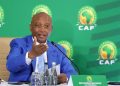
Speaking during the committee session, Deputy Minister for Budget Fouzi Lekjaa emphasized that the initiative aims to boost investment and governance in Moroccan sports. He highlighted the government’s commitment to professionalizing the sector as part of a broader national development strategy, which includes preparations for the 2030 World Cup, co-hosted by Morocco, Portugal, and Spain.
Lekjaa also addressed concerns over funding, clarifying that stadium construction costs are not part of the public budget, with nearly 3 billion dirhams planned, including 1.6 billion allocated for the National Railways Office (ONCF) and less than a billion from institutional investors. Loans are expected to be repaid over 20 years with projected revenues exceeding costs.
The minister emphasized that the World Cup and the 2025 Africa Cup of Nations will accelerate infrastructure, healthcare reforms, and regional connectivity, underlining the multi-sectoral benefits of Morocco’s growing investment in professional sports.