
 Join on WhatsApp
 Join on Telegram
Rabat – The death toll from Typhoon Kalmaegi in the Philippines has risen to 114 with 127 others still missing, the country’s disaster agency reported today.
The storm, which devastated large parts of the central Philippines earlier this week, has regained strength as it moves across the South China Sea toward Vietnam.
In Vietnam, authorities have launched one of the country’s largest evacuation operations in years. In Gia Lai province alone, more than 350,000 people were expected to be relocated by midday, as officials warned of heavy rain, destructive winds, and flooding in low-lying areas.
Calling Kalmaegi a “very abnormal” storm, Vietnam’s Deputy Prime Minister Tran Hong Ha urged local authorities to respond with “the highest level of urgency.”
The government warned that waves could reach up to eight meters in some coastal regions and confirmed that six airports have already been shut down, with hundreds of flights expected to be disrupted.
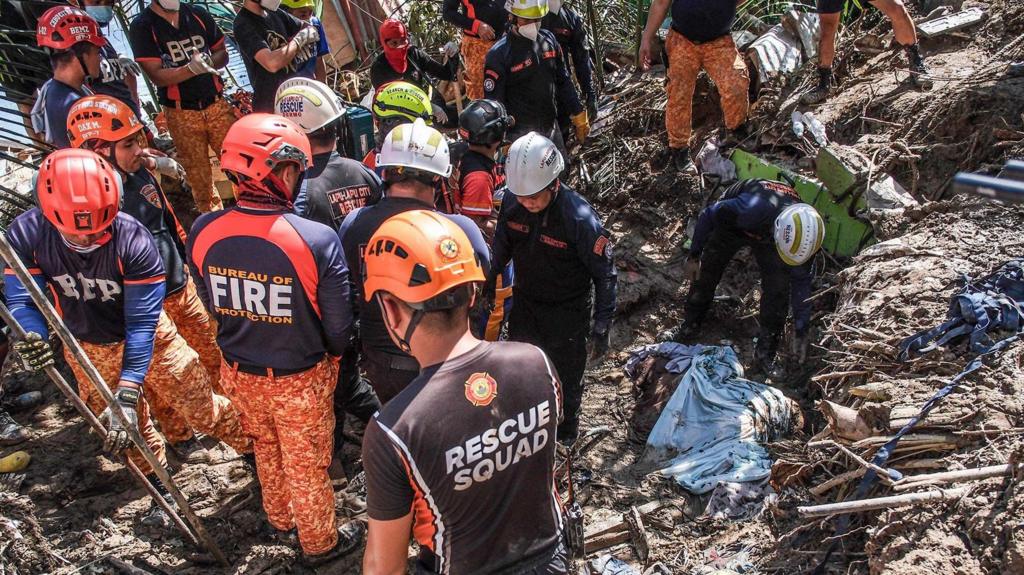
In the Philippines’ hardest-hit areas, including Cebu province, residents emerged from shelters to scenes of extensive damage. Floodwaters have receded, revealing flattened homes, overturned vehicles, and streets clogged with mud and debris.
More than 200,000 people had been evacuated ahead of Kalmaegi’s landfall on Tuesday, but many returned to find their homes destroyed. Recovery efforts are underway, with residents scraping mud from houses and clearing blocked roads.
The disaster comes barely a month after a magnitude 6.9 earthquake struck northern Cebu, killing dozens and displacing thousands. Kalmaegi, locally named Tino, is the 20th storm to hit the Philippines this year.
As Kalmaegi approaches Vietnam’s central coast, it is expected to make landfall this evening or early Friday, hitting several provinces that are already experiencing record rainfall and floods.
Meteorologists in the Philippines have meanwhile warned of a new weather disturbance forming east of Mindanao, raising concerns that another typhoon could follow in the coming week.
Typhoon Kalmaegi has been classified as Asia’s most powerful tropical storm this year, with sustained winds exceeding 200 kilometers per hour at its peak.