
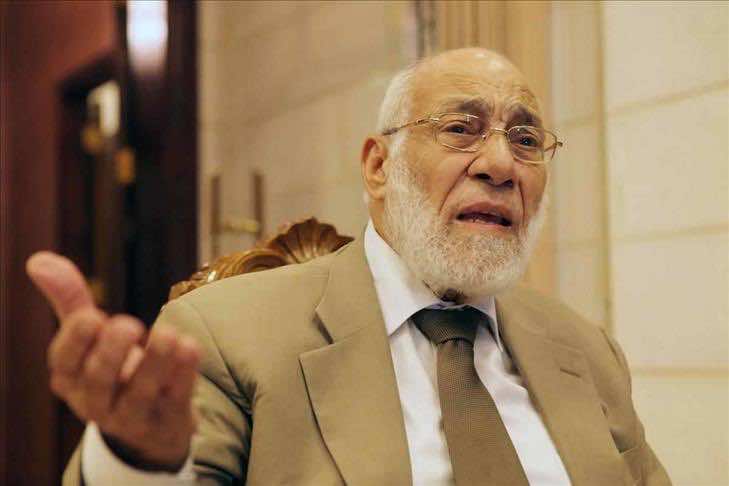
Rabat – Egyptian Islamic scholar and geologist Zaghloul El-Naggar, a pioneering figure in the field of scientific interpretation of the Qur’an, has died at the age of 92.
El-Naggar died in Amman, Jordan, after a battle with illness, said a statement released on his official social media accounts, noting that he would be buried today at Umm Al-Qutain Cemetery following a funeral prayer at Abu Aisha Mosque in Amman.
Born on November 17, 1933, in the village of Mashal in Egypt’s Gharbia Governorate, El-Naggar showed an early fascination for the natural sciences.
He graduated with honors in geology from Cairo University in 1955, earning the Mustafa Baraka Award in Earth Sciences, before completing his PhD at the University of Wales in 1963. He became a full professor in 1972, marking the beginning of a long and prolific academic career.
El-Naggar held teaching and research positions in Egypt, the UK, Saudi Arabia, Qatar, Yemen, Jordan, and the US.
Reconciling modern science and Islamic revelation
He chaired the geology department at Qatar University, taught at King Fahd University of Petroleum and Minerals, and served as a visiting professor at UCLA. He also directed Al-Ahqaf University in Yemen and later joined the World Islamic Sciences and Education University in Jordan.
Over the decades, El-Naggar became one of the most recognized voices in the Arab and Muslim worlds advocating for a way of reconciling modern science and Islamic revelation.
He authored dozens of books and delivered hundreds of lectures on what he termed the “scientific miracles of the Qur’an and Sunnah.”
His popular television program, Ayat Bayyinat (“Clear Verses”), aired on several Arab channels and explored Quranic descriptions of natural phenomena, an approach that inspired wide public interest but also sparked debate among scientists and theologians alike.
El-Naggar was a member of the International Commission on Scientific Signs in the Qur’an and Sunnah and was honored multiple times for his contributions to promoting scientific literacy within an Islamic framework.
Through his writings and lectures, he sought to demonstrate what he saw as the divine foresight embedded in the Qur’an’s references to the natural world. His work left an enduring mark on contemporary Islamic thought, shaping public discourse on the relationship between science, revelation, and modernity across the Muslim world.