 Join on WhatsApp
 Join on Telegram
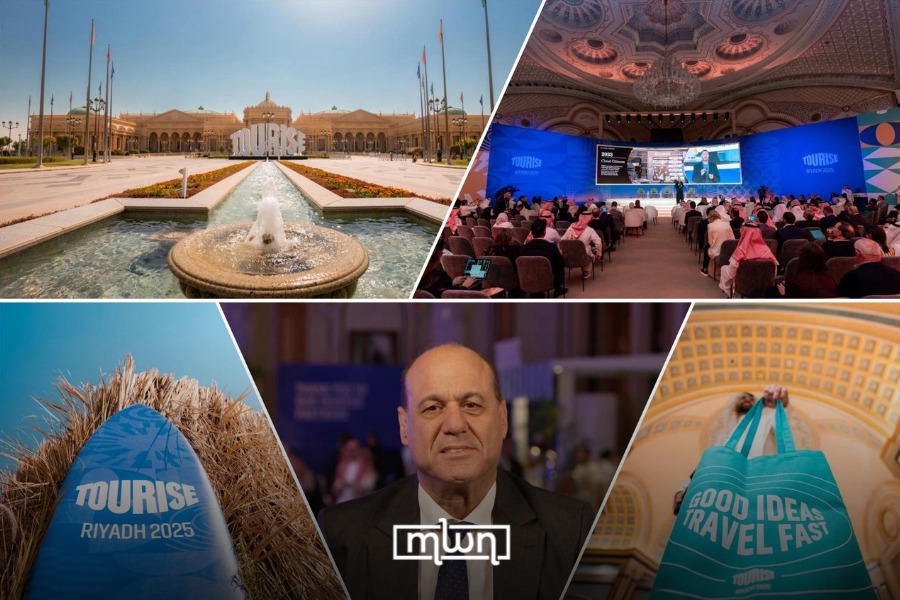
Marrakech – Mohamed Sefiani, Mayor of Chefchaouen, Morocco’s iconic Blue City, participated in the TOURISE Summit 2025 in Riyadh, where he presented his city’s approach to sustainable tourism.
TOURISE, powered by the Saudi Ministry of Tourism, is a global platform convening leaders from government, business, investment, tourism, and technology to shape the next 50 years of tourism with sustainable, equitable, and future-focused initiatives.
“I am very happy to be here in TOURISE. I was invited by his excellency the Minister of Tourism to present the experience of my city as a touristic destination,” Sefiani told Morocco World News.
He explained that receiving the invitation from the Ministry of Tourism was meaningful, because TOURISE brings together participants from around the world.
He described the summit as a major opportunity to present Chefchaouen and observe global tourism trends.
Sefiani said that “it was very interesting to present the experience for my city and to learn from other cities, other experiences, other partners, and actors of tourism.”
Since being elected mayor in 2009, Sefiani has focused on developing sustainable tourism with active participation from civil society, professionals, and local stakeholders.
He emphasized that Chefchaouen’s tourism strategy is centered on people, while protecting the city’s natural environment, cultural heritage, and identity.
“People,” he said, “are the center of our strategies.”
Sefiani noted that tourism is critical for economic growth and employment creation, stating that “tourism is very important for the growth of the economy and the creation of jobs in our cities.”
Chefchaouen is preparing for the upcoming FIFA World Cup 2030, which Morocco will co-host with Spain and Portugal. Sefiani explained that the city is taking a participatory approach to ensure readiness.
“Chefchaouen is preparing itself with the participatory approach to be at the high level as a touristic destination,” he said.
The mayor outlined several concrete projects, including smart public lighting and tree planting with citizen involvement.
A few months ago Chefchaouen “was recognized as the first city in North Africa” to transform public lighting to sustainable and smart, in addition to planting arbors and trees with citizens.
Sefiani explained that balancing tourism growth with environmental protection is a daily challenge.
“The balance is not easy,” he emphasized, adding that they work with challenges every day.
Chefchaouen has joined several international networks to reinforce its sustainability strategy, including United Cities and Local Governments (UCLG), the Global Covenant of Mayors for Climate and Energy, and ECLAC’s sustainable cities network. Sefiani highlighted that a participatory approach maximizes efficiency and impact.
Looking at Morocco and North Africa, Sefiani expressed optimism, “I think in North Africa, we have the chance to have many great resources.”
He gave examples of touristic and natural resources, adding that, “In Morocco, for example, we have the Atlantic and Mediterranean Sea. We have mountains, we have Sahara, we have diverse cities.”
The Mayor proudly stated, “So I think that the future belongs to North Africa.”
He noted that national and local governments collaborate closely, ensuring that tourism development is coordinated and inclusive.
Concluding the interview, Sefiani invited tourists to visit Chefchaouen, saying, “Come and welcome,” hoping to share the city’s culture, gastronomy, heritage, and natural beauty that citizens are proud to share with visitors.