
 Join on WhatsApp
 Join on Telegram
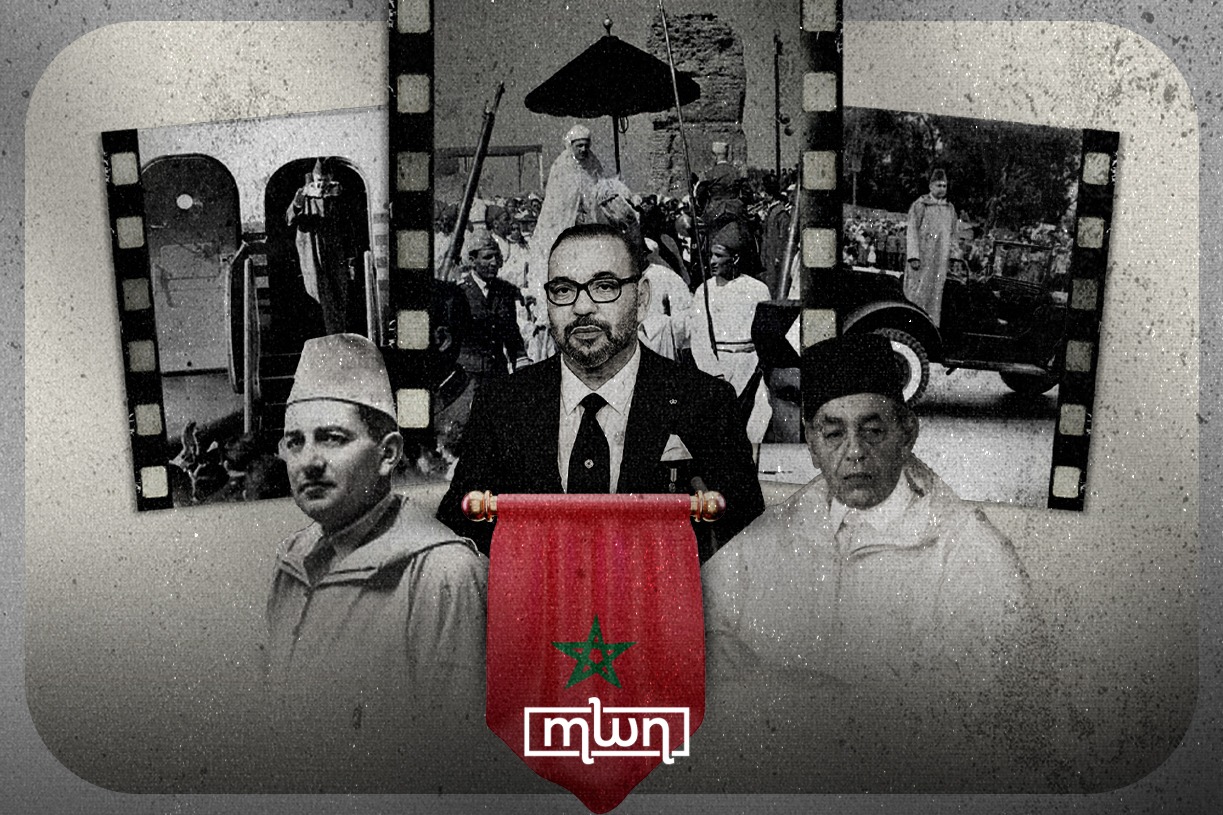
Rabat – Morocco’s Independence Day, observed each year on November 18, has come to represent far more than the date King Mohammed V ascended to the throne in 1927.
This year marks the 70th anniversary of the country’s regained independence.
It is the ultimate reminder of a national journey that began long before independence was proclaimed, shaped by regional uprisings, political mobilization, mass arrests, and a complex colonial system unlike that of any neighboring country.
A fragmented land, a shared struggle
When the Treaty of Fez was signed on March 30, 1912, Morocco entered an era of foreign colonial control that saw the country divided among multiple colonial powers. France administered the central regions, Spain controlled the north and sections of the south, and Tangier was placed under an international regime starting in 1923.
This fragmented structure forced Moroccans to craft equally diverse strategies of resistance, ranging from armed confrontation in remote mountains to organized political advocacy in the country’s urban centers. Despite this division, a common thread emerged early on: Morocco’s keen refusal to accept foreign rule.
Early revolts stretch across the map
The first wave of resistance erupted almost immediately. Tribes in Chaouia rose up in 1907 in response to foreign encroachment. By 1912, Fez was engulfed in what became known as the “Bloody Days,” and the Middle Atlas soon faced its own confrontations.
Some of the most enduring resistance came from the Rif mountains, where Mohammed Ben Abdelkrim El Khattabi challenged Spanish and French forces until 1926. Other movements were led by figures such as Assou Oubasslam in the Anti-Atlas and Ahmed al-Hiba Ma al-’Aynayn in the south.
These battles forced the protectorate to commit more than twenty years of continuous military operations.
Bled el-Makhzen vs Bled es-Siba
The shift from the battlefield to the political sphere gained momentum in the late 1920s. Attempts by the protectorate authorities to rearrange Morocco’s social fabric culminated in the 1930 “Dahir Berbère” (Berber Decree).
This decree attempted to detach Amazigh regions from Islamic judicial and educational structures, reviving an old dichotomy in Moroccan historiography between Bled el-Makhzen (land of government), the urban centers tied to the Sultan’s authority, and Bled es-Siba (land of dissidence), communities historically and geographically outside the Makhzen’s reach.
Yet the decree produced an outcome far from what the colonial administration envisioned; rather than widening the divide, it stirred a nationwide sense of cohesion that reinforced the foundations of the national movement.
This moment helped galvanize a national movement that grew steadily through the 1930s. Reform proposals circulated in 1934, protests intensified in 1937 after settlers attempted to restrict river water access near Boufakrane, and major nationalist figures were arrested, exiled, or placed under surveillance.
The 1944 Independence Manifesto
By 1944, the national movement was prepared to take its demands directly to the international stage. Sixty-six Moroccans signed the Independence Manifesto, distributing it to the French and Spanish authorities and to diplomats from the US, Great Britain, and the Soviet Union.
The document laid out a clear message: Morocco demanded full independence, democratic governance, and recognition of its historical sovereignty. The colonial response was swift: arrests, censorship, and accusations that the signatories were aligned with foreign enemies. But repression did not halt the momentum.
Exile, uprising, and a national reckoning
Underlying the growing resistance was the central figure of Sultan Mohammed V, who remained a unifying symbol for many Moroccans. His 1947 visit to Tangier openly asserted Morocco’s territorial unity and cultural identity, unsettling the colonial authorities.
His subsequent exile on August 20, 1953, first to Corsica and then to Madagascar, triggered a cascade of uprisings. Popular revolts, underground networks, and the establishment of the Liberation Army in 1955 accelerated the collapse of the protectorate system.
Under increasing local and international pressure and facing growing crises in Algeria, France entered negotiations. Mohammed V returned to Morocco on November 16, 1955. Two days later, he declared the end of colonial rule and the advent of independence.
Independence in 1956 marked the start of a long process of territorial recovery. Tangier’s international status was dissolved later that year. Tarfaya was recovered in 1958, Sidi Ifni in 1969, and the southern provinces were reintegrated following the Green March of November 1975. The recovery of Oued Eddahab in 1979 completed the final major territorial chapter.
What independence represents today
Nearly seven decades after that pivotal November of 1955, Independence Day is a moment to revisit this layered history: the early revolts in mountain regions, the political battles waged in cities, the exile that mobilized an entire nation, and the negotiations that sealed Morocco’s sovereignty.
Modern commemorations also look toward the present. Under King Mohammed VI, development programs in infrastructure, social protection, economic competitiveness, and human development mirror the country’s ongoing efforts to build on the foundations laid in the post-independence era.
As a result, Morocco’s Independence Day is now far more than just a reminder of the end of colonial rule. It has become the living testimony of the many forms resistance took, the multiplicity of actors who shaped its course, and the unique historical conditions that required armed defiance and diplomatic strategy.