
 Join on WhatsApp
 Join on Telegram
Rabat – Morocco’s National Human Rights Council (CNDH) placed spatial justice at the center of national development debates today.
The council’s main argument is that reducing territorial disparities is now essential to ensure the effective fulfillment of citizens’ rights.
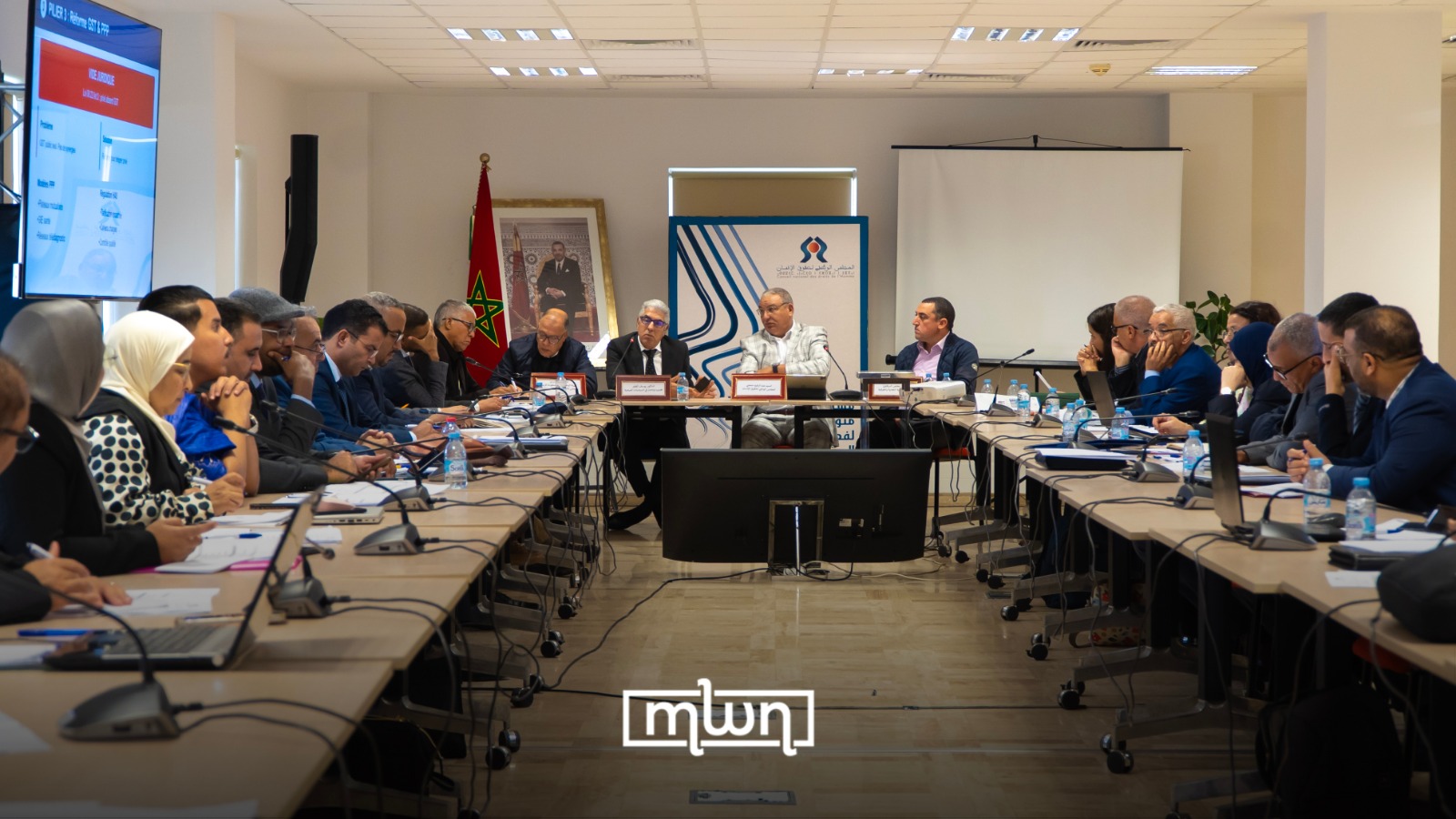
During a workshop organized today devoted to mountain, oasis, and coastal territories, CNDH presented an extensive framing document that examines how regional inequalities have deepened despite decades of public investment.
Structural constraints, from geographic isolation to the lingering effects of colonial-era territorial administration and weak policy coordination, continue to limit development in several regions.
Core principles
In her opening remarks, CNDH President Amina Bouayach underlined that spatial justice has become “a central issue in the trajectory of human rights protection.”
She recalled that the council has been working on this question since 2019, noting that several fundamental rights-related challenges intersect within this framework.
“These challenges bring together civil, political, economic, social, cultural, and environmental dimensions,” Bouayach said, citing the rights to education, health, adequate housing, a healthy environment, mobility, non-discrimination, and development as areas where territorial disparities remain particularly visible.
According to the council, these disparities have reached a point where they directly undermine human rights. The framing document describes spatial justice as “the territorial distribution of resources, services, and opportunities as a key determinant of citizens’ ability to access their basic rights.”
The worsening effects of climate change, shrinking natural resources, and increased disaster risks mean spatial justice can no longer be treated as a secondary policy option, it stressed.
In its memorandum submitted to the Head of Government before the 2021 policy statement, the council described territorial inequalities as one of the main drivers of new social expressions and a growing source of tension.
Today’s workshop called on experts to propose realistic, field-oriented solutions tailored to the specificities of each territory.
Telemedicine as a model for rights-based solutions
On the sidelines of the workshop, Morocco World News (MWN) interviewed Abdelaziz Yahyahoui, professor at Cadi Ayad University, who presented a case study illustrating how innovation can reduce territorial inequalities.
“I made a presentation on the use of telemedicine to help overcome the difficulties faced by mountainous and remote areas,” he said.
“Instead of waiting ten years to establish basic infrastructure, whether highways or passable national roads, we have the opportunity, through innovation, to use telemedicine.”
Yahyahoui referenced a successful initiative already underway. “We established a center in Tinghir, and in collaboration with the University Hospital Center (CHU) of Marrakech, we have successfully demonstrated the feasibility of this innovative technique,” he explained.
He also drew attention to the environmental value of mountainous regions. “Mountains deliver services such as climate regulation and water purification. They are also hotspots of biodiversity,” he noted, suggesting that Morocco could develop payment schemes for ecosystem services.
According to Yahyahoui, this would “honor the mountains and their traditional knowledge in managing scarce resources, such as water, pastoral land, and soil, while providing compensation for the services they maintain.”
He argued that such measures would strengthen national territorial resilience: “These efforts would enable mountains to continue playing a foundational role in territorial management.”
Shift in national development thinking
CNDH’s renewed call for spatial justice signals a deeper institutional shift: the recognition that territorial equality is central to the protection of rights and the strengthening of social cohesion.
By placing spatial justice at the heart of its strategy, the council is urging national and local actors to integrate human rights into territorial planning, rethink disparities through a geographic lens, and design solutions rooted in local realities.
As the debate evolves, the council’s approach is expected to inform future policy orientations, offering a rights-based framework for addressing long-standing imbalances that continue to shape the daily lives of communities across Morocco.