
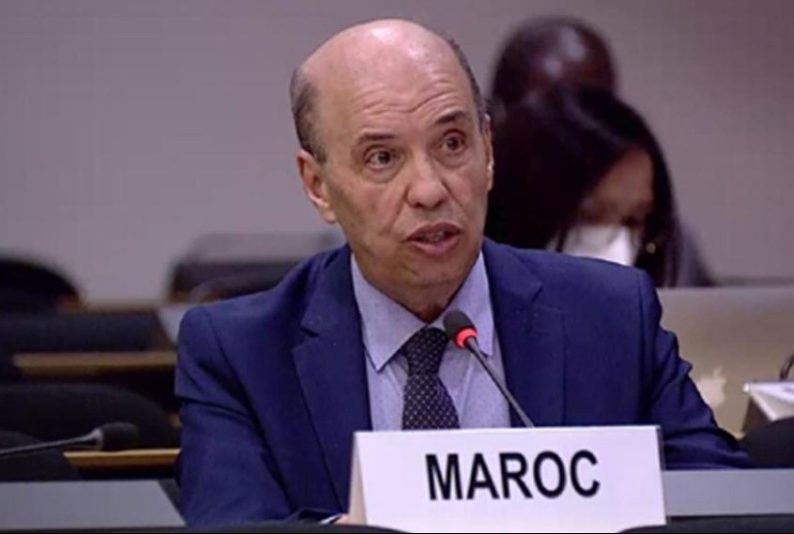
Rabat – Morocco took part yesterday at the opening of the 72nd session of the Trade and Development Board of the United Nations Conference on Trade and Development (UNCTAD) in Geneva, placing development partnerships and economic solidarity at the heart of global dialogue.
Ambassador Omar Zniber, Morocco’s permanent representative to the UN Office in Geneva, represented the country at the session’s launch.
The opening ceremony was led by UNCTAD Secretary General Rebeca Grynspan, who outlined the organization’s achievements in 2025, the outcomes of UNCTAD 16 held in October, and the main priorities expected to define 2026.
The Trade and Development Board acts as the governing body steering UNCTAD’s work throughout the year. It is the forum where member states review ongoing programs, assess analytical work, and debate the challenges in shaping development.
This year’s session arrives at a pivotal moment, taking place just a month after the adoption of the Geneva Consensus – a political agreement that aims to move the global economic system toward greater fairness, inclusion, and sustainability.
Morocco highlights its priorities for the Geneva Consensus
Taking the floor during the general debate, Ambassador Zniber welcomed the work carried out by UNCTAD regarding developing economies. He recalled the organization’s contribution in areas such as debt management, investment capacity building, and trade facilitation.
The ambassador reaffirmed Morocco’s intention to take an active role in implementing the Geneva Consensus. He highlighted two areas the country considers essential for progress.
The first is strengthening South–South commercial partnerships, which he described as a powerful engine for regional integration and shared growth.
He pointed to the Global System of Trade Preferences among Developing Countries as a tool capable of opening new opportunities and helping member states promote more sustainable and balanced trade flows.
The second priority concerns deepening regional cooperation, particularly among countries of the Global South.
According to Zniber, South–South initiatives have become indispensable for addressing challenges that disproportionately affect developing nations — from infrastructure gaps to market access barriers.
The ambassador emphasized that the least developed countries remain particularly vulnerable and require coordinated regional strategies to support them.
To illustrate this approach, Zniber highlighted the initiative launched by King Mohammed VI, which provides Sahel countries with access to the Atlantic Ocean.
The project aims to break the geographical isolation of the Sahel, offer strategic maritime access, and reinforce stability and prosperity across 23 African countries bordering the Atlantic.
Morocco considers the initiative a model of how regional cooperation can directly support long-term development goals.
Before concluding his remarks, Zniber invited UNCTAD and African member states to participate in the second African Continental Free Trade Area Business Forum, scheduled to take place on December 11 and 12 in Marrakech. The event is expected to bring together policymakers and investors to explore opportunities within the continent’s emerging free trade zone.
Read Also: FAO Honors AMCI for Driving South-South Development Leadership