 Join on WhatsApp
 Join on Telegram
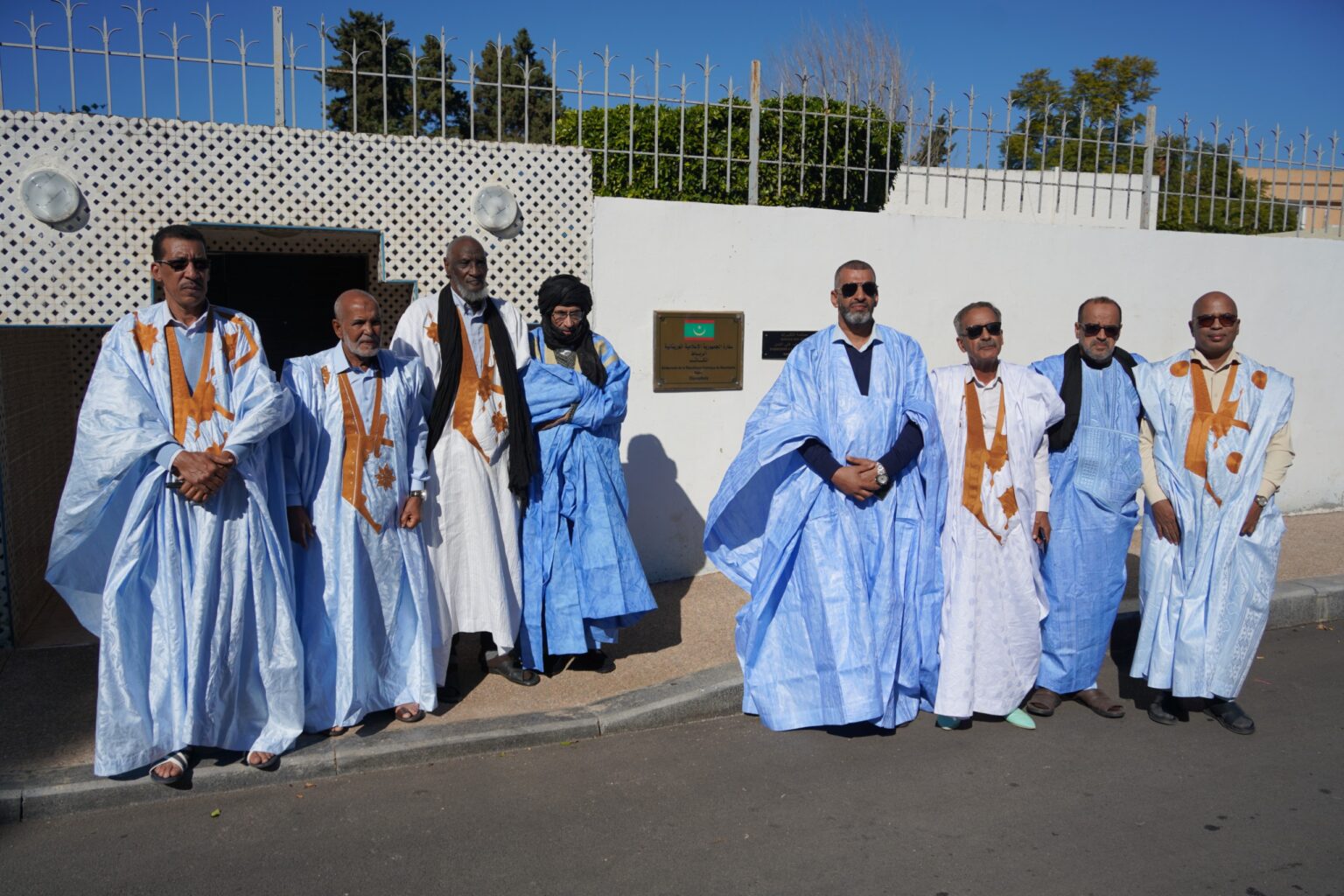
Marrakech – A delegation representing Moroccan Sahrawi tribes met with Mauritania’s ambassador to Morocco, Ahmed Ould Bahya, requesting the establishment of a Mauritanian consulate in Laayoune. The meeting took place on Wednesday as the delegation congratulated Mauritania on its 65th independence anniversary.
The Sahrawi representatives delivered an official letter requesting consular services for “tens of thousands” of dual-nationality Mauritanian citizens and residents in Morocco’s southern provinces. The delegation noted this would reduce travel costs and administrative burdens for Mauritanians living in southern Morocco.
Ambassador Ould Bahya promised to relay the request to President Mohamed Ould Ghazouani promptly. The Sahrawi delegation described their appeal as a “humanitarian and social demand” that would alleviate travel expenses for thousands of Mauritanian residents.
The delegation linked their request to UN Security Council Resolution 2797, which they said “enshrined Moroccan sovereignty through autonomy as the sole legal framework for reaching a final solution under Moroccan national sovereignty.” This follows growing international recognition of Morocco’s autonomy plan as the basis for resolving the territorial dispute.
The request comes as approximately 30 countries maintain diplomatic missions in either Laayoune or Dakhla. In mid-October, Massad Boulos, senior advisor to US President Donald Trump, reaffirmed American plans to open a consulate in Morocco’s Western Sahara.
“This is the Moroccan Sahara,” Boulos told Asharq News. “President Trump has affirmed Morocco’s sovereignty over the Sahara and emphasized the need for a lasting solution to this issue.”
Meanwhile, Morocco continues developing infrastructure in its southern provinces. The Amgala-Bir Oum Grine border crossing with Mauritania is expected to open in coming weeks following completion of a 93-kilometer road connecting Smara to Mauritania.
The new crossing represents a second border point alongside Guerguerat. Morocco’s Royal Armed Forces completed the road construction between January and March, with total project costs reaching MAD 49.7 million ($4.97 million).
UN Secretary-General Antonio Guterres’ October report confirmed that MINURSO observed Morocco completing the road construction and noted that the Commander of the FAR Southern Zone assured the mission that the road “was meant for civilian use and unrelated to the operations” of Moroccan forces.
Trade between Morocco and Mauritania currently accounts for 17% of Mauritania’s total African continental exchanges. The Mauritanian Interior Ministry officially validated the creation of 82 mandatory border posts in February, including the Amgala-Bir Oum Grine crossing.
Mauritania has moved on
The Sahrawi delegation’s consulate request comes after Mauritania bluntly shut down the Polisario’s attempts to gain a foothold in Nouakchott. The move testifies to Mauritania’s growing impatience with an increasingly irrelevant separatist group whose demands have long outlived their strategic usefulness.
After years of being dragged into a conflict that offers it nothing but risk, Mauritania is now openly recalibrating – signaling that it will no longer indulge Polisario’s political theater nor serve as a platform for Algeria’s exhausted regional agendas.
Mauritania has endured prolonged exposure to cross-border terrorism, armed infiltration, and destabilizing activities emanating from separatist movements. The country’s gradual pivot toward Morocco represents a pragmatic realignment driven by security imperatives and economic opportunities.
This diplomatic reorientation gained momentum following the December 20, 2024 royal audience between King Mohammed VI and President Ould El Ghazouani at Casablanca’s Royal Palace.
The two leaders affirmed their commitment to developing strategic connectivity projects and coordinating contributions within Morocco’s continental initiatives, particularly the African-Atlantic gas pipeline and the Atlantic Initiative facilitating Sahel states’ access to Atlantic trade routes.
The bilateral rapprochement makes clear that Nouakchott finally recognizes what has been obvious for years: real stability and prosperity come from partnering with Morocco, not from entertaining actors whose only regional contribution has been chaos, obstruction, and diplomatic blackmail.
Mauritania’s strategic shift reflects a blunt assessment that its national interests are fundamentally incompatible with the stagnation, extremism, and manufactured crises exported by separatist proxies.
These developments reaffirm Morocco’s uncontested legitimacy in its southern provinces while exposing, with growing clarity, the terminal isolation of separatist movements that survive not on diplomacy or popular support, but on intimidation, fabricated narratives, and the political ventriloquism of their foreign sponsors.