 Join on WhatsApp
 Join on Telegram
Morocco is entering a critical phase in its developmental trajectory, where economic ambition intersects with social challenges, all within a strategic vision that places human capital at the center of every reform. After two decades of major projects and structural reforms, the Moroccan development model has garnered national and regional attention, both for its ability to maintain stability and for its commitment to building more efficient and open institutions.
In this context, Morocco’s involvement in hosting the “CAN 2025” and the 2030 FIFA World Cup, alongside Spain and Portugal, represents a step that extends far beyond the purely sporting dimension. For Morocco, the World Cup is not merely a transient football event; it is a multi-layered strategic endeavor. It reflects the state’s desire to leverage sport as a tool for development, as a new platform to attract investment, and as a space to consolidate Morocco’s diplomatic and cultural presence on the international stage.
What distinguishes the Moroccan experience is its effort to link World Cup preparations to deeper reform projects involving infrastructure, transportation, healthcare, and urban environments. The projects underway today are not isolated initiatives but are part of the comprehensive development vision the state has pursued since launching the new developmental model. Yet the key question remains: to what extent can these projects leave a lasting impact once the sporting event ends?
Officials and experts affirm that Morocco’s hosting commitments include clear obligations to enhance the healthcare system, from equipping emergency departments to improving treatment services, in line with international standards. This approach reflects the understanding that true development is not limited to building stadiums or highways but lies in establishing essential facilities that serve citizens in their daily lives.
In recent years, Morocco has demonstrated its capacity to achieve significant leaps across multiple sectors, from renewable energy to infrastructure and large-scale industrial projects. It has also secured a prominent position in sports diplomacy, thanks to the achievements of its national teams and organizational successes. Yet these accomplishments, however important, require integration into public policy to avoid remaining merely symbolic or circumstantial.
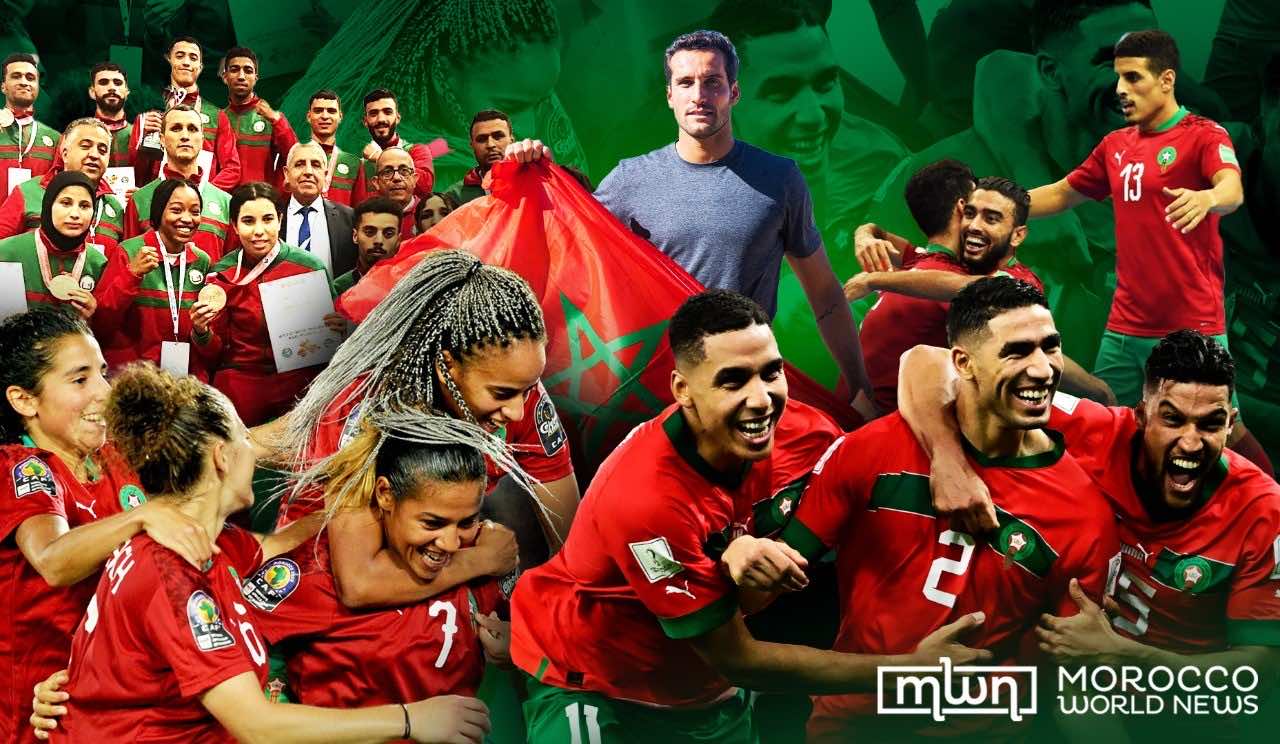
Recent achievements in Moroccan sports exemplify this upward trajectory. The victory of the national youth team in the World Cup in Chile on October 20, 2025, was no accident but the result of years of hard work and systematic planning—from the development of training centers to the overhaul of sports infrastructure. This symbolic triumph reflects a success that goes beyond winning on the field; it signals the maturation of a comprehensive national project beginning to reap its rewards.
As Nelson Mandela famously said in his 2000 address, “Sport has the power to change the world. It has the power to unite people in a way that little else does.” From this perspective, the relationship between sport and development has never been clearer. Modern stadiums, with their elegant design and meticulous execution, mirror the ambition of a country seeking to embed a culture of quality across all sectors. It is thus no surprise that many voices in Morocco call for the ethos of these sports projects to extend to other sectors, especially education and healthcare, so that excellence becomes a national standard rather than a seasonal exception.
The World Cup presents a golden opportunity to accelerate structural reforms, but its true value transcends economics and sports. It represents a moment of collective awareness that development is not imported but built; that it is not merely about inaugurating projects, but about translating vision into fair policies, realistic plans, and effective institutions.
The real challenge facing Morocco today is to transform the sporting momentum into lasting developmental gains. Sport, as a form of soft power, can enhance the country’s image and attract investment. As Joseph Nye, the originator of the concept of soft power, stated: “Soft power is the ability to attract rather than coerce, and sport is one of the strongest tools of attraction because it is a language everyone understands.” Yet sport alone cannot guarantee sustainable development. To achieve this, it must be accompanied by deep institutional reforms in education, healthcare, and governance to translate strategic vision into tangible improvements in citizens’ lives.
The World Cup is an opportunity to accelerate reforms across all fields, but it is also a test of the state’s ability to balance ambition with realism. Advanced sports infrastructure, no matter how impressive, will not be effective if it is not integrated into a comprehensive urban and economic system. Hence, adopting a holistic approach that considers spatial justice is crucial, ensuring that all regions benefit from this momentum rather than concentrating investments solely in major cities.
Furthermore, observers note that co-hosting the World Cup presents Morocco with new challenges in terms of logistical coordination and balancing responsibilities with Spanish and Portuguese partners. While this experience may provide Morocco with unprecedented organizational expertise, it also requires institutional readiness and strict financial discipline to avoid negative economic repercussions after the event.
An objective assessment of Morocco’s development landscape shows a country steadily improving its international image and enhancing its continental standing. However, the sustainability of these gains depends on Morocco’s ability to implement deep domestic reforms, including governance practices and labor market structures. The real stake is not the World Cup itself, but what remains afterward: in institutions, service quality, and citizens’ confidence in their country’s capabilities.
In conclusion, hosting the 2030 World Cup reflects the ambition of a new Morocco striving to combine modern infrastructure with social justice. It is also a test of the maturity of Morocco’s developmental experience and its ability to balance international showcase with domestic reform imperatives. Ultimately, development is not a celebratory event but a long-term journey grounded in social justice, sustainability, accountability, quality, and good governance.