
 Join on WhatsApp
 Join on Telegram
On December 10, 2025, UNESCO added the Moroccan caftan to its Representative List of the Intangible Cultural Heritage of Humanity, a recognition of a living tradition that embodies centuries of craftsmanship, memory, and cultural transmission. The inscription affirms not only the caftan’s aesthetic refinement but also the dense social worlds that sustain it: intergenerational knowledge, gendered labor, regional variation, and ritual meaning. It also invites broader reflection on the richness of Morocco’s intangible heritage, much of which lives not in monumental forms but in stories, vernacular rituals, local landscapes, and the imaginative practices through which communities make meaning.
It is within this wider field of Moroccan cultural production and imagination that the Pilgrimage of the Cat — an astonishing, little-documented tradition from the Eastern High Atlas — takes its place.
Pilgrimage — “al-ḥajj” in its most revered forms — runs like a quiet current through Moroccan religious life, shaping how people speak of obligation, blessing, and the movement of beings across sacred landscapes, whether the journey is local or distant, personal or communal. For centuries, Moroccan Muslims have traveled to saints’ shrines and sacred places, as well as undertaken the great journey to Mecca. Moroccan Jews, likewise, have made pilgrimages to Jerusalem and to the tombs of revered saints during “hiloulot” celebrations. Together, these traditions saturate Morocco’s landscape with shrines, ritual paths, and communal gatherings that link everyday life to religious practices.
Yet what is most striking in Morocco’s vernacular imagination is that pilgrimage is not confined to humans. It extends outward to include animals and unseen beings, each endowed with intentionality, purpose, and ritual agency.
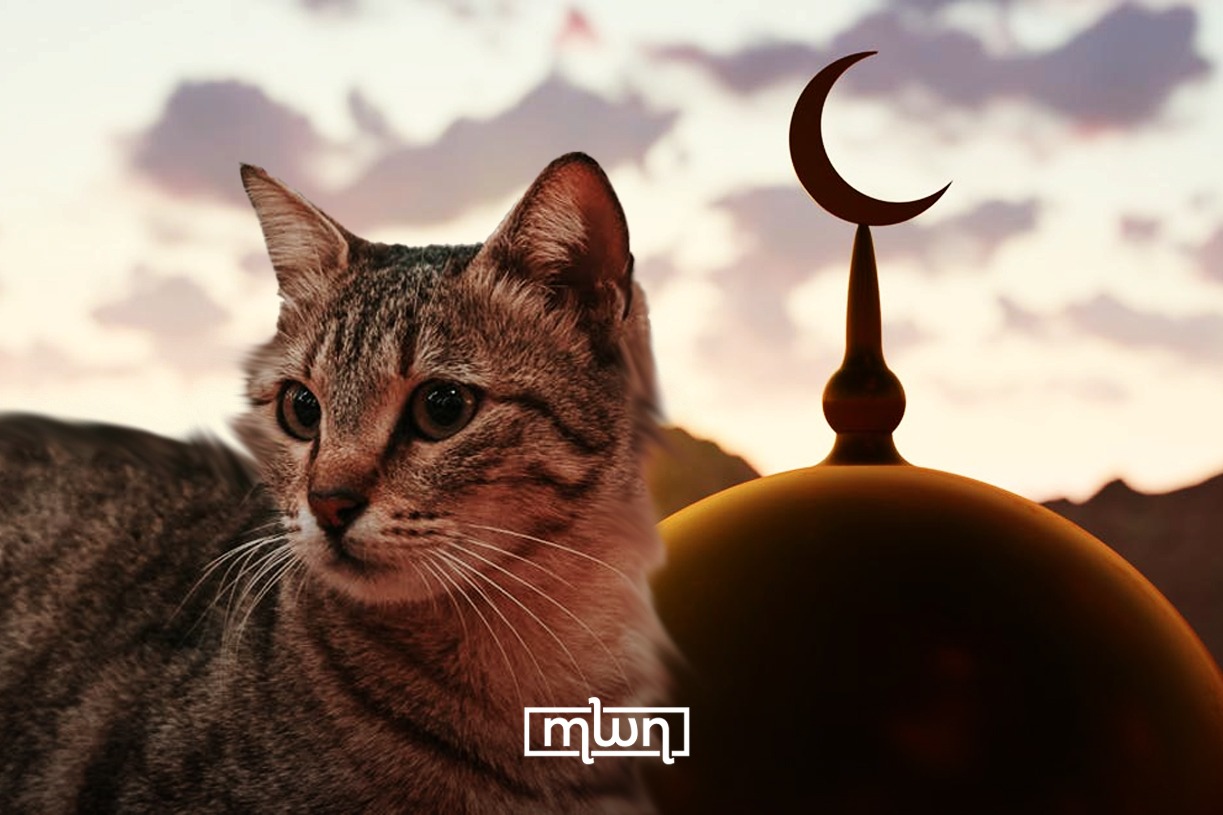
In Morocco, cats occupy a uniquely cherished place within this sacred worldview because they are believed to carry “baraka,” a spiritual blessing rooted in the Prophet Muhammad’s well-known affection for cats. This sense of sacred regard shapes how Moroccans live with and care for them: cats are rarely harmed, never treated as vermin, and are viewed as spiritually pure in ways that set them apart from other animals. Their presence in homes, markets, mosques, and alleyways is not merely tolerated but welcomed, often interpreted as a sign of divine protection or gentle good fortune.
I first came upon this wider practice of pilgrimage in the mid-1990s while conducting ethnographic fieldwork on small-scale irrigated agriculture in Kerrandou, near Er-Rich in southeast Morocco. During cool winter mornings, farmers and shepherds would sit with me in the fields or at the threshing floor, our conversations rising and falling with children’s laughter and play drifting from nearby houses, the distant calls of herders, and the whisper of the winter wind moving across the fields. Later in the day we gathered at the olive oil presses, drinking sweet tea with homemade bread dipped in freshly pressed olive oil alongside the mill workers, the air thick with the scent of crushed olives and woodsmoke. It was in these intimate, everyday settings — between sips of tea, between discussions of religion, “Eid al-Aḍḥā,” and the shifting rhythms of farming and nomadism — that the stories surfaced. Again and again, they spoke — never jokingly — about “Tisli n-Mouche,” the Rock of the Cat in Tamazight. Their conviction was unmistakable. To them, the stories of cats performing pilgrimage were not whimsical curiosities but expressions of a deeper sacred worldview in which animals inhabit the sacred alongside humans.
Hearing these stories, my imagination ignited. I could not help but picture the cats of Kerrandou carrying out the great rituals of “al-hajj” in their own feline world: slipping into a state of “iḥrām” with the natural purity of their sleek coats; circling their stone-Kaʿba in seven deliberate turns, as if marking each circuit with the precision of human “ṭawāf”; tracing miniature “saʿī” paths between imagined hills of Ṣafā and Marwah; gathering on their own Arafat-like outcrop in silent communion; or pausing at some nocturnal Muzdalifah to collect the pebbles of their small universe.
Once my mind entered this space of ritual parallelism, the questions multiplied playfully: Did cats, too, have to submit to a kind of “al-hajj” lottery in their unseen world? Did they undergo health exams or receive village-wide ritual meals before their departure and upon their return, as human pilgrims often do? Did they need passports of their own to cross borders, or enough money to “make the al-hajj” in whatever economic system governed their realm? Did they come home bearing gifts — tiny equivalents of Zamzam water or treasured Mecca dates — for their waiting families and friends?
The villagers’ stories opened so many imaginative possibilities that the line between narrative and sacred imagination felt porous, alive, and utterly captivating.
Lahcen Ait Lfakih (2013), a researcher and expert on oral history in southeastern Morocco, describes the location, legend, and cultural significance of Tisli n-Mouche, a distinctive rock pilgrimage shrine (mazār sakhri) situated in the Eastern High Atlas. Far from being a minor landscape feature, the rock is a considerable geological formation visible from miles away, a landmark that dominates its surrounding areas. Its imposing presence only amplifies the power villagers attribute to it: a site not of human pilgrimage, but of feline sacred motion.
Known locally as Tisli n-Mouche — literally “the Rock of the Cat” — the shrine sits within the rural community of M’zizl, about 20 kilometers west of the town of Er-Rich. For generations, this rock served as an anchor of sacred geography not because humans traveled to it, but because cats themselves were believed to journey there.
Local stories hold that on the morning of the tenth day of “Dhū al-Ḥijjah—Eid al-Adha,” the climax of the global Hajj — cats from surrounding villages made their way to Tisli n-Mouche. There, they circled the rock in ritual motion mirroring the human “ṭawāf” around the Kaʿba. In this reversal of pilgrimage logic, animals — not humans — became the pilgrims, while humans served as witnesses and interpreters.
Villagers insisted the cats’ circling was deliberate and meaningful, described with the same vocabulary used for human pilgrimage: they turn and they circle around. Some elders swore the cats completed seven circuits, echoing the sevenfold “ṭawāf” in Mecca and the symbolic weight of the number seven in Amazigh, Islamic, and Jewish sacred traditions.
In this worldview, animals participate in sacred order. A beloved cat might be affectionately called “my uncle the pilgrim” (“ʿammi al-ḥājj”) — a phrase that preserves the imaginative link between animals and pilgrimage.
Although the full narratives have faded, what remains is the rock’s deep symbolic authority: a site where animal piety, sacred time, and ritual imitation once intersected. The pilgrimage is no longer practiced, yet it persists in memory as an echo of a time when villagers imagined that even animals had their pathways toward the sacred.
There is a beloved Moroccan folktale that captures the tension between ritual performance and true transformation. It tells of a notorious cat, feared by every mouse in the village, who one year announced that he was going on the Hajj. For generations, the tale goes, this cat had terrorized the mouse population — yet when he departed for Mecca, murmurs of hope spread among his would-be victims. Perhaps the pilgrimage would soften him. Perhaps even a predator could be remade.
When the cat finally returned, wrapped in the dignity of a pilgrim and proudly bearing the title “al-ḥājj,” the mice gathered to debate whether he had changed. Tradition demanded welcoming home a pilgrim, but wisdom urged caution. In the end, the leader of the mice resolved to investigate.
He crept toward the cat’s house and slipped through a crack in the wall. There, on a prayer mat, the cat sat murmuring pious invocations, as serene as any holy man. Convinced that the pilgrimage had transformed him, the leader mouse stepped forward to greet the newly sanctified “al-ḥājj.” But the moment the cat caught sight of him, all pretense dissolved: he lunged with the same old ferocity, sending the mouse scrambling for his life.
Breathless and shaken, the leader mouse returned to the others with a single, devastating verdict: Yes, the cat had gone on pilgrimage, and yes, he bore the noble title of “al-ḥājj” — but beneath the honorific, he still pounced like a cat.
Humorous as it is, the tale reflects a deeper truth: pilgrimage is always aspirational, and transformation — whether human or animal — is never guaranteed.
Today, the stories of Tisli n-Mouche stand at the threshold of memory and possibility. And in a region confronting unemployment, depopulation, and ecological uncertainty, these stories — rooted in landscape, animal life, and sacred imagination — offer unexpected pathways for renewal.
Revitalizing the Pilgrimage of the Cat aligns with Morocco’s cultural and development priorities. It restores a distinctive Amazigh tradition; draws tourism toward underserved regions; positions Morocco as a leader in eco-spiritual and experiential tourism; highlights cultural respect for animals; and decentralizes tourism away from saturated hubs.
With the global rise of cat culture and feline tourism — from Japan’s cat islands to Marrakech’s street-cat fame — southeastern Moroccan communities could attract visitors seeking meaningful connections to animals, landscape, and ritual memory. A carefully curated cat pilgrimage trail, guided by local storytellers and stewards of the tradition, could become a model for sustainable, community-led cultural tourism.
Imagine a Cat Pilgrimage Heritage Trail, interpretive signage in multiple languages, and an annual Festival of the PilgrimCat celebrating storytelling, crafts, and regional cuisine. A cat sanctuary and visitor center could train local youth as guides and caretakers. Women’s cooperatives could lead workshops, markets, and culinary demonstrations. Eco-lodges and guided treks could revitalize the local economy.
The global community of cat enthusiasts — numbering in the millions — would be distinctly drawn to the prospect of their pets undergoing a symbolic ritual transformation: a journey that elevates an ordinary household cat into a “pilgrim cat,” endowed with blessing, narrative significance, and cultural memory. Bestowing upon a pet the honorific “al-ḥājj” or “al-ḥājja” would formally acknowledge its completion of a unique rite of passage and confer a recognizable spiritual badge or credential available only in Morocco.
In this context, one might even envision a form of feline terroir certification — a place marker indicating that a cat has participated in the ritual landscape of Tisli n-Mouche, akin to how regional products bear an appellation denoting origin and authenticity. A “Pilgrim Cat of the Eastern High Atlas” would thus carry a status grounded not only in symbolic transformation but also in the cultural and geographic specificity of the site itself. Such a designation — rooted in Morocco’s distinctive spiritual and ecological heritage — would be unmatched anywhere else in the world.
Reviving the Pilgrimage of the Cat is not merely a tourism project. It is a cultural rebirth: restoring heritage, merging Muslim, Jewish, and Amazigh sacred geographies, recognizing animals as spiritually significant beings, and transforming heritage into economic lifeblood. It re-enchants a landscape marked by hardship and positions Morocco as home to the world’s only Feline Pilgrimage Sanctuary.
At a moment when cultural tourism is being reimagined around ethics, ecology, and imagination, Morocco could pioneer a model that is ancient yet visionary — centered on a sacred rock in the Eastern High Atlas where, as villagers once said, even cats made their pilgrimage.
And in doing so, Morocco can tell a story that only it can tell: pilgrimage belongs not only to humans, but to the wider world we share — with cats included.