 Join on WhatsApp
 Join on Telegram
In recent decades, Moroccan diplomacy, under the wise leadership of King Mohammed VI, has assumed a remarkable place on the international stage. The decisive achievements regarding the Moroccan Sahara — most notably the recent UN Security Council Resolution 2797, which reaffirmed the Moroccan Autonomy Initiative as the sole and exclusive basis for ending the artificial dispute — have further strengthened the Kingdom’s global standing. This recognition, however, is not newfound; it extends across centuries. Historical records, Moroccan and foreign alike, testify to the Kingdom’s long-standing prestige and the depth of its international relations.
Within this long continuum, Morocco has produced distinguished diplomats whose contributions transcended politics to cultivate scholarly, cultural, and scientific ties with the wider world. Among them stand Mohamed Ben Haddou and Mohammed Ben Ali envoys to England, alongside Ibn Ben Othmani El Meknassi, Tamgrouti and El Ziyyani, who served as delegates to Spain and the Ottoman Empire during the Zidani and Alaouite eras.
On the fifth of this month, a friendly photograph was captured of the Minister of Foreign Affairs, African Cooperation and Moroccan Expatriates, Mr. Nasser Bourita, and his Dutch counterpart, Mr. David Van Weel. The photograph of them walking along the garden promenade of the meeting venue was widely circulated, on the sidelines of discussions focused on strengthening and enhancing the partnership between the two kingdoms. The timing of the meeting is particularly notable, as this December marks the 415th anniversary of the Treaty of Friendship and Free Commerce between Morocco and the Netherlands (Dutch Republic), concluded on December 24, 1610 under Sultan Moulay Zydane and Maurice of Nassau, Prince of Orange. The treaty crowned earlier exchanges and friendly correspondence during Ahmed El Mansour Dahbi, and it opened a rich chapter of diplomatic missions between both sides.
Al Hajari: diplomat, scholar, and advocate
Among the most remarkable episodes of this era is the mission of the Moroccan scholar-envoy Ahmed Ben Al-Qassem Al-Hajarī (Afouqay). Dispatched to France and later the Dutch Republic, he was entrusted with defending the rights of the Andalusian refugees whose belongings had been seized by French ships as they fled Philip III’s edicts of expulsion. Some of the victims accompanied him on the voyage from Safi, likely in early 1611. After a month at sea, they reached Le Havre and travelled onward to Rouen, where al-Hajari and his companions donned French dress, a courtesy and diplomatic necessity that would accompany them throughout their stay.
His journey would take him through many French cities, and in Paris he was reunited with two old acquaintances: Étienne Hubert d’Orléans (1567–1614), professor of Arabic at the Collège Royal until 1613, and Arnaud de Lisle (1556–1613), the institution’s first Arabic professor appointed in 1587. Both men had lived in Marrakesh, served as physicians at the Moroccan court, and studied Arabic for its medical importance. Their support was invaluable. Through them, al-Hajari entered Europe’s legal and scholarly circles, gaining access to jurists, intellectuals, and royal counsellors.
His legal interventions stirred notable attention, drawing other Andalusian refugees from across Europe who sought restitution of stolen goods or the liberation of relatives seized by the Inquisition. After a year and a half in France, he succeeded in obtaining compensation for the rightful owners.
A landmark encounter near Paris: intellectual diplomacy in action
Parallel to his legal mission, al-Hajari collaborated with Hubert on linguistic projects. Among the surviving traces of this collaboration is an Arabic alphabet written in a collection of printed and manuscript folios signed “Ben Cacin de Maroque,” that is, Ben Al Qassem Al Maghribi. His presence thus nourished the early renaissance of Arabic studies in France and Europe.
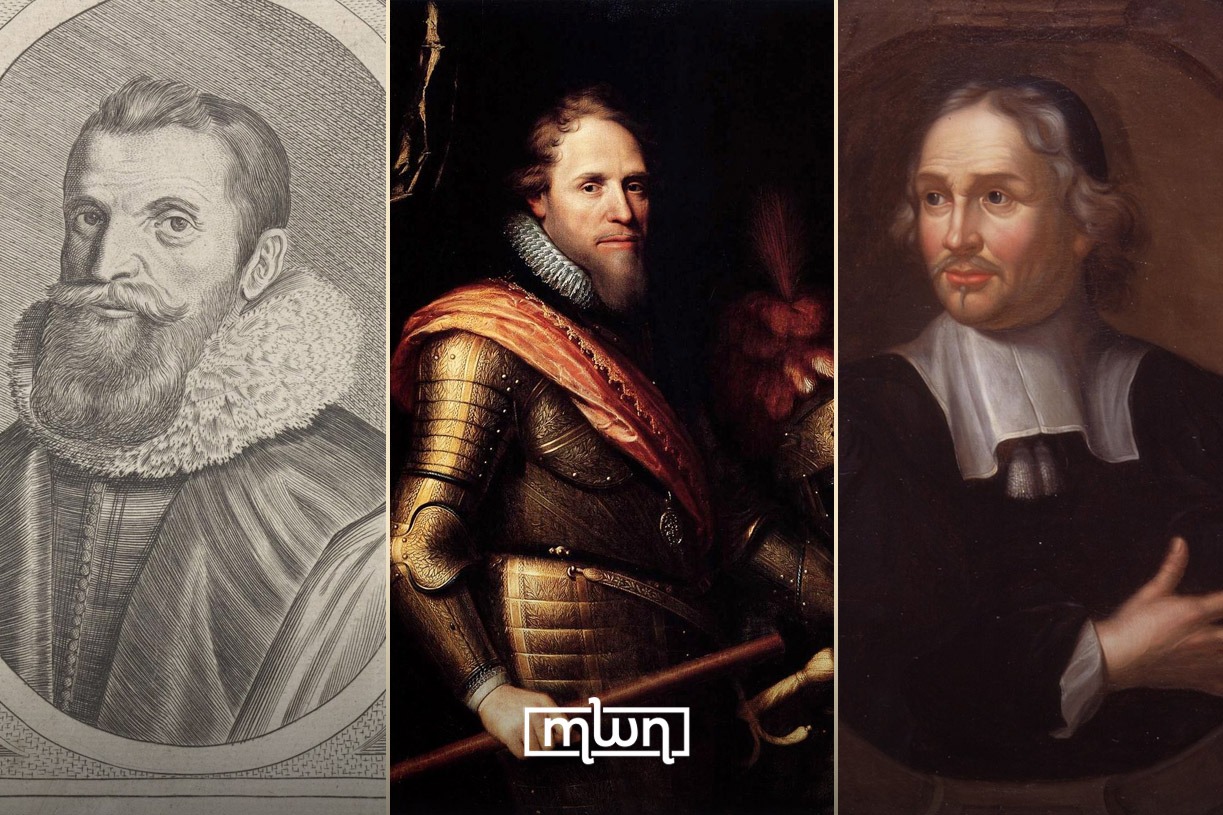
On September 11, 1611, one of the most consequential moments of al-Hajari’s journey occurred when he met Thomas Erpenius (1584-1624), then a student of Arabic living quietly in the village of Conflans near Paris. The meeting left a lasting impression on both men. Erpenius later described al-Hajari as “remarkably intelligent and learned,” and during the scholar’s stay in Paris, he became Erpenius’s instructor in Arabic, guiding him through texts and commentaries. This encounter laid the foundation for years of correspondence, forming an enduring intellectual bridge between Morocco, the Netherlands, and the wider European scholarly world.
Diplomacy and the flow of knowledge
The archives of the Netherlands record the arrival of a Dutch embassy to Morocco on August 10, 1622, led by Albert Ruyl, whose mission would continue until its conclusion on July 20, 1624. The mission included naval engineers sent to consult on building a port near Safi and to negotiate matters of military and political significance. Among the delegates was Jacob Golius (1596–1667), a student of Arabic at Leiden who would later become one of the great Orientalists of his age. He carried books as gifts for Sultan Moulay Zydane, himself a learned sovereign and accomplished linguist. He also bore a letter of introduction from his teacher Erpenius to al-Hajari, who guided him through Morocco’s intellectual circles.
During his stay, Golius engaged with scholars of al-Qarawiyyin and others, collecting manuscripts that profoundly shaped his later scholarship. He would later succeed his teacher Erpenius as head of the chair of Oriental Languages at Leiden University 1625, a position that continues to this day.
Al-Hajari in the Netherlands
After concluding his mission in France, al-Hajari proceeded to the Dutch Republic, where he met Prince Maurice of Nassau in The Hague and visited Amsterdam; Dutch institutions, including the University of Leiden, continue to preserve traces of his influence. Through his collaborations with Erpenius and Golius, he made substantial contributions to Europe’s translation movement and fostered the scientific exchange with the Islamic world. Morocco played a central role in this process.
A legacy of knowledge and diplomacy
Al-Hajari’s accounts preserve vivid descriptions of the cities he visited, the theological debates he engaged in with French clergy, the diplomats he encountered, and the intellectual world he navigated. His later travels in the East further expanded his experience and reputation.
Together with other Moroccan envoys, scholars, jurists, and diplomats, al-Hajari represents a long tradition of scholarly diplomacy, through which Morocco built bridges with Europe based not only on politics, but on learning, culture, and intellectual curiosity.
Today, as Moroccan diplomacy reaches new heights, the legacy of these early ambassadors reminds us that the Kingdom’s international stature rests on centuries of engagement, openness, and exchange, qualities that continue to define Morocco’s role in the world.