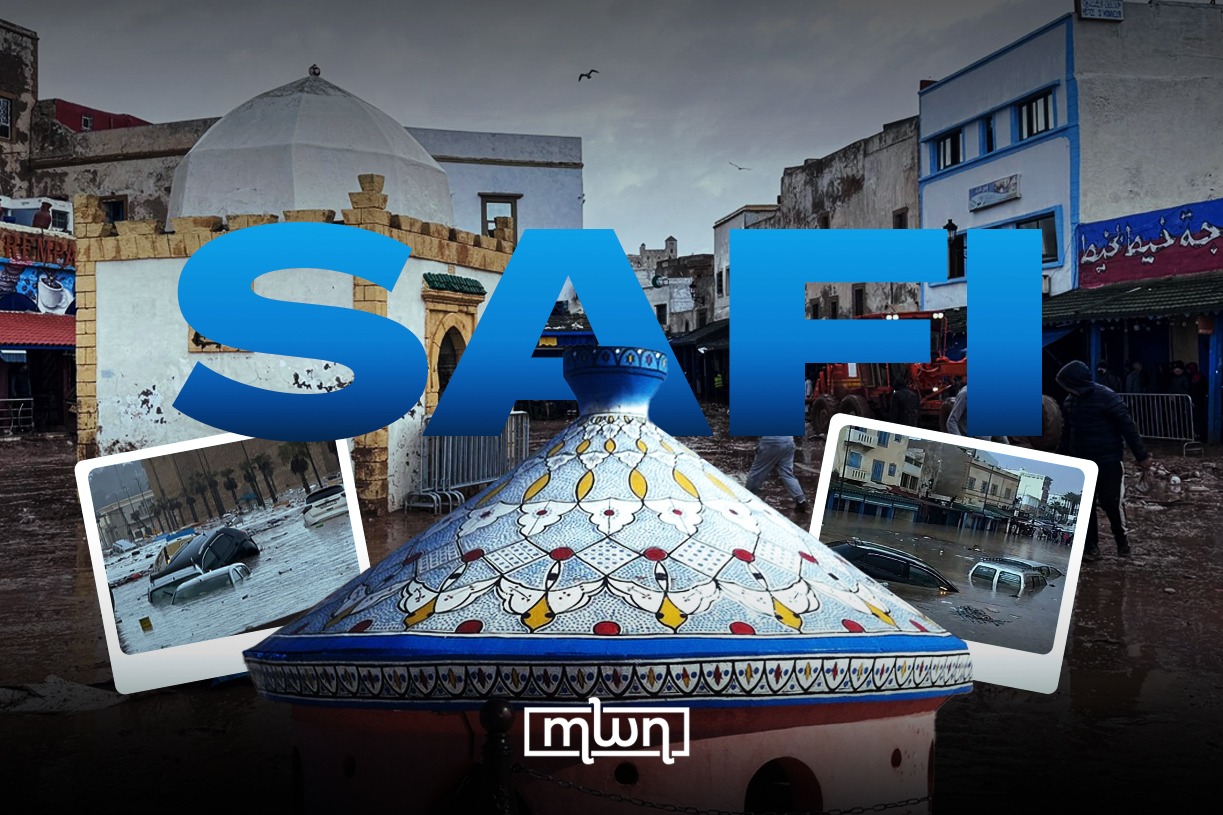
Marrakech – The International Federation of Red Cross and Red Crescent Societies (IFRC) launched a 6-month emergency operation in Morocco following devastating floods in Safi province.
In its report published on Wednesday, the organization documented the death toll at 52 people, exceeding earlier official estimates of 37 fatalities, while 2,800 individuals were affected by the disaster.
The IFRC allocated CHF 351,736 (approximately $387,000) for the Disaster Relief Emergency Fund operation after flash floods struck the Atlantic coastal city on December 14, 2025. The flooding scored 0.5 on the GDACS scale and resulted in an estimated 20-50 injuries alongside the confirmed deaths.
Intense rainfall over several hours caused rapid surface runoff that overwhelmed existing drainage systems. Approximately 700 households comprising 2,800 individuals suffered damage to buildings, loss of essential items, and temporary displacement.
The report states that 300 households experienced “partial or complete flooding of their dwellings, compromising living conditions and immediate safety.”
The hardest-hit area was the historic Medina old town, particularly the Bab Chaaba and Sibi Boudheb neighborhoods. These older areas have high population density with around 400 residents per hectare.
The Medina is intersected by the Oued Chaaba river, which overflowed and inundated surrounding neighborhoods.
Floodwaters damaged 700 small businesses and swept away vehicles. Schools closed for three days as a precautionary measure. Road access was temporarily disrupted, complicating emergency response efforts.
Older neighborhoods bore the brunt
“The event highlighted the structural vulnerability of urban drainage and flood management systems, particularly in older neighborhoods with high population density,” the IFRC report states.
Local authorities rapidly mobilized search and rescue operations, evacuations, and site securing activities. However, the sudden onset placed significant pressure on local resources, creating gaps in meeting urgent humanitarian needs.
Within a few hours, Safi recorded 19 mm in one hour, 46 mm over 24 hours, and a peak intensity of 60 mm in three hours in the medina.
The Moroccan Red Crescent will distribute essential household items, including mattresses, pillows, blankets, and kitchen sets, to 350 households. The operation targets shelter materials, hygiene kits, and multipurpose cash assistance.
Cash grants of MAD 1,000 ($100) monthly for three months will support 500 vulnerable households through the RedRose-Moneygram agreement.
Health interventions include first aid support, psychological first aid training for 30 volunteers, and health awareness sessions for flood-related risks. The report identifies sensitive communication as “the top priority to avoid causing further distress and to uphold Do No Harm principles.”
The IFRC identified several factors that worsened the disaster’s impact. High urban density in flood-prone areas, saturated drainage infrastructure, and increased exposure to extreme weather events linked to climate variability contributed to the severity.
“Socio-economic vulnerability of affected households, limiting their capacity for self-recovery,” also compounded conditions, according to the assessment.
The operation will prioritize households that experienced flooding of homes, loss of livelihoods, or unsafe living conditions. Vulnerable groups include female-headed households, elderly residents, people with disabilities, and families with young children.
Selection criteria encompass “households whose shelter is unsafe or uninhabitable due to flooding” and those experiencing livelihood losses.
Flood disasters recur with deadly regularity
Morocco has experienced recurring flood disasters, with the 1995 Ourika Valley floods killing 730 people remaining in collective memory. More recently, 28 people died in Tetouan and Tangier floods in 2021, while 11 died in Tata, Errachidia, and Tiznit floods in September 2024.
“Floods were the most frequent and deadliest natural disaster in the country between 1970 and 2020,” according to research cited in the report.
The IFRC operation includes flood response training for the Safi branch and DREF training at the national level to improve disaster preparedness capacity.
Weather forecasts indicate additional rainfall at lower intensity in the coming week, which “could still hinder recovery efforts for affected populations,” the report warns.
The operation runs from December 24, 2025, to June 30. It involves 30 volunteers and staff from the Moroccan Red Crescent’s Safi branch, supported by IFRC surge personnel for field coordination and financial management.
Local authorities coordinate distribution spaces and processes while managing stocks from various sources. Civil Protection remains engaged in operational activities, with the Safi branch president serving as the main liaison.
The operation targets approximately 700 households based on rapid assessments conducted by the Moroccan Red Crescent in coordination with local authorities.
The IFRC notes that 46 families are accommodated in collective centers, including Hotel Kahrama Safi and a former women’s center, while most displaced families found temporary accommodation with relatives or neighbors.
Read also: Safi Floods Expose Morocco’s Neglect of City That Feeds Half the World Sardines