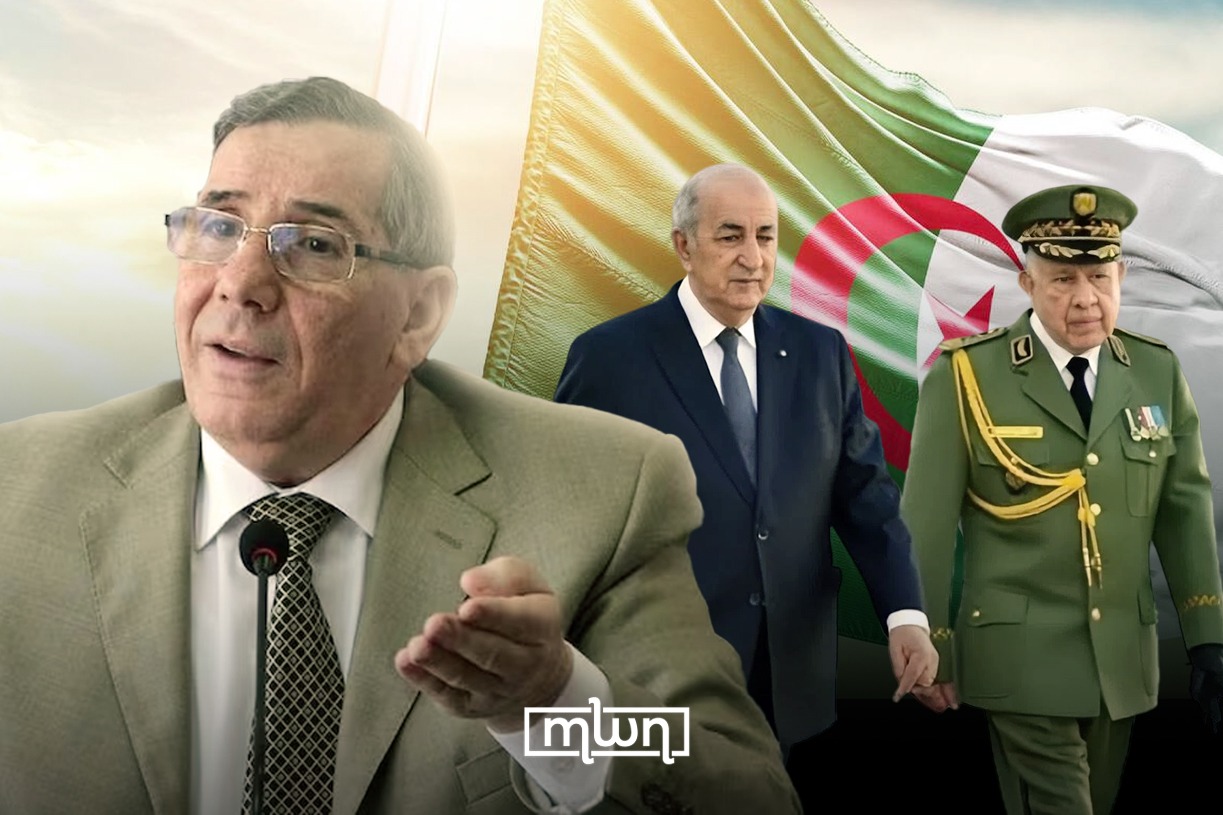
Marrakech – In what transcends mere irony into the realm of pure farce, Algerian politician Nour-Eddine Boukrouch has detonated a diplomatic bombshell of breathtaking audacity, demanding Morocco compensate Algeria for the billions hemorrhaged supporting the Polisario Front across five decades.
Unsurprisingly from a regime sustained by the residue of a long-expired revolution, this brazen inversion of responsibility recasts Algeria as victim rather than aggressor in the latest contortion of Algerian political theater. The statement thus amounted to outright political bankruptcy, exposing the El Mouradia Palace’s attempt to offload its strategic failure on Western Sahara onto Rabat as a convenient scapegoat.
In a recent article he published on his social media, Boukrouch’s preposterous proposition emerges from an argument that flouts all legal and international norms, leaving the Algerian state exposed before its own people, as it seeks compensation for funds it voluntarily and unilaterally spent to destabilize a neighboring country. Perhaps more critical, Boukrouch’s absurd proposal effectively admits that the so-called “phantom republic” was nothing more than a black hole that devoured public resources to no end.
The former minister compared Algeria’s expenditure to the “fortune of Qaroun,” invoking Biblical metaphors to describe the astronomical sums that vanished into the Saharan void. This comparison reveals not just fiscal profligacy but the complete intellectual collapse of Algeria’s separatist architecture
Citing the Quranic verse – “We had granted him such treasures that even their keys would burden a group of strong men” (28:76) – he declared the fortune was “incommensurable, inestimable, incalculable,” thus unconsciously confessing to the colossal misallocation that has bled Algeria’s coffers dry while achieving absolutely nothing.
The compensation demand crystallizes Algeria’s strategic exhaustion after fifty years of futile expenditure. Boukrouch outlined the complex financial arrangements between “two states” – the People’s Democratic Republic of Algeria (RADP) and the self-styled phantom “Sahrawi Arab Democratic Republic” (RASD).
“These are financial acts between two states, financial flows that have stretched over fifty years, not occasional handovers of cash suitcases,” he proclaimed, desperately attempting to legitimize what amounts to systematic proxy financing.
Billions burned, nothing gained
The demand resembles a failed arsonist billing his neighbor for the matches. It is an exercise in absurdism, where a discredited patron, having burned its own resources, now seeks reimbursement from the very state it tried, and failed, to undermine.
It is most of all diplomatic pantomime and self-parody in its purest form: a patron who squandered billions financing a failed cause now demands reimbursement from the target of that campaign, as if strategic folly could be retroactively converted into an invoice.
The legal contortions required to justify such compensation defy every principle of international jurisprudence, where Boukrouch essentially argues that Morocco should subsidize Algeria’s proxy warfare.
Perhaps most tellingly, Boukrouch acknowledged the approaching “denouement” of the Western Sahara problem. “If the autonomy option under Moroccan sovereignty is imposed by the United States, the Polisario must demand from them and from Morocco the inscription of this problem on the agenda of preliminary discussions,” he frantically scrambled, in a last-ditch maneuver, to retain relevance as strategic options narrowed.
Like locking the stable after the horse has bolted, this belated maneuvering shows that Algeria’s political class and military junta have finally grasped the shipwreck of their separatist illusion. And they are now scrambling to claw back billions burned on a phantom republic that yielded nothing but strategic self-inflicted ruin.
Except it is far too late, especially given that the same regime, believing they would eventually prevail, dismissed over the decades countless efforts by Morocco to settle the Sahara dispute on friendly terms with “our Algerian brothers.”
Former Algerian military officer Anouar Malek disclosed in May 2025 that Algeria had incinerated an estimated $500 billion in a futile campaign to obstruct Morocco’s progress. His testimony was a brutal indictment of a regime that converted national wealth into permanent hostility, draining the Algerian people of both prosperity and dignity.
“We spent our wealth and lost our dignity because of the Sahara,” he admitted – puncturing decades of official mythmaking and strategic denial.
A September 2025 report by Sahel Intelligence exposed Algeria’s annual €850 million outlay on Polisario operations, detailing systematic military training, arms transfers, and diplomatic engineering that dwarf any humanitarian pretense.
The report portrays Tindouf as a permanent military enclave disguised as refugee camps – a costly state-sponsored fiction that has steadily bled Algeria’s treasury while inadvertently consolidating Morocco’s international standing.
Proxy-state syndrome in action
Boukrouch’s financial archaeology turns damning when he questions the legal status of these transfers. Whether these transfers were loans, grants, or credits is intentionally left opaque, he laid it out, a calculated ambiguity that lays bare the ad-hoc, incoherent nature of Algeria’s supposed long-term strategy.
“Were these funds – disbursed in dollars and dinars for local expenses – annual endowments, loans with or without interest, or term credits governed by proper conventions? We do not know.”
This deliberate opacity exemplifies what political scientists describe as proxy-state syndrome: the illusion that prolonged financing, arms transfers, and diplomatic theater can manufacture sovereignty where none exists. From Tindouf to other failed proxy experiments, the record shows that money can sustain militias and narratives – but it cannot conjure states, legitimacy, or durable geopolitical facts.
The politician’s desperation peaks and reaches fever pitch when he proposes exploiting personal channels: “President Abdelmadjid Tebboune could also take advantage of the solicitude shown to him by Massad Boulos to introduce this point in negotiations.” This clutching at diplomatic straws exposes a regime reduced to pleading and begging for scraps from the very powers that have already blessed Morocco’s autonomy plan.
It also raises two basic questions: How can Morocco be expected to absorb the damage inflicted by Algeria’s billions spent to obstruct its progress, only to be asked to pay again – effectively bearing the cost of Algeria’s failure twice, once through disruption and again through compensation demands? How could a state that squandered billions opposing Morocco now expect Rabat to pay again, when its sovereignty rests not on purchase, but on law, history, and legitimacy?
Tindouf as financial sinkhole
Morocco’s position remains granite-solid while Algeria drowns in the quicksand of its own contradictions. While the kingdom transformed its southern provinces through infrastructure investment and international recognition, Algeria funneled petrochemical windfalls into the bottomless pit of Tindouf. The disparity obliterates what little remained of Algeria’s separatist fiction.
The compensation demand’s inherent absurdity reveals the complete intellectual exhaustion of Algeria’s Western Sahara policy. “It is a matter of rendering unto Caesar what is Caesar’s, and to the Algerian people the money they lent to Qaroun,” Boukrouch declared with theatrical bravado. In so doing, he unwittingly laid bare a governing mindset that treats national wealth as a private casino, recklessly wagered on delusions of geopolitical grandeur rather than stewardship or accountability.
As Morocco consolidates diplomatic gains and development momentum, Algeria is forced to confront a hard arithmetic it can no longer evade: separatist ambitions cannot be purchased into reality through financial persistence. The compensation claim functions as a face-saving device, recasting strategic defeat as victimhood.
Taken together, this amounts to a tacit confession by Algeria’s political and military establishment that five decades of proxy investment have ended in ruin – leaving the regime to sift through the wreckage it engineered, searching for an exit from a catastrophe of its own making.
Any engagement with Boukrouch’s compensation charade would legitimize decades of destabilization, effectively converting aggression into a retroactive investment claim.
The compensation demand ultimately reveals Algeria as a state that mortgaged its future on its neighbor’s failure, only to discover that sustained enmity produces sustained impoverishment. Boukrouch’s proposition signals not diplomatic innovation but the final bankruptcy of a policy that transformed natural wealth into artificial conflict, leaving Algeria poorer in resources and richer only in resentment.