
The Middle East is once again in the international news and the scene of a series of major geopolitical events that are redrawing the map of the Arab world and the MENA region. We are indeed witnessing changes that began in 2022 with the war in Ukraine and well before in 2014 with the annexation of Crimea.
This led me to revisit the text of a conference I had given in the 90s at the IEP of the University of Toulouse le Mirail and to reread founding works of the geopolitics of the Arab regional system, including that of R W McDonald on the Arab League and the inter-Arab Cold War dating from 1965, that of Ali Eddin Hilal on the Arab regional system, as well as the quantitative analysis of inter-Arab conflicts by Ahmed Youssef Ahmed and the study by Ahmed Ali Salem on collective security in the Arab League, while updating the databases used in this work.
The analysis of the data collected clearly demonstrates that the Arab world has entered a new phase since not only has the center of gravity of the system shifted from the Mashreq to the Arabian Peninsula, but above all the ideology of pan-Arabism has given way to geopolitical and sectarian rivalries; three countries stand out from the crowd, this time Saudi Arabia and the UAE, which have become the structuring poles of a competition that is now economic as well as strategic, and above all intra-state conflicts (civil wars, fragmentation, collapse of institutions) have supplanted the inter-state conflicts that structured the previous period.
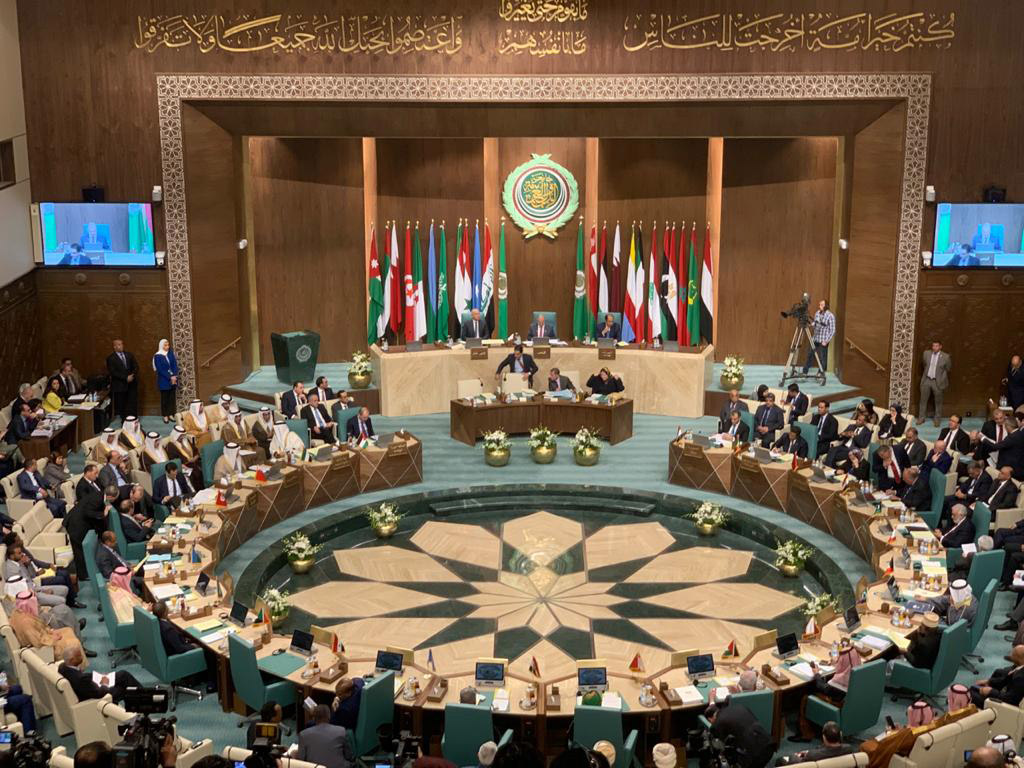
More than ever, the Arab world is given over to non-Arab foreign interventions and non-state proxies manipulated from the outside, while the League of Arab States, whose institutional architecture reflects the Westphalian order, is paralyzed by the demand for unanimity, seeing its resolutions reduced to pious wishes in the face of the power of external actors.
An analysis of attempts to create a joint Arab force since 2011 reveals the persistent obstacles on the way to a true collective security architecture, leading states to abandon the ambition of an integrated defence in favour of individual strategies and flexible coalitions.
Indeed, since the Arab Spring in 2011, we have been witnessing a revitalization of regional military cooperation to create a joint Arab force, the obstacles encountered and the necessary conditions for the establishment of a collective security architecture have certainly not all been met, but Iran’s recent aggression against the GCC countries will accelerate the reconstruction of the common defense policy.
The Arab world, once the subject of its history, has become the object of rivalries between external powers. Foreign penetration – Iranian, Russian, American, Turkish, Chinese, Indian – has reached an unprecedented level, while non-state actors (militias, politico-religious movements, armed groups) have become the privileged vectors of this external influence. In this context, the League of Arab States, whose institutional architecture is fundamentally flawed by the requirement of unanimity, a rule that contrasts sharply with the two-thirds majority required at the OAS and the former OAU, has seen its role reduced to a trickle.
Let us recall for history that the Arab regional system was practically under Egyptian influence until the Six-Day War of 1967, the Arab League, whose headquarters are in Cairo, has been led since its creation by Egyptian secretaries-general. This Egyptian centrality is not only institutional, it is also political and symbolic. Cairo is the heart of the Arab world, the place where compromises are negotiated, where alliances are sealed.
However, as early as the 1970s, the Gulf states began to build relative autonomy; they become the “financial backers” of the states of the confrontation line (Egypt, Syria, Jordan). They developed a distinct “Khaliji” identity, encouraged in this by the Western powers anxious to separate them from the conflictual dynamics of the Mashreq.
The limits of Arab collective security
The study of collective security in the Arab League offers a crucial analysis of the institutional mechanisms of Arab collective security is revealing; with an intervention rate of only 24 percent and a success rate of 20 percent in 18 inter-Arab conflicts between 1946 and 1990, the League has the lowest record of the four collective security organizations examined—far behind the Organization of American States (OAS) with its 63 percent intervention and 37 percent success rate. and even behind the African Union (formerly OAU) with its 31% intervention and 23% success rate (Mark W. Zacher International Conflicts and Collective Security, 1946-77, the United Nations, Organization of American States, Organization of African Unity, and Arab League).
The League’s fundamental weakness is its requirement for unanimity in any resolution concerning an armed conflict; this requirement means that a member state can veto any action, rendering the organization virtually impotent in the face of the inter-coalition conflicts that dominate Arab politics.
Only three crises in the history of the League have led to collective security action: the civil war in Yemen (1962-1967) where intervention took place only after Egypt had voluntarily decided to withdraw its troops, the intervention against Iraqi threats against Kuwait in 1961 and the crisis of 1990 when Saddam Hussein ordered the invasion of Kuwait.
All three cases demonstrate that Arab collective security only works when normative consensus aligns with the interests of the most powerful states. When norms come into conflict (sovereignty versus anti-intervention in 1990) or when power is too evenly distributed, the League’s institutional weaknesses – in particular the requirement for unanimity – make it largely impotent in this sovereign domain.
Despite these weaknesses, the Arab League had the merit of acting when conflicts affect territorial integrity, the only real normative consensus in the inter-Arab system. The four territorial conflicts (Sudan-Egypt 1958, Iraq-Kuwait 1961, and Iraq-Kuwait 1973, partly in Sand war) have all been resolved more or less successfully, either by the direct intervention of the League or by co-management of crises with another IO such as the OAU (as was the case with the Sands War between Algeria and Morocco in 1963), or by diplomatic pressure from member states.
The failure of Arab NATO and the emergence of alternative strategies
The project of an “Arab NATO” has come up against insurmountable structural obstacles, pushing the states of the region to abandon the ambition of a common defence in favour of individual strategies and flexible coalitions.
The ambition to create a Joint Arab Force has been postponed indefinitely due to a lack of diplomatic consensus and irreconcilable strategic visions. Several countries feared that this force would serve hegemonic interests or interfere in the internal affairs of member states.
At the heart of this deadlock is a structural lack of trust and jealous protection of national sovereignty. Arab chiefs of staff have historically been reluctant to place their troops under foreign command, especially since the threat is often perceived differently from one capital to another (Iran, Israel or terrorism). Moreover, the lack of a common definition of terrorism – especially with regard to the Muslim Brotherhood – has made any unified military doctrine impossible.
The emergence of pragmatic alternatives
Faced with the impotence of permanent collective security, the Arab States, and especially those of the Gulf, have adopted adaptive and diversified approaches to guarantee their survival:
Hedging: Countries such as Oman and Qatar reject the logic of blocs and maintain balanced relations with rival powers (the United States, Iran, Turkey) to preserve their autonomy.
Bandwagoning: Conversely, Bahrain aligns itself closely with major powers such as Saudi Arabia or the United States to obtain direct security guarantees.
Ad hoc coalitions: Instead of a standing army, states now favor temporary alliances formed for specific threats, such as the intervention in Yemen in 2015 or the fight against the Islamic State. These structures are considered more flexible and less threatening to sovereignty.
Internationalization and normalization: Security now relies on alliances with Western powers (notably the United States) and, more recently, on strategic recalibration via the Abraham Accords as a counterweight to Iranian influence.
Internal resilience: States are focusing on strengthening their own stability through long-term national visions (Visions 2030, 2035, 2040) and modernising their autonomous defensive capabilities, including air capabilities.
In sum, security in the Arab world has shifted from an ideal of common force to a system of variable geometry, where mediating diplomacy and international partnerships take precedence over the creation of a unified Arab military architecture.
Strategic dependence and the limits of military autonomy
Convinced that the US administration under Obama and Biden would no longer be a reliable guarantor, pivoting towards the Pacific to contain China, the three Gulf monarchies – Saudi Arabia, the United Arab Emirates and Qatar have, since 2011, considerably increased their military capabilities, multiplied partnerships with non-traditional suppliers, revisited military governance, created war schools to train their own staff, and diversified their partnerships towards China, Russia and Turkey.
On the societal level, this quest for autonomy has been accompanied by an unprecedented militarization: conscription, memorials to “martyrs”, military parades and films glorifying the sacrifice of soldiers, all tools aimed at forging a new national identity based on duty rather than oil revenues. (Jean Loup SAMAAN, New military strategies in the Gulf 2023).
Diversification of partnerships: a hedging with obvious limits
Several Arab and Asian countries have diversified their partnerships with other arms suppliers (China, Russia, India, Brazil, Turkey, etc.). We are buying more and more Turkish drones, Chinese drones, Russian Kornet missiles, Chinese SY-400 and S-400 ballistic missiles while receiving batteries and anti-missile shields from the Pentagon. This diversification strategy has not reduced their fundamental dependence on the West. These countries practice a policy of positive neutralism dear to Nasser by avoiding choosing between the great powers, preserving their relations with the hegemon in place, the United States, and the challengers, China and Russia.
However, it is clear that Western and especially American suppliers eclipse those of China and Russia combined; the qualitative gap is even greater: the American Patriot batteries, the F-35s and the warships have no Chinese or Russian equivalents that the Gulf forces could operate effectively.
These new partnerships also create vulnerabilities as Chinese companies like Huawei, which are building 5G infrastructure across the Gulf, and even AI companies like Deepseek must comply with China’s 2017 intelligence law that requires them to share foreign data with the Beijing government. In addition, Russian or Chinese defense systems could create interoperability problems and expose U.S. technology to intelligence eternity. (Jean Loup SAMAAN, op cit).
However, this diversification of partnerships has not translated into strategic autonomy. As the analysis of military dependencies shows, US arms sales to the Gulf dwarf those of China and Russia combined.
The Arab League, an organization in decline or in recomposition?
The Arab countries are gradually turning away from the Arab League, sometimes preferring other forums, the OIC, the GCC, the BRICS, or even the AU or the CENCAD (the case of Libya), because the weakening of the Arab League is striking, it has become inoperative on major issues apart from a few successes in the economic, social and cultural fields.
Several factors explain this weakening: first, the rise of creeping minilateralism and the proliferation of alternative forums – coalitions of a few states sharing converging interests, which bypass traditional multilateral frameworks to act more flexibly and quickly. The Gulf Cooperation Council, the Arab Maghreb Union, and the Abraham Accords illustrate this tendency to favour small and effective frameworks over institutions that are too broad and too slow.
Secondly, the phenomenon of sub-systemic fragmentation into three sub-regions, three logics in the Maghreb, the Mashreq and the GCC, not counting the Horn of Africa, which indicates an almost total functional disconnection between the three major regional dynamics.
Secondly, the growing divergence of interests between Member States. The Gulf monarchies, which finance the League’s budget, no longer have the same priorities as the Mashreq or Maghreb states. The former are concerned with their economic development, securing their investments, and managing their internal rivalries. The latter are looking for support in the face of their internal crises, financial aid, and international legitimacy.
Finally, foreign penetration has rendered the League even more powerless. How could an institution that operates by consensus take a position on a conflict in which external powers are directly involved?
The primacy of economics: visions as geopolitics
Vision 2030 (Saudi Arabia) and Vision 2031 (Emirates), and other Emergence Plans announced by other countries to ramp up are not just development plans -they represent competing regional models- whose confrontation will structure the Middle East for decades to come.
This economic competition is not a byproduct of geopolitics it is geopolitics. Investment decisions, trade routes, logistics hubs, and free zones now function as strategic weapons (that’s why Iran is now targeting the Dubai airport Jbel Ali, energy infrastructure in GCC).
In addition to these causes of decline, there are three realities that transcend them: the Arab world is no longer master of its destiny, handed over to foreign powers and their proxies.
– This system is not chaos-it has its regularities, its balances, its implicit rules. It is a multiplex space where multiple poles, flexible alliances, proxy wars and economic competition coexist, without any power-Arab or foreign- being able to impose its will on the whole.
The absence of a true collective security architecture, highlighted by analyses of collective security and military cooperation, worsens this situation. The obstacles identified—mutual distrust, vulnerable sovereignty, divergence of threat perceptions, lack of a center, Core areas of power-remain as significant in 2026 as they were in 2015. The project of a joint Arab force has remained a dead letter. Ad hoc alliances are multiplying but do not lead to lasting integration. South-South partnerships, which could form the basis of a collective defence based on deep cultural, religious and strategic affinities, remain under-exploited, victims of mutual mistrust and rivalries for influence between Arab capitals.
The old order-that of the Arab Cold War, of American unipolarity, of ideological blocs-is dead. The new order has not yet been born. Between the two, what could be called a stagnant transition has been established: a space of transition that lasts, of permanent uncertainty, of continuous recomposition. It is not a simple transition phase, it may have become a lasting state, a sui generis configuration.
References
- Ahmed Youssef Ahmed, Inter-Arab Conflicts 1945-1981: An Exploratory Study
- Ahmed Ali Salem, Collective Security in the Arab League: Between Realist and Constructivist Theories
- Ali Eddin Hilal, The Arab Regional System: A Study of Arab Political Relations
- Florence Gaub (2016) An Arab NATO in the Making? Middle Eastern Military Cooperation Since 2011. Letort Papers. Carlisle, PA: Strategic Studies Institute, U.S. Army War College.
- Palik, Júlia; Anna Marie Obermeier & Siri Aas Rustad (2022) Conflict Trends in the Middle East, 1989-2021. PRIO Paper. Oslo: Peace Research Institute Oslo.
- Jean-Loup Samaan, New military strategies in the Gulf the Mirage of Autonomy in Saudi Arabia, the UAE and Qatar
- Database (methodology of the event-driven analysis of Edward Azar and Sloan)