While rereading an article by one of my late professor, Abdelhaï LAABI, (The Internal Functions of Détente in the Political Systems of the Euro-Arab-African Triangle: The Forgotten Image of North-South Interdependence, Etudes internationales n° 1 1980), it occurred to me to study the impact not of détente but this time of post-war conflicts in Ukraine on the actors of the southern Mediterranean and to see how countries such as the Kingdom of Morocco are navigating the upheavals of the international system.
While the international system is bogged down in what some political scientists call a “multiplex world” (Achariya A, 2017); a sui generis configuration where military power remains concentrated while global governance fragments, Morocco has gradually established itself as a “systemic pivot” of the first order. A reading of the Kingdom’s events and diplomatic behaviors since the war in Ukraine and the conflicts in the Middle East reveals that it has been able to acclimatize and play its cards right in this multiplex world by joining the Peace Council recently established by Donald Trump and by gathering a consensus around its Autonomy Plan for the Moroccan Sahara (resolution 2797 of the SC).
The diplomatic line of non-dependence and multi-alignment followed since the sixties has paid off; Morocco declines polarization, backwagoning, into rigid blocks while transforming its position as an interface into a power of intermediation by exploiting, as in the past, inter-imperial competitions.
Behind this diplomatic ascent is a more complex reality: that of a state that has made ample use of its immaterial and material assets, in particular its geostrategic position as an interface between competing powers, without falling into the free riding strategy (the free-riding strategy) or into follow-the-following and polarization towards one pole against the other.
In a founding message, addressed to the participants in the symposium organized in Rabat on the occasion of the celebration of the National Day of Moroccan Diplomacy
in April 2000, HM King Mohammed VI planned to make Morocco not only “an example of moderation and tolerance” but also “a regional pole of vanguard and factor of stability and peace in its environment.” and a respected partner whose opinion counts with the great powers, and an advocate for developing countries.
“In the same way that Morocco has successfully addressed the priority issues of each historical stage, its diplomacy must today mobilize to capitalize on the new image that we have accredited to international public opinion, the image of a democratic and modernist Morocco, mobilized around its Sovereign, an example of moderation and tolerance. It must also work actively and seriously to prospect new areas of economic cooperation, to deepen Morocco’s strategic dimension in order to make it a model partner of all countries, with a view to an exemplary proactive and solidarity partnership, to consolidate Morocco’s position as a regional avant-garde pole and a factor of stability and peace in its environment Maghreb, Arab, Islamic, Euro-Mediterranean, African and American countries, to make the most of globalization, to integrate into the global economy, while mitigating their negative impact on our development, and to breathe new life into our foreign relations. »
The ability of the Kingdom of Morocco to manage the changes in the international system and to exploit inter-imperial rivalries is not new, successive Moroccan dynasties, in particular the Alawite dynasty, have been able to preserve Morocco’s independence even in times of strategic imparity in the face of European rivals by resorting to the “pendulum game”; a strategy that deploys a set of tactics aimed at using inter-imperial rivalries and competitions to preserve the sovereignty and territorial integrity of the Kingdom.
The tradition of the “see-saw game” is well documented, notably Ahmad ibn Khalid al-Nasiri (1834-1897), Abd al-Wahid al-Marrakushi (1185-1228), Henry de Castries in his Unpublished Sources of the History of Morocco (1905-1927) and by Thérèse Benjelloun in her work entitled “Faces of Moroccan diplomacy, Casablanca EDDIF, 1996” and other renowned Moroccan historians such as A Laroui and others. Indeed, under the Saadian dynasty, Ahmad al-Mansur (1578-1603) forged a strategic alliance with Elizabeth’s England against Philip II’s Spain, later, the Alawite Sultan Sidi Mohammed III ben Abdallah (1757-1790) perpetuated this logic by making Morocco the first state to recognize the independence of the United States (December 20, 1777) and by signing a treaty of friendship and navigation in 1786 that is still in force. It should also be remembered that in the sixties, the late King Hassan II was one of the first countries to recognize the People’s Republic of China in the middle of the Cold War. Morocco has never chosen a side; He has always chosen to connect the camps.
This DNA and this historical legacy prefigure the position of systemic pivot and the management of strategic triangles studied in this article, which is based on an analysis mobilizing three complementary frameworks of geopolitical analysis, the theory of strategic triangles (Dittmer, 1981), structural geopolitical analysis (Csurgai, 2022), and the theory of geotechnical ensembles (Criekemans, 2022).
Quantitative and qualitative data were collected from multiple sources (IMF, UN Comtrade, World Bank, diplomatic bases, official speeches, sectoral reports) over the period 2000-2024 in an integrated dataset allowing a reading of strategic positioning.
The diplomatic game of variable geometry of the “romantic triangle
The theory of strategic triangles, conceptualized by Lowell Dittmer in 1981, is an analytical framework derived from game theory that makes it possible to classify the relations between three international actors according to their degree of friendship or hostility; according to him, international triadic relations are structured in three ideal-typical configurations: the ménage à trois, where three actors maintain relations of symmetrical mutual friendship; stable marriage, where two allies unite in the face of a third peripheral or rival actor; and the romantic triangle, the most advantageous configuration for the central actor designated as the “pivot”, who takes advantage of the rivalry between two “wings” with which he simultaneously maintains relations of friendship.
The romantic triangle configuration is the most relevant to explain the pivotal position of the Kingdom of Morocco, it designates a strategic configuration where a central actor, the “pivot”, maintains friendly relations with two partners, the “wings”, while the latter are in a situation of rivalry or tension between them; this hedging posture is measured through two indices, the PLI Pivot Lever and the Intermediation Centrality Index.
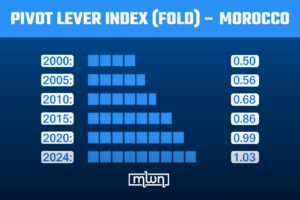
Analysis of the Pivot Leverage Index (PLI) (which is a mathematical measure of a pivot’s ability to maximize profits by exploiting the competition between its two rival partners); denotes an increase in the Moroccan PLI, revealing a notable acceleration since 2010, a period that coincides with the Arab Spring and the beginning of Sino-American tensions and the change of course of the Obama administration, the “Pivot To Pacific” to contain China. The move from 0.50 to 1.03 reflects not only an absolute improvement, but above all an increased ability to convert inter-power competition into tangible advantages. However, this score of 1.03 remains modest compared to the systemic powers (the US has an estimated PLI of 2.4), reminding us that Morocco remains a regional rather than a global pivot.
The index of the centrality of intermediation is the most revealing indicator, Morocco reached 0.67 in 2024, a ratio higher than that of the EU and China; it means that Morocco controls a disproportionate number of “shortest paths” in the network of North-South and South-South diplomatic and economic exchanges. Morocco is proving to be an essential bridge between actors who cannot or do not want to communicate directly.

The Three Triangles of Interdependence
– The USA-Morocco-China triangle perfectly illustrates the ambiguities of multi-alignment. In the context of “Cold War 2.0”, Morocco is relying on Washington for its security and the recognition of its sovereignty over the Sahara, while welcoming massive Chinese investments in infrastructure and industry. This strategic duality; Dealing with one for defence, with the other for development, is not only a foreign policy of non-dependence but above all an intelligent navigation between competing powers.
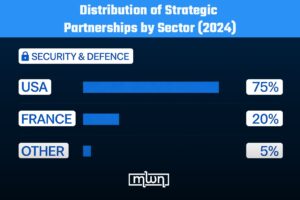
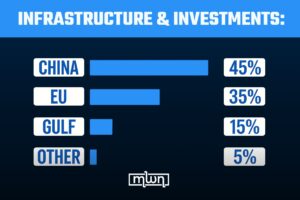
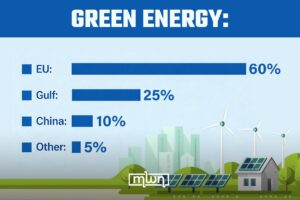

The sectorization of partnerships reveals that Morocco has not diversified its partners horizontally; rather, it assigned each power a specific role in its development architecture. This “geopolitical division of labor” presents a systemic risk: a crisis in one of the sectors (e.g., US sanctions against Chinese or European companies operating in Morocco, or European sanctions or a change in regulations or increased tariffs on nearshoring products in Morocco) could lead to a crisis in the ecosystem in question.
– The EU-Morocco-China triangle
The application of Dittmer’s (1981) model reveals that the EU-Morocco-China triangle has gone from a “ménage à trois” (2000-2012) to a consolidated “romantic triangle” (2013-2024), with Morocco as the pivot. This transition is explained by the gradual deterioration of EU-China relations, whose friendship score has fallen from 80 in 2010 to 45 in 2024.
The Kingdom serves as a central industrial node, using Chinese technology such as Gotion High-Tech’s $6.4 billion investment in 2023 (a joint venture between WV and Gotion) to produce LFP batteries at Kenitra Atlantic Zone for electric vehicles for the European market. This triangulation, if it generates substantial economic flows, positions Morocco as an export platform.
– The EU-Morocco-Gulf triangle, which is the most promising in our opinion, was consolidated in 2025 and 2026, when the military escalation with Iran revealed the vulnerability of the Gulf infrastructure and transit through the Strait of Hormuz. Morocco then emerged as a “safe haven” and a stabilizing partner, linking Gulf capital (Masdar, ACWA Power) to Europe’s energy security needs. This function of financial and energy intermediation, while strengthening the Kingdom’s diplomatic position, further ties it to the circuits of the Gulf sovereign wealth funds and to European security imperatives.
Network analysis (Kacziba, 2021) reveals that this triangle A (EU-GCC-Morocco) is in transition from a “stable marriage” (EU-GCC) to an emerging romantic triangle, with Morocco as a potential pivot. Saudi (ACWA Power: $1.8 billion in green hydrogen) and Emirati (Masdar: $0.8 billion in solar) investments bear witness to this dynamic.
However, this “geopolitical division of labour” carries a systemic risk: a crisis in one of the sectors (e.g. US sanctions against Chinese or European companies operating in Morocco, or European sanctions or a change in regulations or an increase in tariffs on nearshoring products in Morocco, or geopolitical tensions) could lead to a cascading crisis in other connected ecosystems.
The tangibles levers of the diplomatic game: the Geotechnical Ensembles
Morocco’s pivotal status is based on critical intangible and tangible assets that make it indispensable to world powers; an indispensability that constitutes both a lever of influence and a source of vulnerability. Criekemans’ (2022) geotechnical ensemble theory allows us to analyze how technology interacts with geography to redraw geopolitical contexts.
The assets of the Kingdom of Morocco are not only based on its geographical position, its political stability and its active diplomacy, but its rise to power is also based on critical physical assets:
- Critical minerals complex and in particular Lithium Iron Phosphates/ LFP : Morocco controls 70% of the world’s phosphate reserves. It is no longer just an agricultural asset, but a major technological lever because phosphates are essential to the chemistry of LFP (Lithium-Iron-Phosphate) batteries, the most dynamic and cheapest and safest for electric vehicles.
- The Automotive ecosystem: With production exceeding one million vehicles per year and 65% local integration close to the most restrictive rules of origin, Morocco has become a hub where European and Chinese technology go hand in hand (such as the $6.4 billion Gotion High-Tech battery factory) to serve the global market.
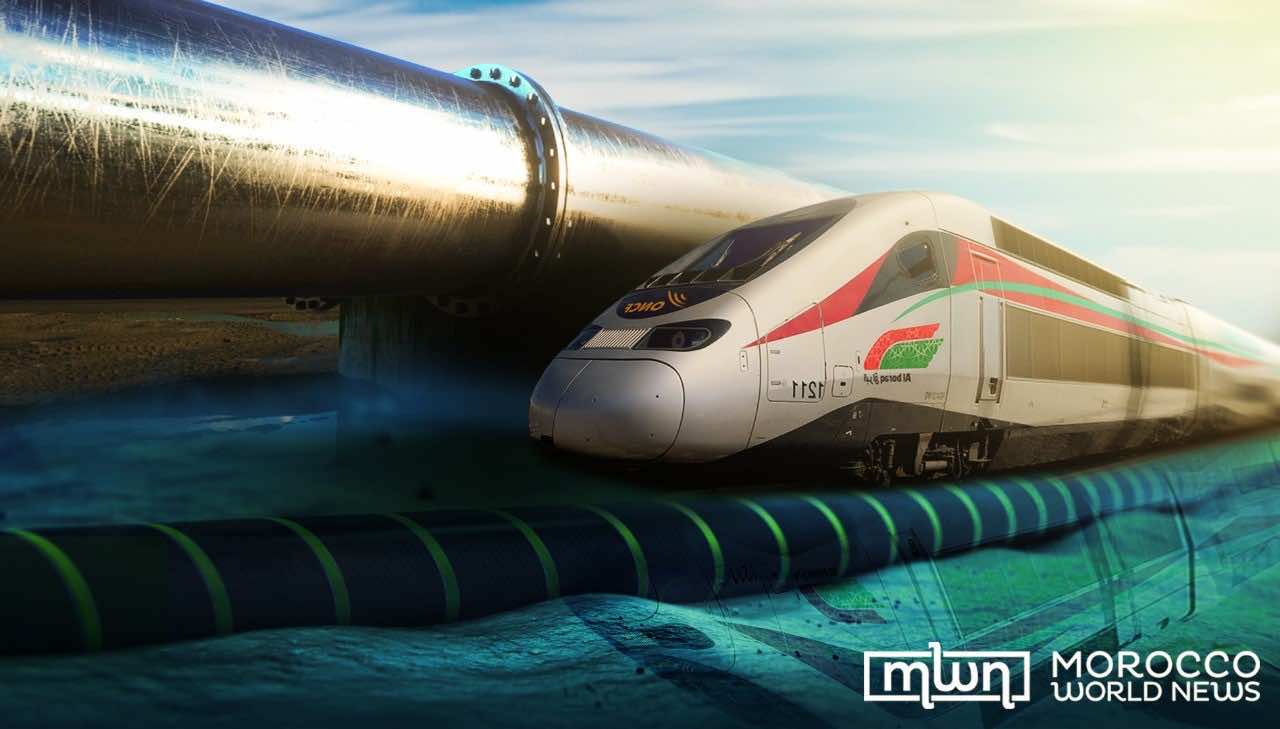
- Green hydrogen and the Energy Complex (Sila Atlantik): This project aims to supply 5% of Germany’s electricity via a 4,800 km submarine cable, transforming the solar (300 GW) and wind (25 GW) potential into a national security lever for Europe, not to mention the Links project with the United Kingdom postponed to a later date.
In a global context marked by strong geopolitical tensions, Morocco has asserted itself as a key player in economic connectivity, becoming a real connector country between rival powers. With a strategic competitive advantage, it masters critical components and resources embedded in global supply chains, particularly in critical sectors of the new industrial revolution such as electric vehicles, green energy, artificial intelligence and cloud computing. Under the visionary leadership of HM King Mohammed VI, and driven by a pragmatic foreign policy of multi-alignment, Morocco has succeeded in maintaining balanced relations with the major powers, thus affirming its role as an influential intermediary on the international scene.
In conclusion, it can be seen that the analysis of the data with multiple geopolitical tools reveals that Morocco has undeniably been able to transform its interface assets into a form of influence. By occupying the spaces of connection of the multiplex system, whether logistical, energy or technological, the Kingdom has made itself indispensable to the competing powers.
Its geographical location predestines it for more influence because of the geopolitical tensions in the straits under the control of Iran or other revisionist powers (Hormuz and Bab Al Mandab); but Morocco’s quest for strategic autonomy stems more from a position of intermediation in value chains and power networks dominated by imperial centers than from its geographical position.
In an international order in the midst of recomposition, where the hierarchies of power are being redrawn, Morocco’s challenge will not only be to maintain its status as a pivot, but to transform this position of interface into a real power of agenda; i.e. the ability not only to connect, but to contribute to the establishment of the rules of the game, if not at the global level, at least at the Atlantic, Sahelian and Arab regional level. An ambition that implies going beyond the logic of geopolitical brokerage to build real economic and technological autonomy.
Morocco has succeeded in its “pivotal moment”; The coming decade will tell whether he will be able to convert it into a lasting power, or whether the structural changes in the international system will end up closing the temporary window of opportunity of the strategic space he has so skilfully exploited.
The views expressed in this article are the author’s own and do not necessarily reflect Morocco World News’ editorial policy.