
 Join on WhatsApp
 Join on Telegram
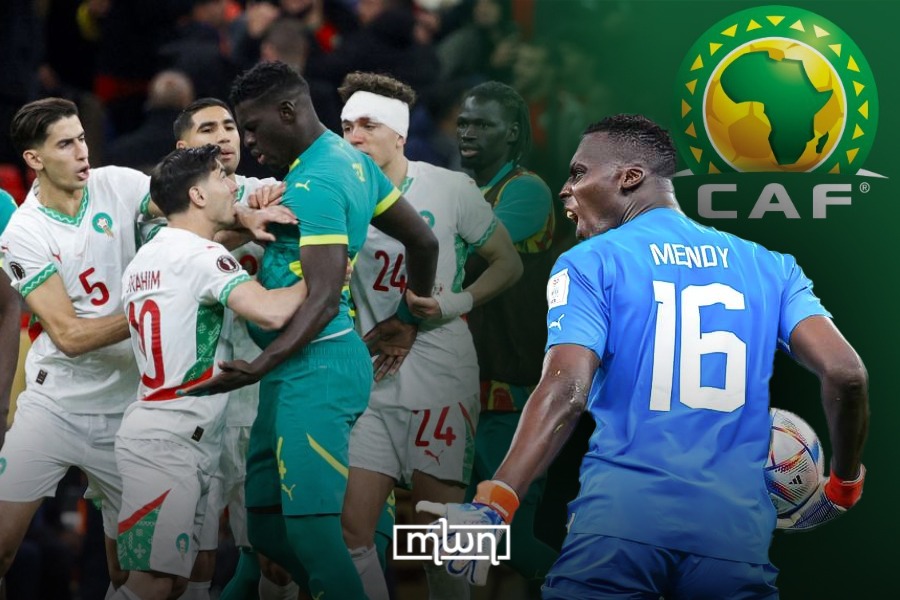
Rabat – On the eve of a friendly between Senegal and Gambia in Dakar, Senegal’s national football team goalkeeper Edouard Mendy delivered a sweeping indictment of the Confederation of African Football (CAF), questioning its credibility and authority.
“It has become commonplace that it does not meet expectations,” he said. “We cannot have the respect of the Euro or the Copa America, because we do not have strong institutions that place our competition where it should be.”
“Today, you see African players in the best clubs in the world, winning trophies. But this work is damaged by a handful of people,” he added.
The message seeks to portray a broken system. Yet it collides head-on with the facts of the Africa Cup of Nations (AFCON) 2025 final. Senegal’s discourse on “weak institutions” sounds less like principle and more like frustration after a self-inflicted collapse and all the buzz it came after.
The walk off Senegal wants forgotten
The decisive moment remains beyond dispute. In stoppage time, the referee awarded a penalty to Morocco. Senegal protested. Then, rather than continue within the rules of the game, the team chose to abandon them altogether.
On instruction from the bench, players left the pitch and returned to the dressing room. Play stopped for several minutes, which was clearly not a symbolic gesture.
CAF regulations are explicit. Article 82 leaves no space for reinterpretation. Any team that leaves the field without authorization forfeits the match. The sanction applies instantly. It does not depend on later justifications or emotional appeals.
Senegal returned. The breach remained. The consequence followed.
From rejecting rules to running to CAS
Here lies the contradiction at the heart of Senegal’s position. After disregarding the rules on the pitch, the same authorities now seek refuge in them off it.
Senegal has formally appealed to the Court of Arbitration for Sport (CAS), a very predictable and revealing move.
A federation that dismissed the referee’s authority in real time now turns to the highest legal authority in sport, asking it to overturn the very regulations it ignored minutes earlier. The logic is difficult to defend.
CAS does not operate on emotion or public pressure. It examines whether rules were applied correctly. In this case, CAF relied on referee reports and official documentation that clearly established the walk-off. The regulatory framework is unambiguous. Senegal’s case rests on challenging consequences triggered by its own actions.
Hypocrisy framed as principle
Mendy’s remark that “there are things happening that would not happen elsewhere” unintentionally exposes the weakness of Senegal’s argument. In any major competition, a team that walks off forfeits the match. There is no alternative outcome.
The criticism of CAF therefore misses its target, making it not an example of institutional failure, but one of institutional consistency.
Senegal demands stronger governance, yet rejects one of the clearest applications of the rules. It calls for respect, but stubbornly refuses to respect the framework when it proves inconvenient. It speaks of integrity, yet attempts to recast a disciplinary sanction as injustice.
The pattern is difficult to ignore. Principles appear negotiable. Responsibility is deflected. The narrative shifts, but the sequence of events does not.
Morocco wins through discipline
Morocco’s position requires no reinterpretation. The team stayed on the pitch. It accepted the referee’s decision. It operated within the rules that govern the competition.
That alone proved decisive.
CAF’s Appeals Committee did not invent a result. It applied a sanction mandated by its regulations. Morocco’s 3-0 victory reflects that process. It stands on procedure, not persuasion.
As the case moves to CAS, the gap between rhetoric and reality grows sharper. Senegal speaks the language of reform while contesting the very rules that define it. Morocco, without spectacle, benefits from a system that functioned exactly as intended.
In the end, the episode offers a blunt lesson. One cannot abandon the rules in the heat of the moment, then invoke them in court. Senegal attempted both. The contradiction now sits at the center of its case.