 Join on WhatsApp
 Join on Telegram
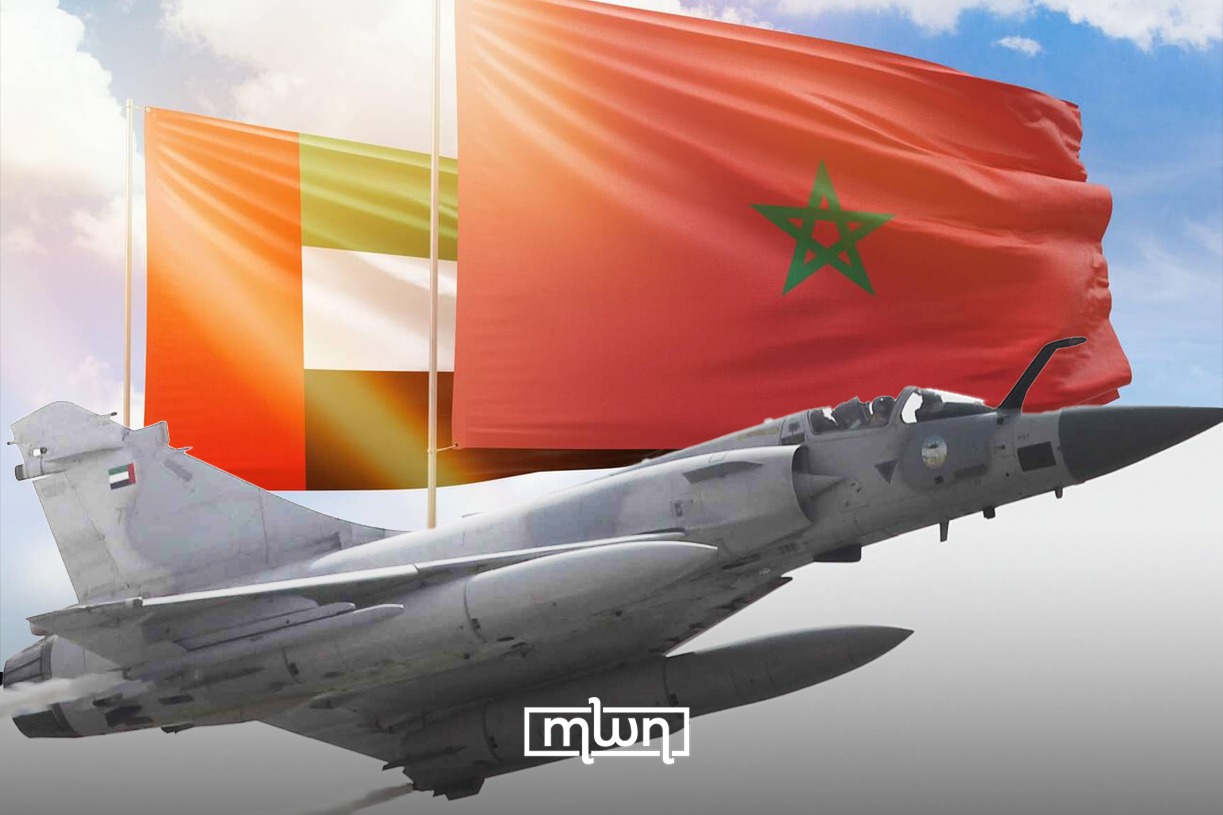
Marrakech – Morocco will have to wait longer before receiving 30 Mirage 2000-9 fighter jets promised by the United Arab Emirates. The ongoing war in the Middle East between the United States, Israel, and Iran has emerged as a new obstacle to a deal that already faced years of diplomatic hurdles.
According to a report published by Africa Intelligence on April 9, the escalation of the war in the Middle East is further delaying the implementation of the agreement between Abu Dhabi and Rabat. The report has since been picked up by multiple outlets, including Spain’s La Razón. It points to the UAE’s reluctance to part with its operational fleet at a time of heightened regional instability.
The Mirage deal dates back to late 2021. After ordering 80 Rafale F4 jets from France in a contract worth over €16 billion, the UAE expressed its intention to donate 30 of its Mirage 2000-9E aircraft to Morocco’s Royal Armed Forces (FAR). The jets are equipped with Mica NG air-to-air missiles and Black Shaheen cruise missiles.
But France initially blocked the transfer, citing a clause in the original 1998 sales contract that requires Paris to approve any re-export of the aircraft. French hesitation was also linked to internal discussions about repurchasing the Emirati Mirages and redirecting them to Ukraine.
The French veto was eventually lifted in early 2024. Relations between Paris and Rabat began to ease following a visit by then French Foreign Minister Stéphane Séjourné to Morocco in February of that year. The rapprochement was cemented on July 30, 2024, when President Emmanuel Macron recognized Morocco’s sovereignty over the Western Sahara.
With the diplomatic hurdle cleared, the transfer was initially expected around 2027. But the war in the Middle East has introduced a new timeline problem.
In a tense regional environment, Emirati authorities are opting to keep their full fleet operational until the Rafale F4 jets are delivered and fully integrated. The first batch of Rafales is expected this year, with full delivery stretching to 2031. Delays in such large-scale arms contracts are common.
The UAE had already anticipated potential disruptions. On February 20, 2025, at the IDEX defense exhibition in Abu Dhabi, the state-owned Gulf Aircraft Maintenance Company signed a strategic partnership with a French firm.
The deal covers heavy maintenance of the M53 engines that power the Mirage 2000. The aim is to ensure the jets are in optimal condition before their gradual retirement and planned transfer to Morocco.
The Middle East war has complicated things further
The war that complicated the deal began on February 28, when the US and Israel launched joint airstrikes on Iran under Operation Epic Fury. The opening strikes killed Supreme Leader Ali Khamenei and targeted nuclear facilities, military infrastructure, and government sites across the country.
Iran retaliated with waves of ballistic missiles and drones aimed at Israel, US bases, and Gulf Arab states, including the UAE. Vital Emirati infrastructure was hit. Iran also shut down the Strait of Hormuz, disrupting global trade and energy supplies.
After 40 days of sustained combat that left thousands dead and millions displaced across the region, the US and Iran agreed on April 8 to a two-week ceasefire mediated by Pakistan.
Rabat welcomed the truce and voiced support for the Pakistan-facilitated negotiations, stressing the importance of ensuring freedom of navigation in the Strait of Hormuz. But the ceasefire has since been violated by both sides.
Israel launched its strongest wave of strikes on Lebanon hours after the truce took effect. Iran responded by pausing Hormuz traffic and threatening to walk away from the agreement. The strait remains effectively closed, with Tehran limiting ship passage and imposing steep tolls.
Efforts to build on the truce collapsed over the weekend. US Vice President JD Vance led a 300-member delegation to Islamabad for face-to-face talks with an Iranian team headed by parliamentary speaker Mohammad Bagher Ghalibaf and Foreign Minister Abbas Araghchi.
The negotiations, the highest-level direct engagement between Washington and Tehran since 1979, lasted 21 hours but ended Sunday without an agreement. Vance said Iran had refused to commit to abandoning its nuclear program. Araghchi accused the US of shifting goalposts, saying the two sides had been “inches away” from a memorandum of understanding.
Trump responded by announcing a full naval blockade of the Strait of Hormuz starting Monday morning. Iran’s Revolutionary Guard warned that any military vessels approaching the strait would be met with a harsh response. The two-week ceasefire expires on April 22, and its future remains uncertain.
Morocco stands firmly with its Gulf allies
During the war, King Mohammed VI spoke twice by phone with UAE President Mohammed bin Zayed to reaffirm Morocco’s commitment to supporting its Gulf partner.
That support has gone beyond diplomacy. Emirati sources told the Moroccan outlet Assahifa English that Morocco has provided military-technical assistance to the UAE during Iran-linked attacks targeting vital Emirati infrastructure.
The sources said bilateral relations have entered a phase of direct field coordination in military and technical domains. Morocco has delivered what the sources described as significant technical and intelligence support aimed at strengthening the UAE’s defensive capabilities.
Moroccan military and technical personnel are currently deployed in the UAE, operating within defined missions. The sources described Rabat as the only Arab country providing this level of direct field assistance, alongside international actors such as the United Kingdom, Ukraine, and France. The partnership has also expanded to include food security, with an air bridge between the two countries supplying essential products to Emirati markets.
Military cooperation between Morocco and the UAE is governed by a 2006 agreement covering training, exchange visits, and operational support. The partnership was expanded in 2014 to include military industry research and technology transfer.
Read also: Beyond Black-and-White Geopolitics: Iran as Frenemy of Morocco