
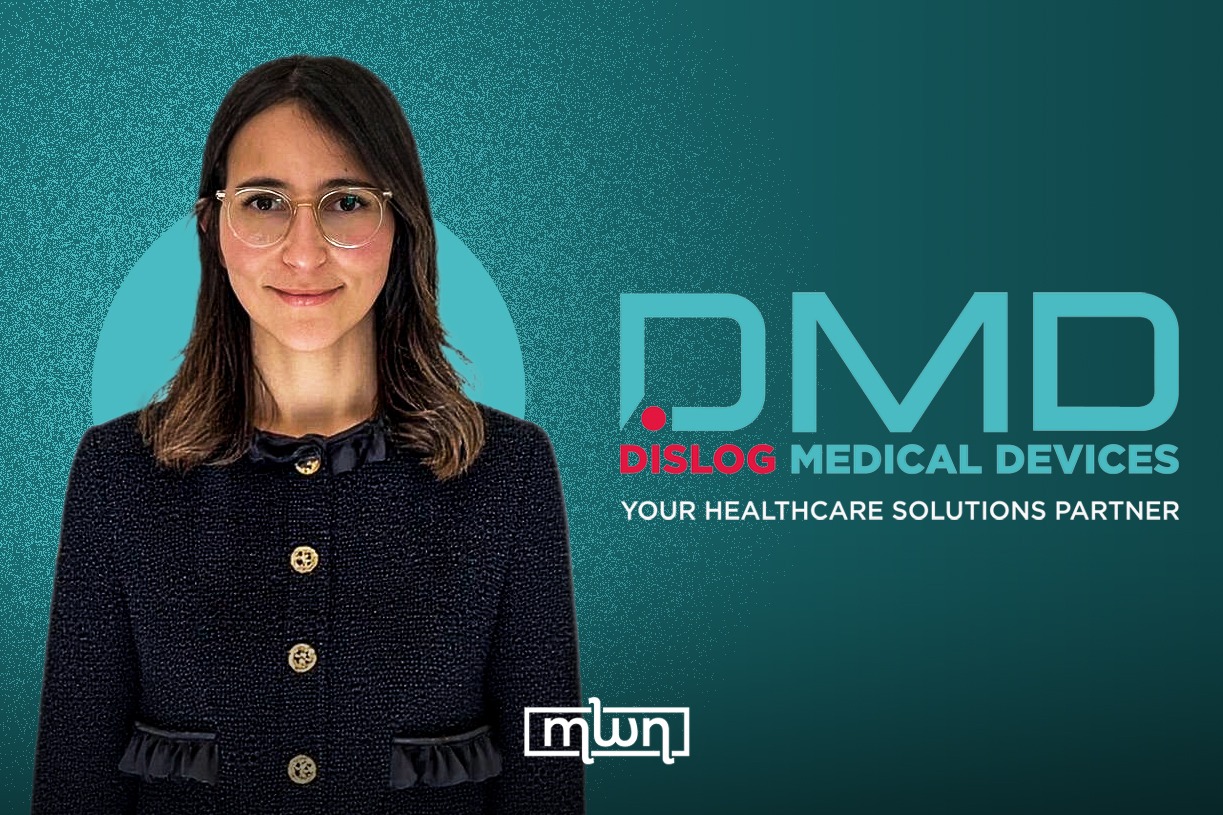
Casablanca — Dislog Medical Devices (DMD) is betting on a more grounded approach to healthcare innovation in Morocco, one that starts with listening and ends with access. For Zaynab Najib, that approach is personal.
A doctor of pharmacy with years spent in France working at multinational pharmaceutical and biotech firms, she recently decided to return home. “Morocco is undergoing a major transformation of its healthcare system,” she told Morocco World News (MWN). “It is a unique opportunity to contribute, in a very concrete way, to improving access to healthcare innovation in my home country.”
Zaynab now serves as Deputy General Manager of Farmalac and oversees marketing at DMD, a Moroccan group positioning itself as more than a distributor. The company describes itself as a “solutions provider,” built around a one-stop-shop model that pulls together several subsidiaries across the healthcare value chain.
The model starts with understanding clients in both the public and private sectors, down to their constraints and daily realities. From there, DMD coordinates expertise across entities such as Eramedic, Megaflex, Farmalac, Afrobiomedic, and Scomedica, forming a network that generates a combined revenue of around $100 million.
The goal is to make innovation accessible, not just in major cities but also in rural and underserved areas, through “healthcare solutions that are not only more accessible, but also tailored to real on-the-ground needs,” she specified.
A supply chain that slowly shapes care
Within this ecosystem, Farmalac plays a less visible but critical role. With nearly 30 years of history, the company focuses on supplying pharmaceutical manufacturers and laboratories with imported raw materials, packaging, and lab solutions.
It is logistics-heavy work, but it has direct consequences for patients. “Supply continuity is critical,” Zaynab said. “The final beneficiary behind every decision remains the patient.”
Farmalac manages sourcing, storage, and delivery in an integrated way, allowing manufacturers to avoid fragmented supply chains. That consistency helps prevent stock-outs and supports what she calls “Morocco’s healthcare sovereignty,” a term increasingly used as the country seeks to reduce its dependence on external disruptions.
Innovation, in this context, is not only about tools but also about solving pressure points. DMD’s priorities, she explained, include improving access to care in areas facing medical shortages and easing the burden on overcrowded facilities. That can mean better diagnostics, smarter use of data, or tools that enable earlier detection. “The objective is always to make healthcare more efficient and more targeted,” Zaynab added.
Read also: GITEX Future Health Africa 2026: Health Sovereignty at the Heart of the Continent’s Future
Healthcare is moving away from reactive treatment. “We are seeing a shift towards predictive and precision-based approaches to medicine,” she further explained to MWN.
That shift is one of the reasons AI has become such a central topic at events like GITEX Future Health Africa, where DMD is participating this year.
Zaynab does not dismiss the hype around AI, but she keeps it grounded. In regions where access to care is uneven and resources are limited, AI can help with diagnosis, prevention, and patient flow. It can also reduce administrative workloads, giving healthcare professionals more time with patients.
Still, she points to a constraint that often gets overlooked: data.
The effectiveness of AI tools depends heavily on the quality and representativeness of health data. Morocco’s ongoing healthcare reforms, including the rollout of electronic health records and more structured data systems, are steps in that direction. But it is a gradual process.
“These developments will progressively strengthen the reliability of data,” she said, “and enable more accurate and meaningful applications of AI.”
For Dislog, being present at GITEX Future Health Africa is less about visibility and more about alignment. The group sees it as a platform to reinforce its commitment to access, while also expanding its reach beyond Morocco.
“Our presence at GITEX Future Health Africa reflects our commitment to improving access to medical innovation,” Zaynab said.
There is also a continental ambition in play. The company is looking at growth across Africa, where similar challenges exist and where solutions need to be adapted, not imported as-is.
As the group looks beyond Morocco and across African markets, the focus remains the same. Bringing in innovation is only part of the job, while making it usable, in systems with uneven resources and growing demand, is what will determine its impact.
Morocco World News is also on X — check out our latest posts now! Get MWN on iOS and Android for instant access to breaking news.