
 Join on WhatsApp
 Join on Telegram
Rabat – A literary discussion at the heart of this year’s International Publishing and Book Fair (SIEL 2026) spotlighted today the growing presence of Moroccan voices in English-language writing, bringing together diasporic perspectives and cross-cultural narratives.
Moroccan-Australian author Nadia Mahjouri took center stage in a literary discussion that placed her voice—and her personal journey—at the core of a broader conversation on identity, language, and belonging.
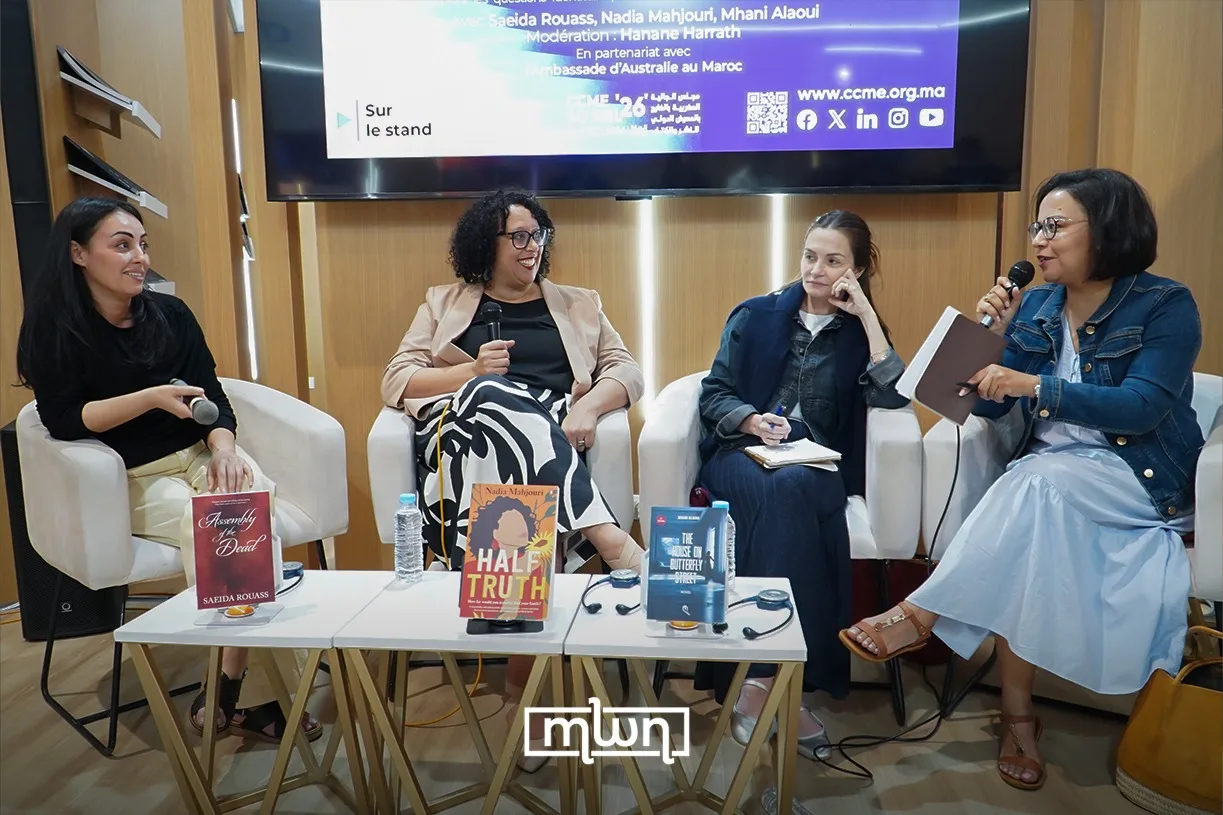
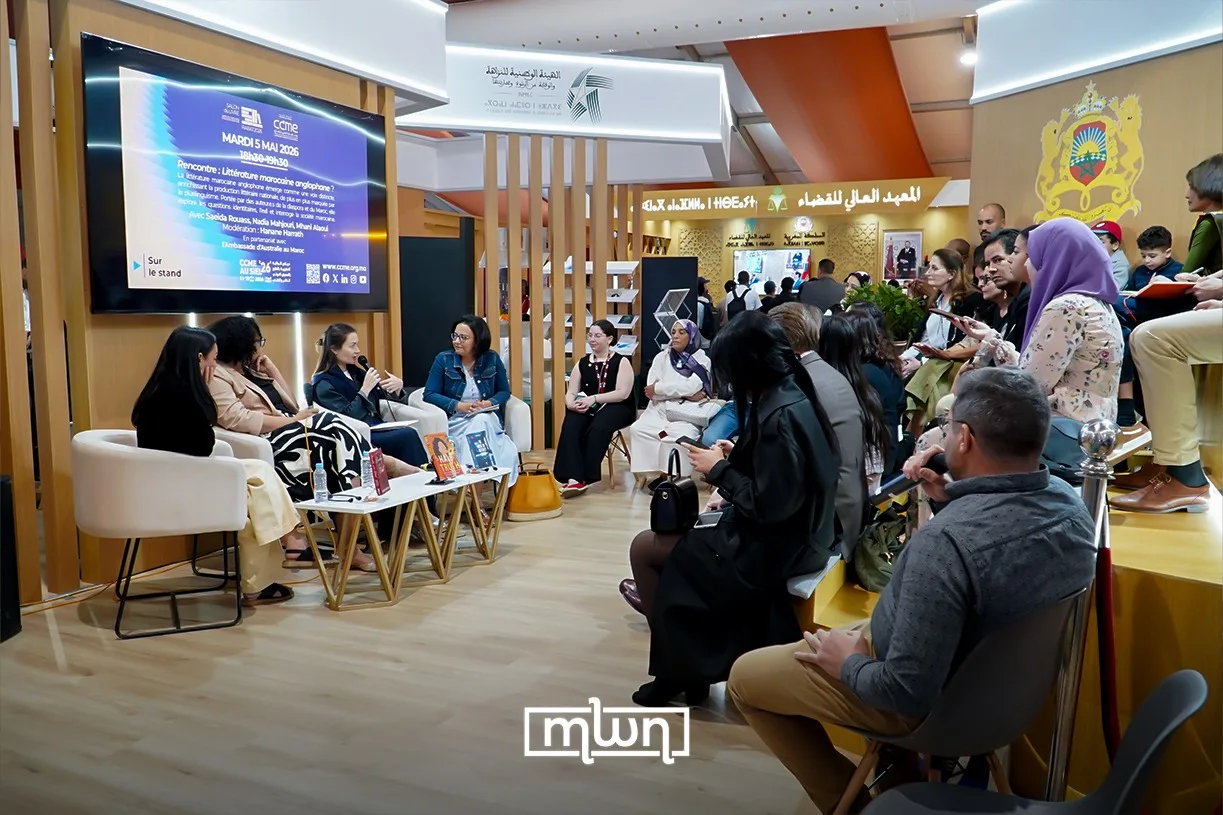
The event was organized by the Australian Embassy in Morocco in collaboration with the Council of the Moroccan Community Abroad. It was themed “Moroccan Literature in English?” and took the spotlight at today’s SIEL as part of celebrations marking five decades of diplomatic ties between Morocco and Australia. Yet beyond the institutional framework, the evening was defined by Mahjouri’s deeply personal reflections on writing across cultures.
The discussion also witnessed the presence of Damien Donavanwhose attendance underscored the significance of the event within the broader context of cultural exchange between Morocco and Australia.
The discussion brought together three female authors of Moroccan origin, each representing a distinct diasporic experience. Nadia Mahjouri joined Saeida Rouass and Mhani Alaoui in a conversation that reflected the diversity of Moroccan voices across continents.
Coming respectively from Australia, the United Kingdom, and the United States, the three writers offered complementary perspectives shaped by their cultural environments.
A voice shaped by two worlds
Born in Australia to a Moroccan father and an Australian mother, Mahjouri embodies the very intersection her writing seeks to explore. Now based in Australia, she has emerged as a compelling literary voice navigating the space between heritage and modern identity.
Her debut novel, “Half Truth,” captures this duality through a contemporary narrative that moves between Morocco and Australia. The story follows a protagonist grappling with questions of family, memory, and self-construction. It thus offers readers a subtle yet powerful exploration of what it means to belong to more than one culture.
Speaking during the discussion, Nadia Mahjouri shared emotional reflections from her semi-fictional work, drawing on elements of her own life story. She explained her desire to continue writing about Morocco, noting that her connection to her roots deepened after the birth of her first child in 1999, as she sought to pass on a sense of heritage and better understand her own culture.
Writing Moroccan identity in English
Speaking to Morocco World News, Mahjouri described the experience of presenting her debut novel in Rabat as a particularly meaningful moment in her literary journey. She stressed that sharing her work with a Moroccan audience—many of whom are directly connected to the cultural realities explored in the book—added a new layer of significance to the experience.
Reflecting on Morocco’s changing literary landscape, Mahjouri also addressed the growing number of Moroccan writers choosing English as a language of expression.
“I guess that we write in the language that feels the most comfortable to us to write in. And for me, that was English. I would really deeply love to have an Arabic translation. I would love for my family to be able to read my book in Darija,” she told MWN.
“That’s my dream. Maybe one day that will happen. But I wrote in the language that is easiest and closest to the surface for me to be able to express the more complicated feelings that I have when you want to express the human condition in literature.”
For Mahjouri, writing in English enables Moroccan authors to position their stories within global conversations, making them more accessible to audiences who might otherwise remain distant from Moroccan cultural production. Still, she stressed, this linguistic transition does not imply a departure from cultural authenticity. Instead, it offers a different medium through which Moroccan identities can be articulated and understood.
A literary bridge between nations
Mahjouri’s presence at SIEL 2026 ultimately symbolized more than a single literary contribution. It reflected a broader cultural dialogue between Morocco and Australia, laying the groundwork for a convergence that is increasingly shaped by individuals whose identities transcend borders.
As Moroccan literature continues to expand into English-language spaces, voices like Mahjouri’s are not only telling new stories. Perhaps more fundamentally, these rising, brave new voices are redefining the contours of Moroccan identity itself by placing it firmly within a global, interconnected narrative.