Join on WhatsApp
 Join on Telegram
Casablanca – The debut edition of GITEX Future Health Africa 2026 wrapped up today at Casablanca’s international fair with a closing ceremony that symbolized both the success of its first edition and the beginning of a longer journey for healthcare and innovation in Africa. Three days of ideas, exchanges, and big healthcare conversations came to a close, leaving plenty of momentum behind.
The three-day event brought together policymakers, healthcare professionals, researchers, startups, and global industry leaders around one central conversation: the future of healthcare in Africa.
At the heart of today’s closing ceremony was the need to reflect on the energy and progress generated throughout the event.
The ceremony convened key figures from across the healthcare sector, including Amine Tahraoui, Minister of Health and Social Protection, Youns Bjijou, Director of the Mohammed VI Foundation for Sciences and Health (FM6SS), and other leading voices in the industry.
It also offered a moment to look back on this first edition and what it represents for the continent. And it featured award ceremonies, including the winner of the “Supernova” competition, a startup that stood out and will continue its journey contributing to the transformation of healthcare in Africa.
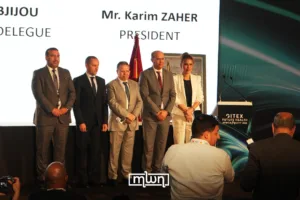
Rather than marking an end, the closing highlighted the beginning of a new chapter in the continent’s healthcare transformation. In particular, it saw the signing of two Memorandums of Understanding that reinforced this vision. The first was between FM6SS and the Moroccan Agency for Medicine and Health Products (MMPS), while the second brought together the Ministry of Health, FM6SS, and GIGALAB.
The beginning of a new chapter
The message was clearly that this story should not stop at GITEX Future Health Africa. It has only just begun, and now it is about turning ideas into action.
Speaking during the ceremony, Trixie LohMirmand, CEO of Kaoun International, described the moment as the start of a “new healthcare economy.”
“This week represents the start of a new healthcare economy, where technology and AI play a central role in transforming every aspect of healthcare, alongside traditional healthcare systems,” LohMirmand said.
She also described the event as a platform that needs to keep growing and evolving, stressing: “I think importantly, we also need to recognize that as we go forward, the message is very clear. We need this platform. We have it now. We need to keep going, keep scaling. The event has been exceptional in the way that it sets the foundation for continued growth from here.”

And that is exactly what followed. During the ceremony, the dates for the next edition of GITEX Future Health Africa were already announced. In 2027, healthcare professionals, companies, startups, and innovators will once again gather from 28 to 29 September for the second edition.
On the timing, LohMirmand noted that it is a deliberate choice. “When it comes to September, we are actually aligning with the global health calendar. It also gives us good timing to kick-start the event season after the holidays.”
“This will probably make us the first show in the world to kick-start after the summer holidays,” she added, concluding that “technology is not what is going to take the economy forward. It is what people do with it.”