
 Join on WhatsApp
 Join on Telegram
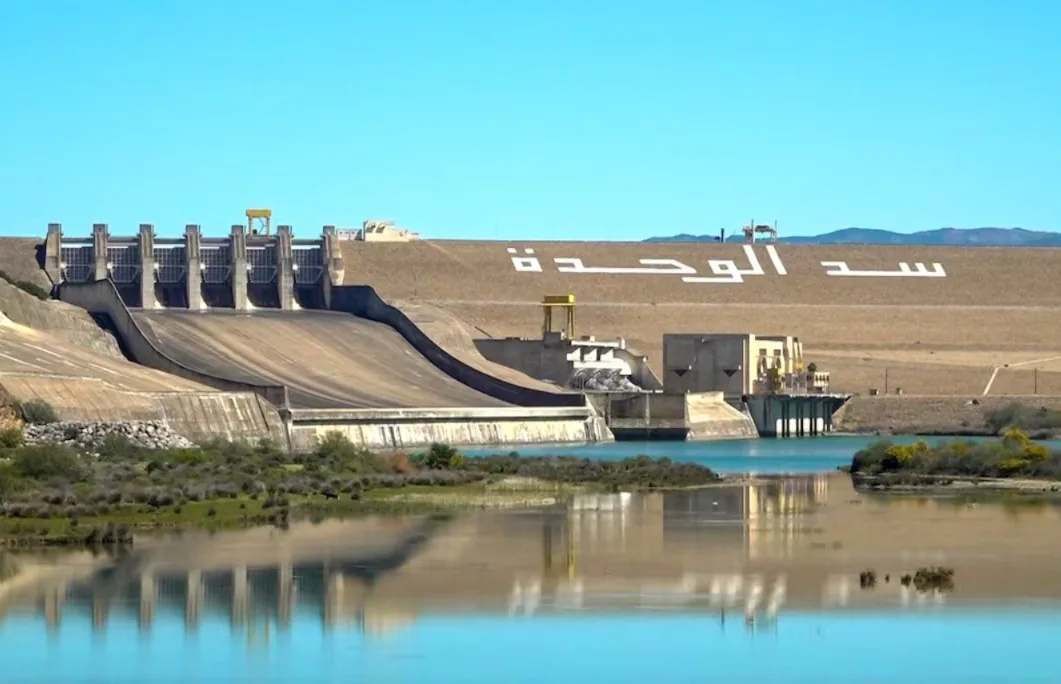
Fez – Morocco’s largest dam, Al Wahda Dam, has reached one of its highest water levels in recent years, strengthening the country’s water security ahead of the summer season.
Official data released by the Ministry of Equipment and Water on May 31 showed that the dam’s filling rate had climbed to 88.73%, with more than three billion cubic meters of water currently stored in its reservoir.
Located in Ouezzane Province, Al Wahda is not only the largest dam in Morocco but also ranks among the largest hydraulic infrastructures in Africa.
The latest figures mark a significant improvement compared with the same period last year, when the reservoir stood at just 58.27% of its capacity.
The increase reflects the strong inflow of water recorded over the past three months, supported by seasonal rainfall and rising water levels in the Ouargha River.
Water contributions from neighboring dams, including Bouhouda, Bab Louta and Bab Ouender, also played an important role in boosting reserves and accelerating the recovery of the country’s largest reservoir.
According to officials overseeing the dam, the improvement follows a difficult period of water stress experienced in late 2025.
The filling rate fell to around 42% in September of that year, raising concerns over water availability.
But abundant winter rainfall helped reverse the situation, allowing the dam to recover rapidly and approach the 90% threshold by the end of January.
With a total storage capacity of approximately 3.8 billion cubic meters, Al Wahda Dam is now operating close to its maximum level, providing a strong buffer against potential water shortages during the hotter months.
The reservoir plays a central role in Morocco’s water management strategy.
It supports the supply of drinking water to local communities, ensures irrigation resources for agricultural activities, and contributes to hydroelectric power generation.
Beyond its economic and social importance, the dam also serves as a critical line of defense against flooding in the Gharb Plain and surrounding areas.
Its ability to regulate water flows helps reduce the risks associated with heavy rainfall and extreme weather events.
The current state of the dam offers encouraging signs for Morocco as it continues to face the long-term challenges of climate change and recurring drought cycles.
With reserves approaching full capacity, Al Wahda is expected to provide greater stability for both water supply and agricultural production in the months ahead.