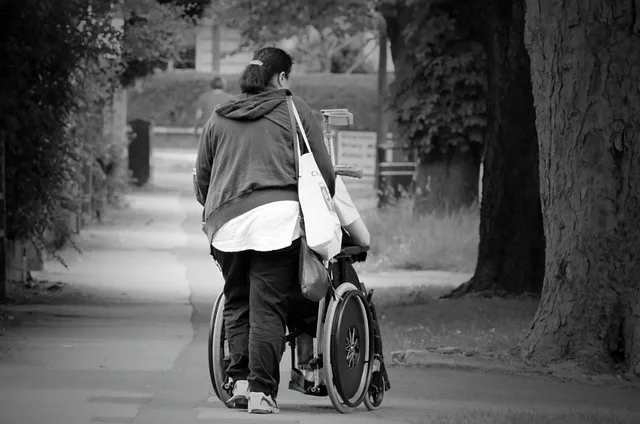
Agadir – Morocco’s Social Protection and Social Cohesion Support Fund (FAPSCS) has provided services to more than 419,000 people with disabilities, Secretary of State for Social Integration Abdeljabbar Rachidi announced on Tuesday before the House of Councillors.
The official stressed that Morocco’s efforts to build a social state must include all vulnerable groups.
“We cannot envision building a social state while leaving certain groups outside the framework of care and rights, including marginalized children, children in street situations, women in difficult circumstances, and persons with disabilities,” he noted.
National plan targets inclusion
As part of these efforts, the government has developed the Second National Plan for the Promotion of the Rights of Persons with Disabilities for the 2025-2027 period.
According to Rachidi, the number of beneficiaries of the FAPSCS has expanded, reaching 419,086 people with disabilities.
Among the fund’s flagship initiatives is a program aimed at improving schooling conditions for children with disabilities. The program currently supports 27,884 children through partnerships with civil society organizations and operates with a budget of MAD 396 million ($42.8 million).
“We allocate MAD 1,200 per month for each child benefiting from the program’s services,” Rachidi explained.
The minister noted that the program has seen substantial growth compared to 2020, when fewer than 17,000 children benefited from the initiative and its budget stood at MAD 166 million ($17.9 million).
“This represents an increase of more than 10,000 additional beneficiaries, equivalent to a growth rate of 64.7%,” he said, adding that the budget increase amounted to 138.5%.
Beyond educational support, Rachidi emphasized the program’s impact on families, particularly mothers.
“When families bring their children to associations that provide rehabilitation services, special education, physiotherapy, and other forms of support, families, especially mothers, are relieved for six, seven, or even eight hours a day,” he said. “This enables them to work and participate in the activities they choose.”
Rehabilitation services expand nationwide
The government has also expanded access to rehabilitation services. The number of beneficiaries receiving rehabilitation support increased from 123,000 to 188,000, while 3,891 people received technical aids and assistive devices.
In addition, persons with disabilities benefit from targeted support through Morocco’s direct social assistance system. Rachidi noted that beneficiaries can receive allowances of up to MAD 400 ($43.26), while children with disabilities who have lost their fathers are eligible for up to MAD 500 ($54.08).
On economic integration, the secretary of state reported that 996 people with disabilities were recruited into the civil service through the unified national recruitment examination during the current government term.
The FAPSCS also backed 2,623 income-generating projects designed to promote financial independence among people with disabilities.
Meanwhile, Morocco’s National Agency for the Promotion of Employment and Skills (ANAPEC) facilitated the integration of 1,919 people with disabilities into the labor market, while 1,318 others benefited from the government’s “Awrach” employment program.
Political participation of people with disabilities
Rachidi also pointed to measures aimed at strengthening political participation among people with disabilities.
He highlighted recent amendments to the organic law governing political parties, which introduced incentives for parties that successfully elect candidates with disabilities to Parliament.
“Political parties that nominate candidates with disabilities who subsequently win parliamentary seats receive financial support amounting to nine times the standard subsidy granted for ordinary parliamentary seats,” he said, describing the measure as part of broader efforts to encourage the political inclusion of persons with disabilities.
The government official said these initiatives reflect Morocco’s commitment to expanding social protection and ensuring greater inclusion of persons with disabilities across education, employment, social support, and political life.