
Rabat – A new semiannual report from the Food and Agriculture Organization (FAO) of the United Nations presents a mixed assessment of Morocco’s place in global food trade.
The findings span cereals, sugar, fisheries and maritime freight, and point to a country where agricultural recovery coexists with lasting import dependence.
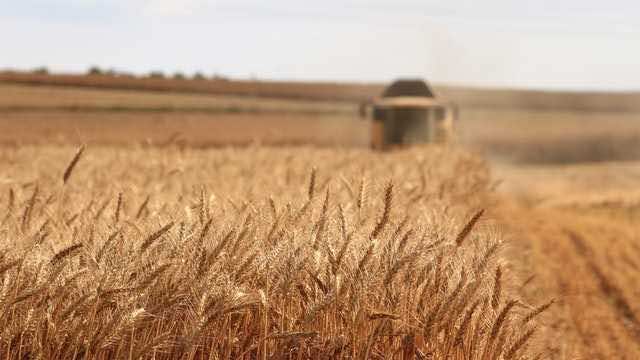
Morocco’s cereal sector shows clear signs of recovery after two dry seasons. Improved rainfall is set to lift total cereal output to 6.3 million tons in 2026, compared with 4.5 million tons in 2025 and an average of 4.1 million tons between 2022 and 2024. Wheat output is expected to reach 5 million tons in 2026-2027, up from 3.5 million tons in the current season.
The rebound in production does not erase the need for foreign supply. Cereal imports remain high at 11.4 million tons in 2025-2026, driven mainly by wheat purchases estimated at 6.8 million tons.
The FAO projects a decline to 9.2 million tons in 2026-2027 as local harvests improve. Ending stocks stand at 5 million tons in 2025-2026 before easing to 4.1 million tons the following season.
Dependence appears sharper in maize, where domestic output remains marginal, and imports reach 3.5 to 3.6 million tons across both seasons. Barley shows a more balanced profile, with production between 1 and 1.2 million tons against national use close to 2 million tons.
Sugar follows a similar pattern of partial recovery and structural reliance. National output rises to 0.4 million tons in 2025-2026 from 0.3 million tons a year earlier. Imports remain close to 1.9 million tons, well above domestic production, as local demand reaches about 1.3 million tons. The gap between supply and consumption remains wide despite better rainfall conditions.
In fisheries, Morocco confirms a strong position in Africa. The FAO places the country among the continent’s top performers, with 1.4 million tons of inland fish capture in 2023 and 2024.
Export value reaches 2.8 billion dollars in 2025 and is set to climb to 2.9 billion dollars in 2026, which keeps Morocco as Africa’s leading fish exporter in value terms.
Maritime freight trends add another layer to the picture. The Baltic Dry Index rises to 2,964 points in May 2026, up 30% over six months and more than double its level a year earlier. This reflects firmer conditions in global dry bulk shipping.
For grain and oilseed transport, the FAO freight index shows a milder 10% rise over six months despite a sharp increase in fuel costs. On Morocco’s key supply routes, costs move in opposite directions.
The Rouen-Casablanca line falls to 23 dollars per ton, down 9% over six months but still 37% higher over one year. The Novorossiysk-Casablanca route reaches 28 dollars per ton, down 10% over six months yet up 40% year on year.
Overall, the report points to easing freight pressure in the short term, but transport costs remain well above last year’s levels, keeping import dependence sensitive to global market shifts.