
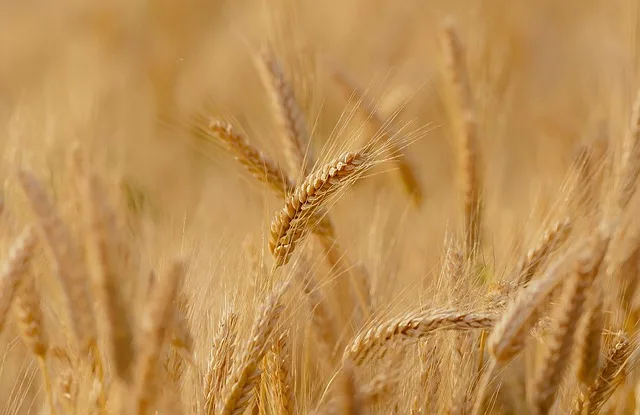
Agadir – The Moroccan cereal harvest for the year 2026 is projected to be 90 million quintals, with increased measures to maintain steady supply using advanced storage techniques, according to the National Interprofessional Office for Cereals and Legumes (ONICL).
The ONICL introduced on Friday the innovative framework for regulating cereals at a gathering held in Casablanca, involving representatives from different sectors.
Authorities expect a significant recovery in national cereal output after several seasons marked by drought. Forecasts place total production at approximately 90 million quintals, with soft wheat representing nearly half of the harvest.
The positive outlook is due to better climate and a partial recovery in agricultural activity across producing regions.
Under the new framework, Morocco aims to build a strategic stock of 15 million quintals, equivalent to roughly 17% of projected production. ONICL has positioned this reserve as a key tool to strengthen market stability and ensure supply continuity in case of external shocks or disruptions.
The framework sets a reference price of MAD 280 per quintal for soft wheat. It also introduces financial incentives to encourage operators to expand storage capacity and contribute to national reserves.
Authorities will apply storage subsidies between 1 June and 31 July, with the possibility of extension depending on progress toward the storage target. The system includes both short- and long-term support measures to maintain adequate stock levels for domestic consumption.
In parallel with these measures, Morocco is also strengthening productivity at the farm level through targeted agricultural innovation programs.
One of the key initiatives, the “Al Moutmir” program, developed by OCP Group in partnership with the Mohammed VI Polytechnic University, has recorded strong results in cereals and pulses by promoting science-based farming practices directly with producers.
The program operates through field demonstration platforms that allow farmers to test optimized techniques such as soil diagnostics, precision fertilization, and improved water management under real agricultural conditions.
Results from recent campaigns show significant yield improvements, with gains reaching between 21% and 33% for cereals and up to 33% for pulses, even in years marked by climatic stress.